Not Ayodhya but this is the most visited temple in India


Not Ayodhya but this is the most visited temple in India

There’s absolutely no limit to India’s spiritual landscape. From Ayodhya and Haridwar to Tirupati and Guwahati, India stands as the undisputed “Land of Temples”. However, there’s one temple which consistently stands out in terms of massive footfall, and global recognition—the Tirumala Venkateswara Temple in Tirupati, Andhra Pradesh. According to Tirumala Tirupati Devasthanams, the temple was visited by a total 79,878 pilgrims by 26 April 2026, making it the most visited temple till April 2026. It is among the most visited religious sites in the world, attracting tens of millions of pilgrims every year. For travellers looking for a deeply immersive spiritual journey, the temple offers far more than just darshan. A temple that attracts global touristsThe Tirumala temple is dedicated to Lord Venkateswara, a form of Lord Vishnu. Set on top of the sacred Seshachalam, the temple is visited by over 30-50 million people every year (an estimate). It’s a staggering number! This means on an average, the temple is visited by around 60,000 to 80,000 pilgrims, which is a massive count. The numbers can reach up to a lakh during peak festivals and weekends, turning the town into a sea of humans. How to reach

Tirupati

Tirumala is not just your regular temple, it’s an experience of a lifetime. For those planning a trip to the city, the experience begins well before reaching the sanctum. Situated some 20 km from Tirupati city, visitors can either drive or take a traditional new pilgrimage route via footpaths like Alipiri or Srivari Mettu. A number of devotees choose to walk the 3,500+ steps barefoot, in an act of devotion.The closest airport is Tirupati Airport. It is well-connected by rail and major Indian cities including Chennai, Bengaluru, and Hyderabad. Buses and taxis are available regularly.How to get darshan

Tirupati

Reaching here is still easy. But getting darshan is a task as per personal experiences of thousands of devotees, there’s immense crowds. Today, the temple stands as a case study in large-scale management. It is administered by the Tirumala Tirupati Devasthanams (TTD), which has implemented an organised system of darshan categories which ranges from free “Sarva Darshan” to special entry tickets booked online.Waiting timeIt’s shocking but waiting times can range between a few hours and over 12–18 hours, which is another task. Yet, the system is surprisingly efficient. From free food (annadanam) and medical facilities to accommodation options, there are people who take care of pilgrims.Spiritual significance and rituals

Tirupati Hills

It is a wish fulfilling temple and that’s where its spiritual pull is tied. Devotees have immense faith in Lord Venkateswara who they believe fulfills wishes. One of the most unique rituals here is the offering of hair which symbolises surrender of ego. The temple remains crowded with lakhs of devotees willing to sacrifice their hair.A laddu is given here as prasadam which is another highlight. The laddu is so popular that it has a Geographical Indication (GI) tag! Amazing, right? Another interesting fact is that Tirumala Venkateswara Temple in Tirupati is also among the richest in the world. Best time to visitThe temple remains open year-round, but the best time is between September and February. The weather remains pleasant during these months. However, festivals like Brahmotsavam and Vaikuntha Ekadashi attract lakhs of devotees. It is important for people planning to visit early. Online booking is strongly recommended.In a country filled with thousands of temples, the temple remains one of the most visited spiritual sites in the country in 2026, with unmatched scale, devotion, and experience.



Source link

Meet Fossa: Three-in-one predator that’s secretly a cat, a mongoose, and a monkey all in one |


Meet Fossa: Three-in-one predator that’s secretly a cat, a mongoose, and a monkey all in one

Madagascar’s isolated forests possess unique biodiversity due to the millions of years of its geographical separation.This separation allowed evolution to brew in unimaginable ways over the years, producing creatures that seem to defy our conventional understanding of biology.Among these unique animals, one creature stands out as a true master of its environment. It is a predator that has confused scientists because it looks like a mix of several different animals.This mysterious animal is called the fossa. It looks like a biological puzzle because it seems made of parts from others: it has the graceful agility of a cat, the long, thin body of a mongoose, and the climbing skills of a monkey.

Meet the Fossa- a mosaic of biology

The fossa is, in many ways, an evolutionary contradiction. Its anatomy is a mosaic of traits that seem borrowed from disparate carnivore branches. Its face and teeth, along with sharp carnassials or large cutting teeth, resemble those of a cat, while its lithe, muscular body resembles that of a mongoose. But the most abstract physical trait is its tail, nearly as long as its body, which acts as a crucial counterbalance for navigating the dense forest canopy.

Meet Fossa Three-in-one predator that’s secretly a cat, a mongoose, and a monkey all in one

Representative Image

The way the fossa moves is also very special

It is one of the few meat-eating animals that can climb down a tree head-first, utilising its incredibly flexible ankles. When it travels through the trees, it jumps and leaps with a smoothness you would expect from a monkey, rather than the way most ground-dwelling predators move.

But how can a carnivore share traits from three different types of animals?

For much of the 19th and 20th centuries, scientists were only amazed by the outstanding features of fossa. Early classification depended heavily on physical appearance, and because the animal displayed “mixed signals,” it was frequently moved between different taxonomic categories.The confusion was finally resolved in 2003 through molecular genetics. A landmark study led by Anne Yoder, published in Nature, confirmed that all of Madagascar’s native carnivores, including the fossa, descended from a single ancestor and belong to their own unique family, Eupleridae.But the resemblance to other carnivores is a classic example of convergent evolution. As researchers noted, the fossa did not inherit its features from a shared ancestor with cats or mongooses, rather, it independently evolved these traits because it occupied a similar ecological role as a flexible, mid-sized carnivore. Essentially, evolution reached a similar “successful design strategy” across different parts of the world.

It is a top predator in the Madagascar

The fossa is Madagascar’s ultimate apex predator, perfectly adapted to a landscape that lacks the large cats or dogs found on other continents. By filling this top ecological role, it has become a master of its unique environment, focusing its hunting strategy primarily on tree-dwelling lemurs.To hunt such quick prey, the fossa uses a special toolkit, like semi-retractable claws that provide a firm grip and a highly flexible spine that aids in lightning-fast turns. These physical traits define it as a “dual-domain” hunter, giving it the rare ability to dominate both the forest floor and the high canopy.


Source link

In 1978, James Dyson’s frustration with a clogging vacuum led to the formation of Dyson |


In 1978, James Dyson’s frustration with a clogging vacuum led to the formation of Dyson
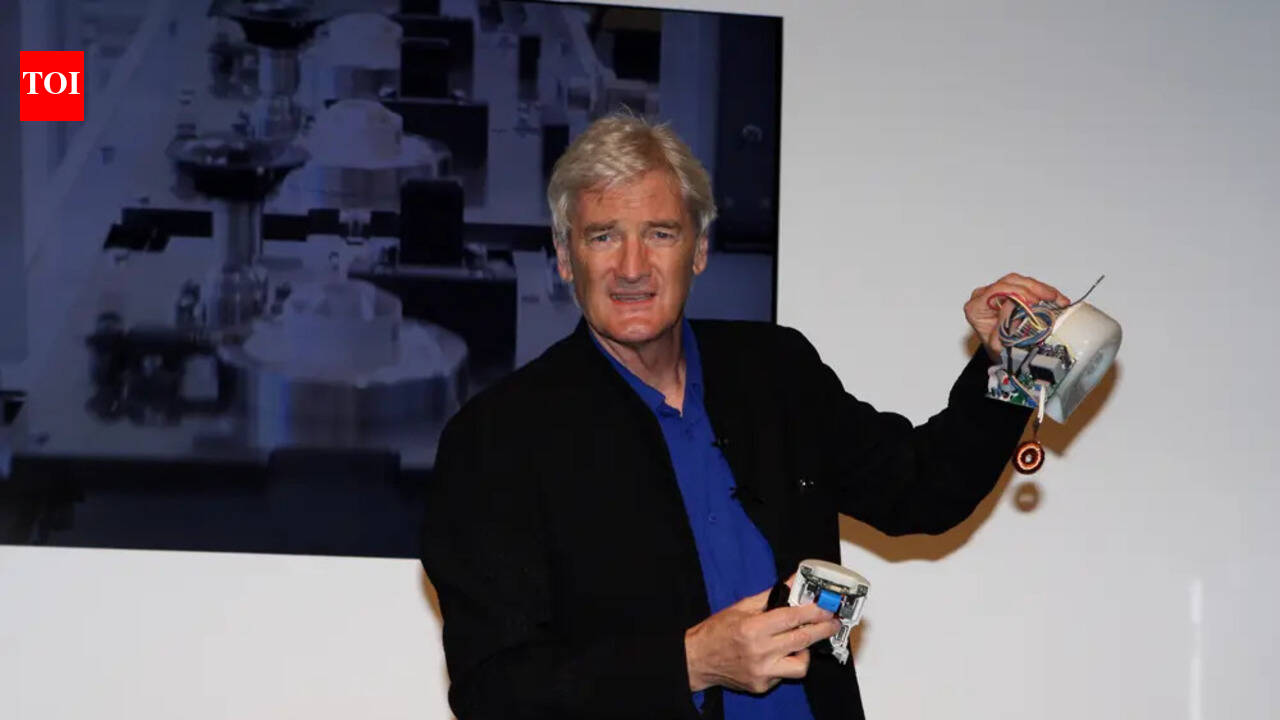
A common household frustration sparked an idea for James Dyson. He spent fifteen years developing a bagless vacuum cleaner. Dyson applied principles of cyclonic separation, a scientific technique. Image Credits: via Wikimedia Commons

All of us have experienced such a scenario when we find ourselves in our living room with a noisy vacuum that is no more effective than the noise it makes in picking up anything at all. To many of us, it may just be a moment of frustration before we continue with the rest of our day. However, in 1978, while taking an afternoon break in the middle of harvesting season, Dyson was struck with a fascination with this problem that went on for almost 15 years. What he found was simply ironic; the bag, intended to hold in the dirt, was the cause of the vacuum’s inefficiency.Instead of following the next version of his product, Dyson decided to look into how huge factories were able to process large amounts of waste. Dyson remembered the gigantic cyclone tower at the local sawmill, where centrifugal force could pull sawdust from the air. Was it possible to apply such a powerful mechanism at home on a smaller scale? This was quite a bold step since it meant giving up the dominant bag system, which had been used for a century. Analysing household issues from the standpoint of engineering tasks, a new way of thinking opened the door for future developments.Physics of the bagless innovationFrom a persistent irritation to a fully-functional device was not a fast journey at all. The process took its course, frequently alone, a period of experimenting and making mistakes. As per the corporate history by the Cambridge Judge Business School, Dyson took about ten years developing his unique concept of a bagless vacuum cleaner while holding down a part-time job in addition to further developing previous inventions. According to him, he tried no fewer than five thousand prototypes before finding the optimal design. This highlights one important principle: “overnight success” is a fiction. For Dyson, it took fifteen years of diligent experimentation from 1978 to 1993 until the invention became marketable.The key to his innovation was the application of an exacting scientific technique called cyclonic separation. While Dyson did not invent the laws of physics, he was the first to realise that they could be applied to solve the problem of clogging bags inside the vacuum cleaner. The use of centrifugal force allowed the dirt to be ejected from the air stream by spinning it out to the outer wall of the container and letting it fall into a collection canister.

James_Dyson_media_launch_(8487827241)

This innovation transformed suction power and airflow. His perseverance led to a revolutionary product that is now a standard feature in modern vacuums. Image Credits: Eva Rinaldi, via Wikimedia Commons

The effectiveness of technical reasoning can be seen in recent research that continues exploring the way these mechanisms work. A study published by the ACS Omega journal confirms that these technologies are quite good at controlling particles and airflow. Taking all that into consideration, it can be noted that Dyson’s prototype of 1978 could be viewed as an example of putting well-established scientific concepts into practice. It was clear to him that vacuum bags were not the best option for filtration, so he replaced them with a separator. It was not an accident but rather an attempt to solve an existing problem.Lab tests and worldwide successWhen Dyson’s vacuum was finally put into production at the beginning of the 90s, it attracted attention by virtue of its unique design and effectiveness. What is more important, it made such a strong impression on users that medical practitioners became interested in it. Such a dramatic change in suction and airflow made people adjust themselves to a revolutionary product.The success of the brand was achieved due to the fact that the product design solved one specific problem of consumers. The failures in the operation of tools are noticeable, and vacuum cleaners without suction ability are particularly problematic. The fact that Dyson was able to solve only one problem led to the development of a useful product rather than a purely visual one. According to the historical data provided in the sources, Dyson’s perseverance during the 1980s allowed him to remain financially independent. In order to prove his concept, he had to be not only an inventor but also an enterprising entrepreneur who could defend his patents and perfect his product designs.In the case of James Dyson, the simple question of “Why do we fail in this?” is all it takes to make an invention revolutionise the industry. While most others would have overlooked such a trivial issue in everyday household use, he chose to view it as one that needed at least fifteen years of his life to be solved. Indeed, what was once considered the height of engineering is now a commonplace feature in all modern vacuum cleaners, showing us that innovation sometimes results from looking at a malfunctioning device and deciding to create something even better.


Source link

In 1967, Aretha Franklin rewrote a few lyrics in one song that turned ‘Respect’ into a women’s rights anthem |


In 1967, Aretha Franklin rewrote a few lyrics in one song that turned ‘Respect’ into a women’s rights anthem
Aretha Franklin turned a simple song into a civil rights anthem. Image credit – Wikimedia

A song that defined a generation and became the greatest of all time for its take on the cultural revolution. “Respect,” recorded by Aretha Franklin in 1967, is considered to be one of the most influential songs in the history of American popular music. This track became one of the symbols of that time, representing two significant events – the Civil Rights Movement and the Women’s Rights Movement.According to Rolling Stone, the track “Respect” occupies the first position in the magazine’s list of “The 500 Greatest Songs of All Time”. According to the publication, it was an anthem that “redefined the possibilities of pop music.” In 1967, “Respect” entered the Billboard Hot 100 and the R&B charts.According to music historian and author of the book “A Change Is Gonna Come: Music, Race & Soul of the America”, Craig Werner, “Respect” turned into much more than a popular track. According to him, it became the voice of demands already growing throughout America.The original version of “Respect” was very different“Respect” by Otis Redding predates the hit version by Franklin. Released in 1965, Redding’s “Respect” was a ballad about a man demanding respect after getting back home from work. The track has an R&B Style and reflects the gendered outlook typical of the era.While “Respect” by Otis Redding enjoyed success, reaching number thirty-five on Billboard Hot 100, it did not have the social significance that the Franklin’s remake would acquire. As reported in the Rock and Roll Hall of Fame, Redding recognised the power of Franklin’s makeover, saying, “That girl stole that song from me.”Aretha Franklin gave new meaning to “Respect”There are several ways that Franklin revamped the classic hit. She changed the gender perspective by telling the story through the eyes of the woman. Furthermore, Franklin incorporated her unique version of the spelling of the word, adding the dash to emphasise it. She included backing vocals, saying “sock it to me,” sung by her sisters, Carolyn and Erma Franklin.As stated on the website of the Library of Congress, which included “Respect” into the National Recording Registry in 2002, the song is culturally, historically, and aesthetically significant. This organisation stressed the fact that it depicted changes taking place in the role of women.

The surprising story behind the song ranked no. 1 in all-time American pop music

The surprising story behind the song ranked no. 1 in all-time American pop music. Image credit – Wikimedia

Cultural influence that has proved long-lastingIt did not take long for the song to become an anthem at various protests. “Respect” addressed the issue of women who faced discrimination both at work and at home. At the same time, it encouraged African Americans to struggle for equal rights.Several studies claim that musical pieces like “Respect” prompted people to discuss issues related to identity and rights in the 1960s. The scholars believe that it was due to music that information was transferred to a larger audience.The song was so successful that Franklin received two awards – a Grammy Award for Best Female R&B Vocal Performance in 1968. Eventually, it got into the Grammy Hall of Fame.Importance of “Respect” todayMore than half a century since its creation, “Respect” is more pertinent than ever. Its themes of self-respect and equal treatment resonate with newer generations of listeners. “Respect” has been featured in various movies and political campaigns, among others.Jon Pareles, music critic of The New York Times, once described Franklin’s ability to transform a personal desire for respect into a universal need as her greatest gift. This was the key factor that made “Respect” stand out from all the songs in its category.From being an ordinary rhythm and blues song, “Respect” has come a long way. Not only was it performed by Aretha Franklin, but it also redefined.


Source link

Quote of the day by George Washington on parenting, responsibility, and financial reality: “A natural parent has only two things principally to consider, the improvement of his son, and…” |


Quote of the day by George Washington on parenting, responsibility, and financial reality: "A natural parent has only two things principally to consider, the improvement of his son, and..."
Quote of the day by George Washington

Taking care of kids has always meant being responsible, making plans, and thinking about the future. Throughout history, philosophers and leaders have talked about what it takes to raise kids and get them ready for the future. George Washington said, “A natural parent has only two things principally to consider, the improvement of his son, and the finances to do it with.” This is a smart and well-planned way to be a parent. It talks about two important things that shape a child’s development: their own growth and the money they have to help them grow.In the 1700s, when George Washington was alive, a person’s family background and wealth had a big impact on their education, resources, and chances. His words show how things were back then, when parents had to think about what they wanted for their kids and what they could give them. This idea is still on the minds of families all over the world as they raise their kids. They think about both their kids’ schooling and their money.

Quote of the day by George Washington

“A natural parent has only two things principally to consider, the improvement of his son, and the finances to do it with.”

Understanding the quote by George Washington in simple terms

This quote is easy to understand. George Washington says that a parent should mostly think about two things. The first thing is how to help their child grow or get better. This encompasses education, values, competencies, and overall development. The second is having enough money to pay for that growth.In other words, the quote says that a child’s progress is linked to the things they need to make it happen. It says that parents should think about how to help their kids reach their goals in a practical way, even if they want the best for them.

The idea of “improvement” in a child’s life

George Washington uses the word “improvement” to talk about how a child grows and changes. This mostly meant teaching, discipline, and moral values back then. Families work hard to prepare their kids for their roles in society.Today, the word “improvement” means more than it did before. It means going to school, getting better at talking to people, growing emotionally, and being healthy in general. Parents often work hard and spend a lot of time making sure their kids get the right advice and chances.The quote makes it clear that this change won’t happen by itself. Parents need to pay attention, make plans, and keep working on it all the time.

Why finances play a key role in upbringing

The second part of the quote talks about money. There are a lot of costs that come with raising a child, like school, health care, daily needs, and activities outside of school. These things were still important in the 18th century, but they looked different.George Washington’s statement recognises that money affects the choices that families have. Being financially stable, for example, often makes it easier to get better training or education. In today’s world, this connection between resources and opportunities still exists.The quote doesn’t say that caring or values are less important than money. It says that you need practical help to reach your long-term goals instead.

Parenting in the time of George Washington

To get a better idea of what the quote means, it’s helpful to think about the time period in which George Washington lived. Formal education was limited in the 1700s and was often only available to people who could pay for it. Families were very important in teaching values and skills.It was expected that kids would learn about responsibilities early on. Parents worked hard to get them ready for certain jobs, like farming, trading, or working for the government. These goals were very much connected to financial planning.Washington’s words show this structured way of thinking, where upbringing was seen as a mix of moral guidance and resource management.

A balanced view of responsibility

The quote gives a fair view of parenting. It doesn’t just focus on emotional support or money. Instead, it combines both parts.Parents are responsible for helping their kids grow and guiding them, but they also need to think about the practical side of giving them chances. This balance is important to make sure that kids get both help and direction.

How the quote applies in modern life

The quote is from a time in the past, but it still works today. Families are still making plans for their kids’ health, school, and future jobs.Parents today often have to decide what schools, activities, and long-term goals are best for their kids. These choices are influenced by both personal values and finances. The quote shows that these two things are connected.It also shows that parents often have to make choices based on what they have and still want the best for their kids.

The role of planning in parenting

Planning is a big part of being a parent. This includes making decisions that will affect you in the short and long term. Parents often think about their children’s immediate needs, like school and health care, as well as their long-term goals, like going to college and getting a job.George Washington’s quote indirectly makes a point about how important it is to plan. It talks about money to show how important it is to plan for future costs. At the same time, it stresses the importance of helping a child grow by focusing on improvement.

Understanding limitations and possibilities

Every family has rules that they have to follow, like how much money they have and how they get along with others. The quote recognises these limits while still stressing the importance of having goals.Parents may not always have all the money they need, but they still want to give their kids chances. A big part of being a parent is finding the right balance between limits and opportunities.

A broader message about responsibility

You could also read the quote as a more general statement about responsibility. It shows that goals need both support and intention. Whether you are a parent or not, planning and hard work are often the keys to success.George Washington’s words show that being responsible means more than just having good intentions; it also means doing things to make them happen.


Source link

5 scenic hill stations in India where you can truly feel above the clouds this summer |


5 scenic hill stations in India where you can truly feel above the clouds this summer

Escape this hot summer with trips to the hills and experience something beyond simply enjoyable temperatures. Many of India’s hill stations are located so high that banks of clouds form and drift below you as you walk, giving you a sense that you are walking on a cloud. These amazing features, paired with mist, dense vegetation and open views, transform normal geographical features into what resemble dream lands.The experiences offered in addition to viewing scenic beauty include feeling lighter than normal in the air, hearing fewer sounds than are heard in a city, and seeing much larger distances than are available to view from a city location. Watching the sun rise above a sea of clouds, as well as walking along foggy trails, are two examples of the many great experiences available while finding a refreshing break from city life.

Hill stations in India where you can walk above the clouds

Nandi Hills

Only a short distance away from Bangalore, Nandi Hills is known for its morning fog. Tourists usually reach the hills before sunrise in order to see the hills emerging from behind the clouds. The calm environment, gentle slopes, and wide viewpoints make it an effortless experience of getting away from urban life.

Kodaikanal

Kodaikanal’s fame is based on its valleys of mist, thick woods, and stunning views. Fog often moves around the hills, particularly during the cold weather period. Walking down its paths or going to its viewpoints, such as Coaker’s Walk, offers an exhilarating experience.

Triund

Triund is a destination that combines trekking with breathtaking scenery. Following a not-so-long walk, one reaches a ridge from which clouds tend to hover below. Situated amidst the Dhauladhar peaks, the surroundings feel spacious and airy, thus making it a much-loved destination for trekkers of all levels.

Duke’s Nose

Another name for Nagphani is Duke’s Nose, which is a picturesque cliff point that lies close to Lonavala. The climb up the hill isn’t very long, and when it’s foggy, the clouds pass through the valleys. With its jagged terrain, one feels as if he or she is above the surroundings.

Kudremukh

The Kudremukh region is renowned for its beautiful hilly terrain and trekking paths. The higher you go, the more you will notice clouds moving below you. The blend of open green fields, cool air, and massive views makes the experience absolutely breathtaking.

Why these hill stations feel like walking above the clouds

The impact of both weather conditions and altitude contributes to this effect. When wet, warm air rises in the mountains, it cools down and forms clouds, which frequently remain below or around the hilltop. The best example of this is either early morning or immediately following rain.From various locations around the hills, especially in the early morning, the clouds appear to sit on top of the hills, giving the person standing there the view that they are actually standing above the hills. The fact that the clouds have been created by altitude, temperature difference and wind patterns makes these areas ideal for having this surreal experience.


Source link

Japanese proverb of the day: “If you are in a hurry, go the long way around” — lessons on patience, careful planning, and why slowing down can save time |


Japanese proverb of the day: “If you are in a hurry, go the long way around” — lessons on patience, careful planning, and why slowing down can save time
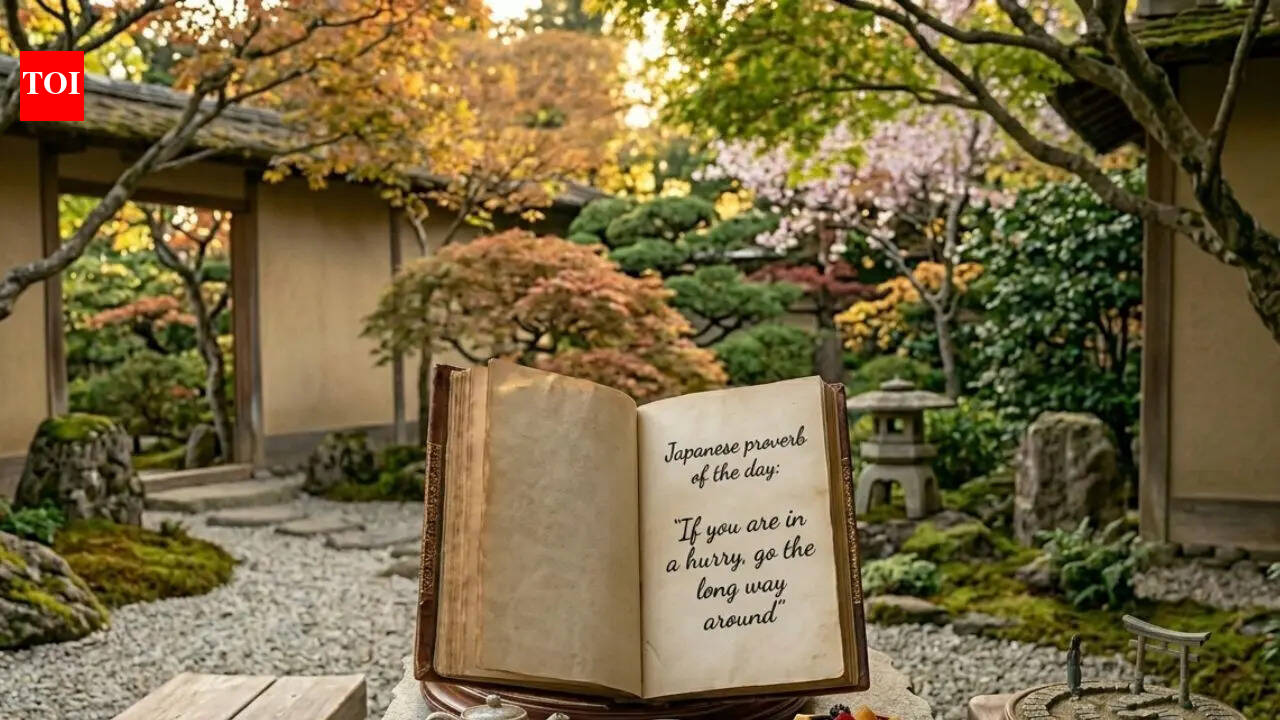
Japanese proverb of the day (Image generated via Google Gemini)

In today’s fast-paced world, many people think that being quick is the key to success. People want to finish things quickly, make decisions quickly, and move on. Whether it’s work, school, or everyday tasks, there is always pressure to do more in less time. This method might seem like a good idea, but it can lead to mistakes, stress, and having to do things over and over again. If you hurry through things, you might make mistakes that take longer to fix later.Traditional wisdom shows you things from a different angle. People say that Japanese proverbs are both simple and deep. They say a lot about how to be patient, disciplined, and take your time before you do something. One of these sayings, “If you’re in a hurry, go the long way around,” might sound strange at first. It says that when you feel like you don’t have much time, it’s better to slow down, think things through, and choose a path that doesn’t put you in danger.This saying tells a useful truth. If you take a little more time at the beginning, you can avoid bigger delays later. It reminds people that rushing without a plan can slow things down.

Japanese proverb of the day

“If you are in a hurry, go the long way around”

Understanding the meaning of this Japanese proverb

At first, the saying might seem to be wrong. It may not make sense to take a longer route if you’re in a hurry. But distance has nothing to do with the meaning. It’s about the way you get there.Planning ahead, being patient, and paying attention to the small things are all part of the “long way.” People often say “short way” to mean going too fast, skipping steps, or taking shortcuts without thinking about them first. You might save time at first by taking shortcuts, but they can cause mistakes that need to be fixed.The saying means that it’s usually best to be careful and take your time. People can get things done faster if they don’t mess up or take too long.

What this proverb teaches about patience and planning

This Japanese saying shows how important it is to wait. Taking the time to figure out what’s wrong usually leads to better results.A big part of this process is planning. People make fewer mistakes when they prepare. This makes everything go more smoothly and work better.For example, reviewing the details before starting a project or studying can help you avoid getting confused later. In the same way, thinking before you do something in real life can help you avoid trouble.The message is clear. It may take a little longer at first to be careful, but it usually saves time in the long run.

Why rushing often leads to mistakes

People tend to miss details when they’re in a hurry. This can lead to mistakes that need fixing. Sometimes, these mistakes take longer to fix than the original task.Rushing also makes you more stressed, which makes it harder to make decisions. People might choose faster options when they’re under stress without thinking about what will happen next. The saying says not to do this.It tells people to stay calm and do things right instead of quickly.

Relevance of this proverb in modern life

Many people feel like they need to work faster these days because there are so many deadlines and expectations. Technology has also made it easier to talk to people and make decisions.But moving quickly can sometimes lower quality. Rushing often leads to mistakes, misunderstandings, and having to do the same thing over and over.The proverb still applies because it talks about this problem directly. It reminds people that taking it easy can help them get more done and feel less stressed.In the workplace, careful planning and execution usually lead to better results than quick, unplanned work.

Applying this idea in daily situations

You can use this saying in a lot of different situations. Taking the time to fully understand ideas can help you do better in school. Checking your work before turning it in can help you avoid mistakes.When making personal decisions, taking your time to think things through can help you make better choices. A patient approach often works better, whether it’s for money, health, or relationships.The goal is not to avoid speed altogether, but to find a balance between speed and accuracy.

The importance of consistency over speed

Another important lesson from this saying is how important it is to be consistent. Moving slowly and steadily makes sure that progress is steady and reliable.Speed can get things done quickly, but it doesn’t always last. Long-term success comes from consistent effort and good planning.This method cuts down on the need to do the same thing over and over again and helps keep quality high.

Why this Japanese proverb still matters today

Even though technology and lifestyles have changed, the basic problems of making decisions and managing time are still the same. People still feel like they have to act quickly, even if it means sacrificing quality.This saying is still useful because it gives a practical answer. It promotes a balanced approach in which speed is complemented by careful thought.It also shows that being efficient isn’t just about getting things done faster; it’s also about getting them done right.

A simple takeaway from this proverb

This Japanese proverb has a clear meaning. If you’re in a hurry, it’s best to slow down, think things through, and avoid making mistakes.When you take the “long way,” you don’t have to waste time. It means picking a path that will get you better results with fewer problems.


Source link

The Japanese cleaning ritual your apartment desperately needs |


The Japanese cleaning ritual your apartment desperately needs
One room at a time. The Ōsōji approach is methodical, not overwhelming Image Credits: Google Gemini

While most of us are cramming in holiday plans and pretending not to see the mountain of stuff that has taken over the living room, Japanese households are quietly doing something brilliant every December: Ōsōji. It’s a centuries-old ritual of cleaning the home out before the new year begins, roughly translated as big cleaning. Not a frantic scrub because the guests are coming; a purposeful, almost meditative reset, sweep out the old year, make way for the new.To be honest? It’s tough to argue with the science behind it.Your home is messing with your head more than you realiseWe’ve all been there, that little bit of anxiety that comes with walking into a room that is just too much. Dishes, laundry, mail that hasn’t been opened, that corner you’ve been meaning to get to since spring, it turns out that it’s not all in your head.A study published in Behavioural Sciences found that the clutter in a person’s home is directly related to lower psychological comfort and weaker subjective well-being. Living in a cluttered environment every day can slowly chip away at your well-being. It adds up quickly, especially for millennials, since many of us are working from home, living in smaller places, and navigating a lot.A structured declutter is really a reset button for those people who struggle to be organised. More often than not, the difference between a clean that sticks and one that falls apart by February comes down to one thing: having a plan. The defined steps, the defined endpoint, the category-by-category approach, all of it makes it feel less like a battle and more like something you can actually get done.Why cleaning feels like hitting a reset buttonCleaning is not just an emotional gesture; it does have a measurable effect on stress.According to a study published in Social Psychological and Personality Science, cleaning can help to reduce psychological and physiological responses to stress. It is not only your mood that feels the difference. It is probably a combination of things: physical activity, the sense of making visible progress, and getting back control of your environment. When the world is a to-do list, crossing off a single item can break the spiral.Ōsōji is basically all of that in one purposeful event, and not the random Tuesday afternoon panic cleaning before your roommate gets home. It is a prescribed rite, with a beginning, middle and end, and that structure is part of what makes it work.

Image

The Japanese year-end cleaning ritual that’s more than just tidying up.Image Credits: Google Gemini

The emotional weight of getting rid of stuffDecluttering is easy until you find a box of things that once meant something. When you are in cluttered spaces, your emotional reactivity increases, making it more difficult to deal with the mess itself. It explains why sometimes you start cleaning and, halfway through, you feel worse.That’s why the Ōsōji way, methodical, categorical, no pressure to do it all at once, is more realistic than a dramatic purge. You just need to take small daily steps.A cleaner home is also a safer oneSo, apart from the mental health angle, there is also a simple public health concern. Cleaning and disinfecting surfaces are important ways to reduce exposure to pathogens in the home. Cleaning out the closet at the end of the year is emotionally satisfying, but it is also a chance to get rid of the dirt that builds up in corners, on surfaces, and in places we don’t always notice.A home that is easier to navigate, less cluttered and more organised is a home where normal routines like sleep, meals, and just existing feel peaceful.How to actually do itVague ambition doesn’t work. “I’m going to clean the whole apartment this weekend” is a phrase that rarely survives reality.Ōsōji is seasonal, organised and limited in scope. Begin with one room or one type of item. Make three piles: toss, donate, keep. Then wipe and sweep and wash. That’s it. You’re not trying to create a Pinterest-worthy home; you’re just trying to make a space that feels a little more like you again as you head into the new year.Happiness is not a clean house, but mess is a stressor, cleaning is a stress reliever, and structure helps them follow through. So, see the ritual for what it is: not a marathon of chores, not a self-improvement project, just an annual chance to make a little more room for your things, and perhaps for your headspace too.


Source link

Foods that support your lungs, liver, gut, and eyes


Breathing feels automatic, but lung health depends heavily on what goes into the body. Pollution, stress, and infections can irritate airways. This is where certain everyday ingredients quietly step in.

Ginger and turmeric, common in Indian kitchens, contain compounds like gingerol and curcumin. These are known to reduce inflammation in the airways. Citrus fruits, packed with Vitamin C, help protect lung tissue from oxidative stress caused by pollution and toxins.

A study by the National Institutes of Health (NIH) highlights how antioxidants like Vitamin C play a role in reducing lung damage caused by environmental stressors.

Adding fresh ginger and turmeric to morning tea or even warm water is a small habit. Over time, it can support easier breathing, especially in cities where clean air is not always guaranteed.


Source link

Princess Diana’s favourite egg dish revealed: The simple royal recipe behind it |


Princess Diana’s favourite egg dish revealed: The simple royal recipe behind it
Princess Diana’s favourite egg dish (AI image generated via Google Gemini)

Princess Diana is still one of the most admired people in modern history. People admire her for her humanitarian work, public image, and lifestyle choices that many people can relate to. People often think that royal life means fancy meals and fancy dining, but her former personal chef says that is not the case. Diana liked simple, comforting meals that were good for her health and tasted good. One dish that stood out as a regular favourite was Eggs Suzette. This old-fashioned way of cooking, which isn’t as well-known today, gives us a look at how she ate every day. The dish uses familiar ingredients in a way that is both elegant and easy to understand, which is what she liked about meals that were both healthy and filling.

Why Eggs Suzette was Princess Diana’s preferred comfort meal

According to several media reports, the dish got a lot of attention after Diana’s former chef, Darren McGrady, said that she asked for Eggs Suzette a lot, sometimes even once a week.This choice shows that she liked meals that were simple but filling. The food had a good mix of nutrients and a taste and texture that made you feel good.It had eggs, vegetables, and potatoes in it, which made it filling and balanced in terms of nutrition. This fit in with how she usually eats.

What is Eggs Suzette: A classic dish with a structured preparation

Eggs Suzette is a classic savoury dish that uses simple ingredients but puts them together in a fancy, layered way. A lot of people say it tastes like a stuffed baked potato.The usual way to make the dish is to scoop out the inside of a baked potato, fill it with sautéed spinach, top it with a poached egg, and then drizzle hollandaise sauce over it. To finish the presentation, a decorative border of mashed potatoes is added around the edges.

Key ingredients in Eggs Suzette that define the dish

Eggs Suzette is built using commonly available ingredients arranged in layers:

  • Baked potatoes (as the base)
  • Spinach or leafy greens (for the filling)
  • Eggs (usually poached)
  • Hollandaise sauce (for richness)
  • Mashed potatoes (for finishing and structure)

This combination creates a mix of textures, including soft, creamy, and slightly crisp elements.

How to make Eggs Suzette at home

Ingredients (serves 2–3)

  • 2 large baking potatoes
  • 2–3 eggs
  • 1 cup fresh spinach (washed and chopped)
  • 2 tablespoons butter
  • 1 tablespoon olive oil
  • Salt and pepper (to taste)
  • ½ cup mashed potatoes (prepared separately)
  • ½ cup hollandaise sauce (homemade or ready-made)

Preparation method

  • Step 1: Put the potatoes in the oven

Set the oven to 200°C. Wash the potatoes well and bake them for 45 to 60 minutes, or until they are soft.

  • Step 2: Get the potato skins ready

After they are done baking, cut the potatoes in half lengthwise. Carefully scoop out the inside flesh, leaving a strong shell. Set aside the scooped potato for later use.Put butter and olive oil in a pan and heat them up. Add the chopped spinach and cook for a few minutes until it starts to wilt. Add salt and pepper to taste.

  • Step 4: Stuff the potatoes

Put the sautéed spinach inside each potato shell to make a base layer.

  • Step 5: Cook the eggs in water

Put the eggs in a pot of water that is just starting to boil and cook them until the whites are set, but the yolks are still soft.

  • Step 6: Put the dish together

Put one poached egg on top of the spinach in each potato shell.

  • Step 7: Add the sauce hollandaise

Spread hollandaise sauce over the egg so that it is even.

  • Step 8: Add mashed potatoes to the end.

To make a border, pipe or spread mashed potatoes around the edges of the shell.

  • Step 9: Optional last bake

Put the assembled potatoes back in the oven for 5 to 10 minutes to warm them up.

How Eggs Suzette reflects Princess Diana’s balanced diet

People knew that Princess Diana liked to eat healthy foods that weren’t too heavy. Reports say that she ate a lot of fresh foods, lean proteins, and vegetables every day.Eggs Suzette fits this pattern by putting vegetables, protein, and carbs all in one dish. The hollandaise sauce makes the dish richer, but the overall balance stays the same.

Flexibility of Eggs Suzette recipe in modern kitchens

  • You can change Eggs Suzette to fit your tastes or the ingredients you have on hand:
  • You can use mushrooms or kale instead of spinach.
  • You can add more toppings, like smoked salmon.
  • You can change the sauce to make it lighter.

This ability to change has helped it stay useful.

Role of the royal kitchen in everyday meals

Darren McGrady, who was Princess Diana’s chef, said that she often chose simple and consistent foods. Meals were made to fit her tastes instead of having long menus.As per reports, his stories show that even in royal settings, meals were often practical and focused on comfort.

Continued interest in Diana’s food choices

People are still interested in Princess Diana’s life, including what she ate. Eggs Suzette and other recipes give you a real link to her daily life.People are once again interested in the dish as they look into classic recipes and try to make meals that famous people have eaten.

Eggs Suzette: A simple dish that reflects a larger story

Eggs Suzette is more than just a recipe; it’s a way to learn about how Princess Diana lived and ate. It shows that meals don’t have to be fancy to be good for you and make you feel good.The dish is still popular because it is balanced, adaptable, and connected to one of the most famous people in modern history.


Source link