This city on Earth is closest to space where people struggle to breathe: All about their daily life |

This city on Earth is closest to space where people struggle to breathe: All about their daily life

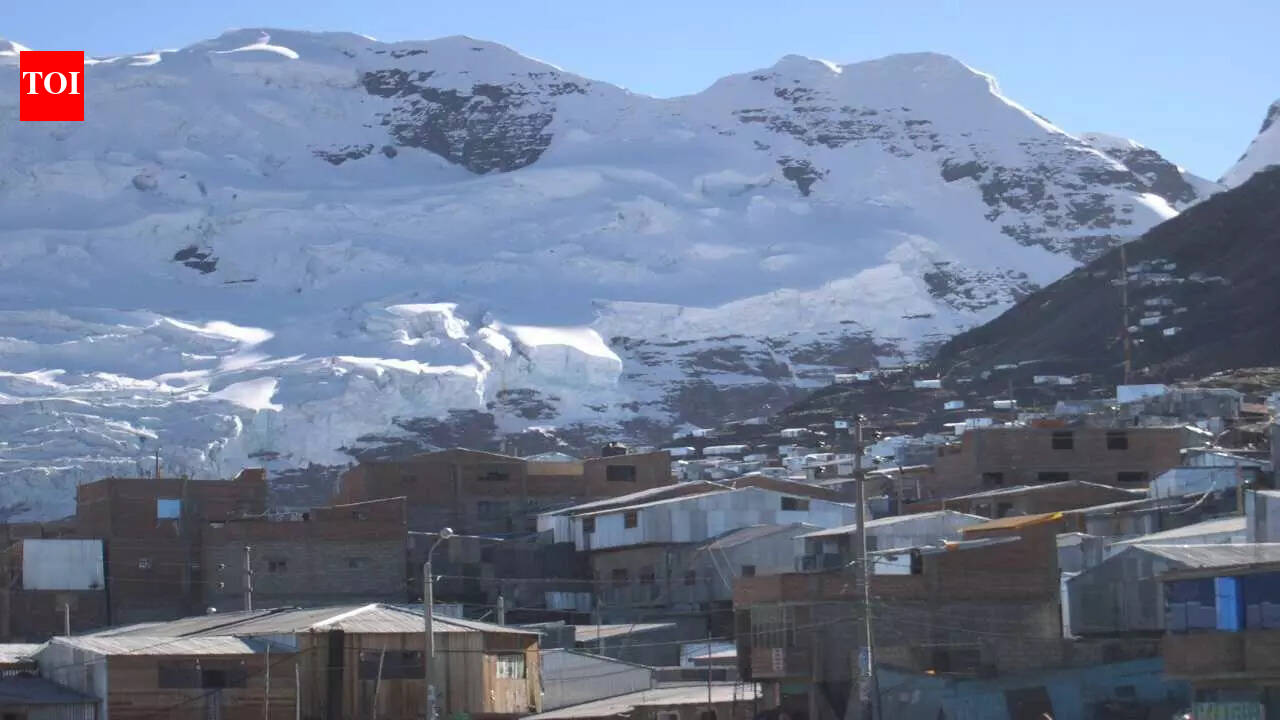
While we sleep on our cozy beds at night worrying about what to cook for breakfast the next morning, there’s a place on Earth where people’s daily struggle is getting adequate oxygen to live another day! Any why, just for a reality shaped GOLD! Yes, we are talking about a remote town in South America which is known as the highest permanent settlement on the planet. This is a place where every breath counts, where clean water is precious and a reminder of how high you truly are. Technically humans shouldn’t be residing here because oxygen is 50 percent less than common cities in the world.The place is known as La Rinconada in Peru. Situated high (at around 5,100 m (16,732 ft) in the Peruvian Andes, La Rinconada is not your typical travel destination. Adventure seekers also call it the “closest city to space on Earth”, not because it touches space, but because of its extreme altitude. You feel like you’re standing so close to the stars! However, there’s nothing starry about the mining town where hundreds of men come in search of gold. In fact, life is a struggle here every moment, making it a perfect example of the fact that humans are hard-skinned and can survive in any situation and in any condition. Survival of the fittest
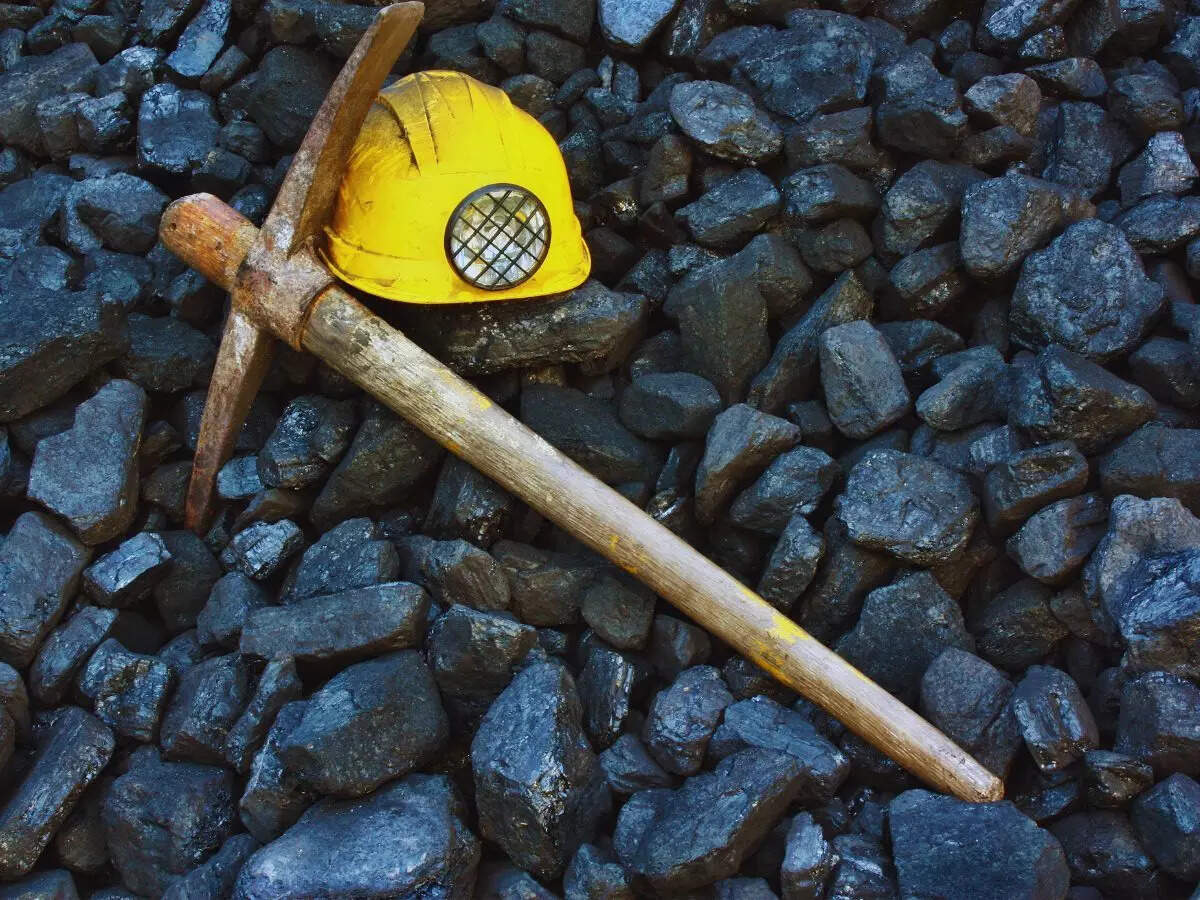
Gold mine

canva

We can only imagine life at such an elevation. Because atmospheric pressure drops with height, its thin air contains only about half the oxygen of sea-level air. Breathing here is a task. Outsiders, travellers generally carry oxygen cylinders with them, else things can get out of hand. The population generally is of gold miners and their families who work here day and night in the hope of getting gold. The average life of residents here is only 35-40 years because of these reasons. Besides natural issues, there are security problems too. The city has no law and order. There are no police stations and crime is at peak. Where it is and why it people are living here

Gold

Canva

Human settlement in La Rinconada grew out of a modest mining camp in the late 20th century. It soon became an informal but permanent town. The existence is only driven by gold mining. Today, tin houses dominate the landscape of La Rinconada which looks like another world. Social challenges only add to the difficulty. Crime, informal mining practices, pollution, and precarious economic conditions have earned La Rinconada a nickname like “Devil’s Paradise.”Difficulties and daily reality
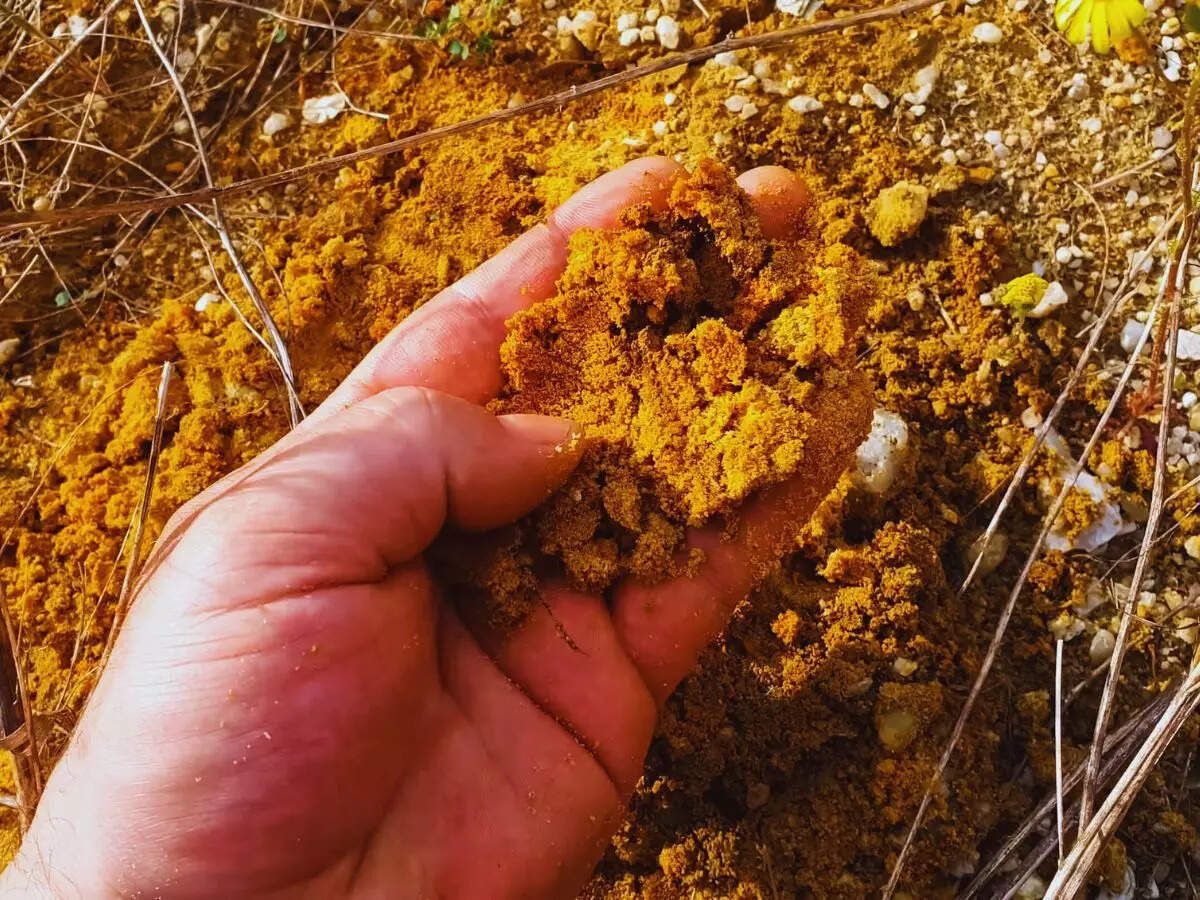
gold mine

Canva

Life in La Rinconada is extreme because of altitude, thin air and less oxygen. Altitude sickness is common. Basic infrastructure is scarce.There’s no running water or sewage systemThe whole town looks like an open dumping ground with sewage water everywhere..Garbage often accumulates in and around the town due to a lack of collection services.Electricity remains unreliable.Medical facilities are minimal, posing serious risks in case of altitude sickness or injury.Despite all the hardships, residents still go through daily struggles in the hope of finding gold and making a living.How to Reach Reaching La Rinconada is another task. By air: Reach Lima Airport, Peru’s capital, before taking a connecting domestic flight to Juliaca.Road trip to Puno: From Juliaca, it’s a 3–4 hours road trip to Puno. This is the last place with decent accommodations and food choices in the city.Off-road ascent: From Puno or nearby towns, you’ll take rugged mountain roads and 4×4 vehicles up steep climbs toward La Rinconada. It’s suggested to go with local guides and drivers for safety purposes.Keep in mind that high-altitude travel always carries risk. So proper acclimatization is necessary.Food and water
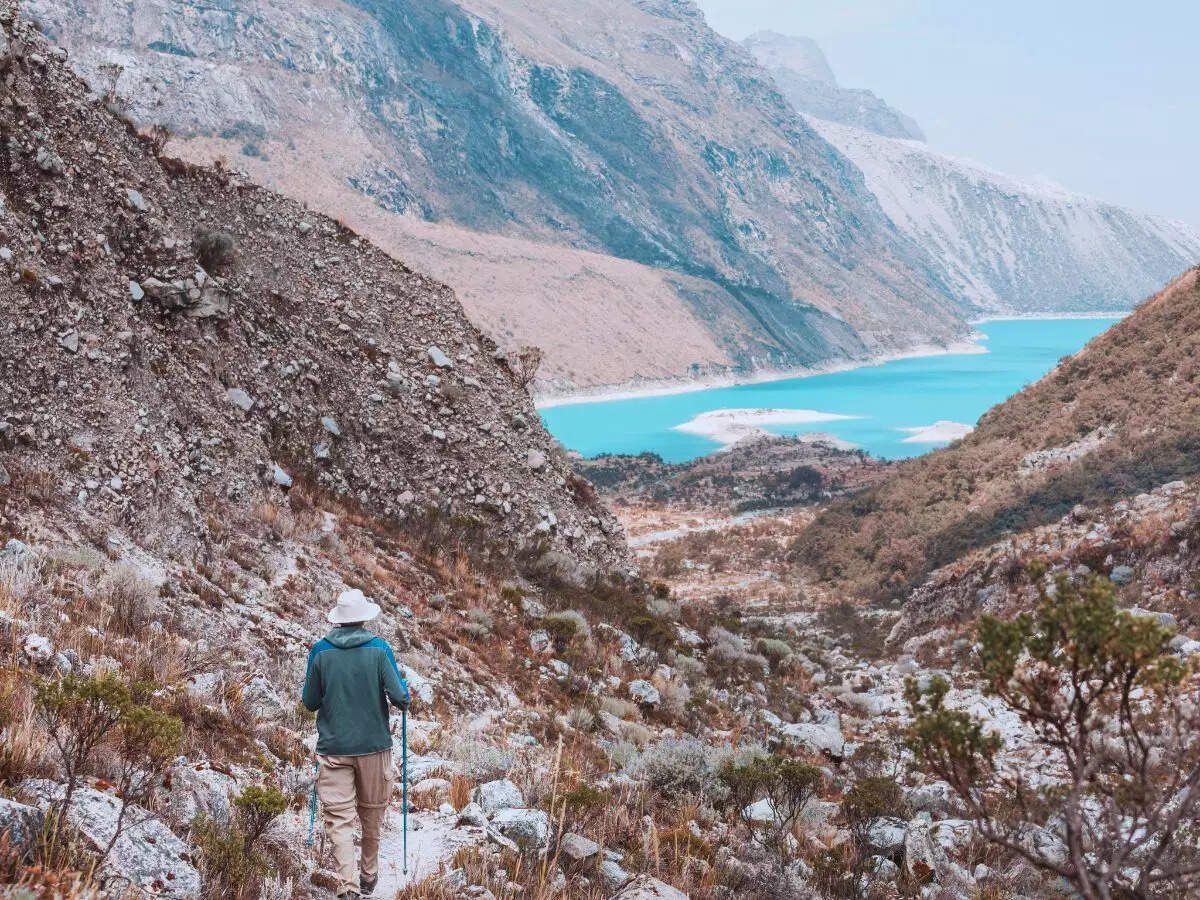
hike

Canva

Dining in La Rinconada is not like a normal city. So carry your water and food from the nearest city.Gold MinesYou can see gold mines everywhere. Exercise caution as these areas are dangerous. Always visit with locals.It is important to note that La Rinconada is not your normal travel attraction and is not meant for regular travellers. Visiting the place requires courage, physical strength and a great deal of preparation.


Source link

Noida Flower Festival 2026 is back with floral displays and free entry: What visitors need to know |


Noida Flower Festival 2026 is back with floral displays and free entry: What visitors need to know

Noida is all set to host the very beautiful and refreshing Flower Festival soon! One of the most awaited events, the Noida Flower Festival, also known as the 38th Vasant Utsav Flower Show, will be conducted by the Noida Authority. Floriculture, sustainability, and slow living are promoted during the festival, which brings residents, RWA groups, educational institutions, gardeners, and nature enthusiasts together. Here’s all that you need to know.

Noida Flower Festival 2026: Key details at a glance

Venue: Shivalik Park (next to Noida Haat)Dates: February 19 to February 22, 2026Timings: 10 AM to 7 PMEntry Fee: FreeThe festival is a genuine celebration of green spaces or outdoor culture across the NCR, with people across Noida, Delhi, Faridabad, and Gurgaon coming together and taking part in the activities. Unlike an ordinary garden show, the Noida Flower Festival is focused on traditional floriculture with a touch of modern and eco-friendly ideas. It is a common platform where people in the field of floriculture, amateur gardeners, educational institutions, housing societies, etc., can come together with the aim of showcasing their creativity while learning the importance of sustainable living techniques with each of the spaces in the stadium being used wisely.

Highlights not to be missed by visitors

Incredible floral exhibits: The exhibitions of seasonal and exotic flowers are ranged in beautiful intricate patterns that the visitors will get to see. It is best for a casual walk and photography.Theme Gardens: These are garden concepts that use stories to communicate theme ideas in the use of plants, texture, and color, hence inspiring oneself in designing a home garden.Competitions: Various competitions shall be held, such as for residents, RWAs, institutions, and the like, and shall comprise flower arrangement, gardens, etc.Photography & art installations: Floral backgrounds and nature-related installations that have helped the festival become the favorite destination for photography enthusiasts.

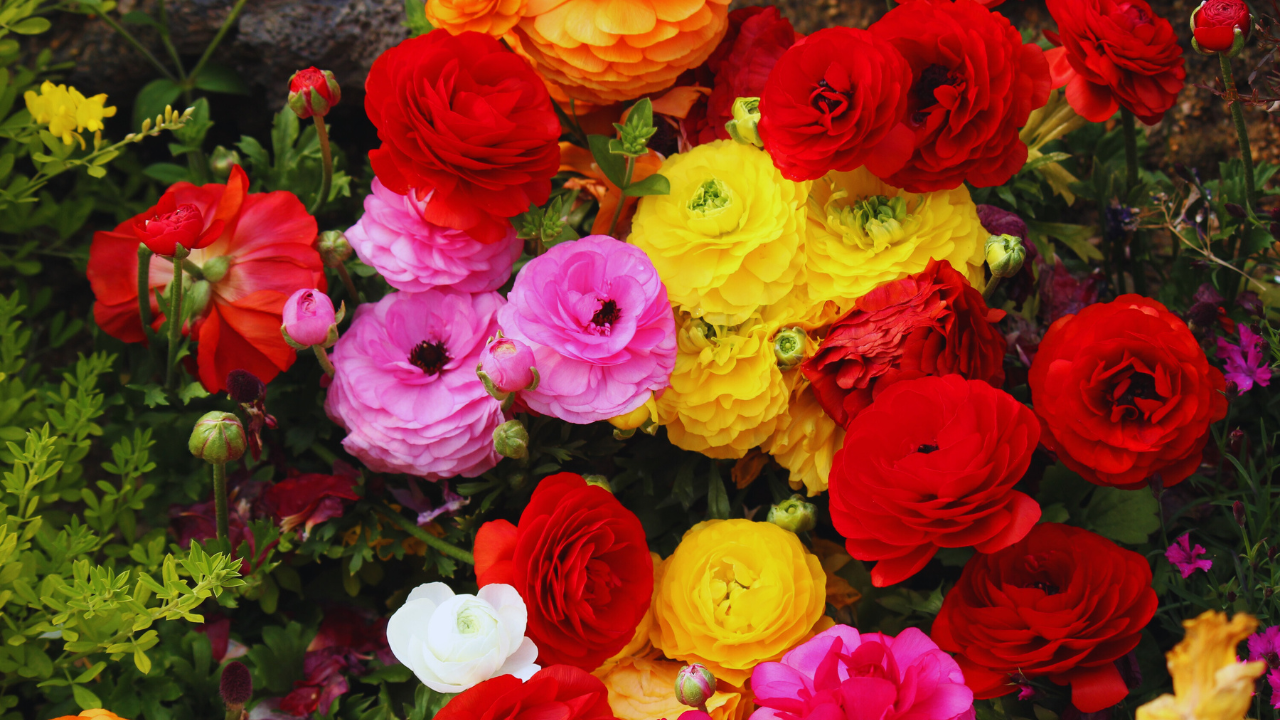
flower

What to explore

The event is best enjoyed at a relaxed pace. The most likely segments to attract the most interest are: Flower tunnel walk: A breathtaking tunnel fully covered with flower installations, making it one of the most captured spots in the venue.Herbal and Medicinal Plants Zone: A well-informed section in Ayurvedic herbs, medicinal plants is moving with some general information on their everyday use.DIY gardening area: This will be an area where anyone, irrespective of age from children to adults, can try to make their mini-gardens.Workshops and demonstrations include composting, sustainable gardening methods, caring for plants, and how to care for bonsai.The items that an organic market stand will sell include plants, seed products, gardening pots, gardening tools, and organic food.Food and beverage vendors: healthy food, light food, flower-themed food, etc.

Emphasis on the theme of sustainable living

The essence of the Noida Flower Festival remains sustainability. There are sections dedicated to practical ideas for green living for urban homes and apartments. Simple, realistic ways of water conservation, balcony and terrace gardening, composting at home, and growing plants in space constraints – all these concepts have been designed to fit into the city lifestyle.


Source link

H-1B visa under threat: US lawmaker introduces EXILE Act; what it means for Indian applicants |


H-1B visa under threat: US lawmaker introduces EXILE Act; what it means for Indian applicants

Greg Steube, a Republican congressman representing Florida’s 17th Congressional District, has introduced legislation seeking to eliminate the H-1B visa programme altogether. As per the press release, dated February 9, Steube proposed the Ending Exploitative Imported Labor Exemptions (EXILE) Act, a bill that would amend the Immigration and Nationality Act to terminate the H-1B category.

The H-1B visa currently allows US employers to hire foreign workers in specialty occupations, particularly in fields, such as technology, engineering, healthcare and finance.

What the EXILE Act proposes

According to Steube’s office, the EXILE Act would amend Section 214(g)(1)(A) of the Immigration and Nationality Act to reduce the number of H-1B visas to zero beginning in fiscal year 2027 and for every year thereafter. If enacted, US employers would no longer be able to submit new H-1B petitions once the cap is eliminated. The proposal calls for a complete termination of the programme rather than a phased reduction. In a statement, Steube argued that prioritising foreign labour over American workers undermines national interests and economic opportunity for US citizens. He said, “Our workers and young people continue to be displaced and disenfranchised by the H-1B visa program that awards corporations and foreign competitors at the expense of our workforce. We cannot preserve the American dream for our children while forfeiting their share to non-citizens. That is why I am introducing the EXILE Act to put working Americans first again.”Read more: The island that is so full of venomous snakes that humans can barely visit
Concerns cited by supporters of the bill

Steube’s office stated that more than 80% of H-1B visa recipients are Indian or Chinese nationals and that employers often favour younger workers. The bill also references several examples that, according to the congressman, demonstrate how the H-1B programme has disadvantaged American workers. These include claims that: More than 10,000 US physicians were unable to access residency programmes while over 5,000 foreign-born doctors entered under visa provisions. Over 16,000 employees at Microsoft were displaced following the approval of more than 9,000 H-1B visas in 2025. FedEx’s use of H-1B visas resulted in the closure of more than 100 US facilities. Disney laid off 250 employees in 2015 and replaced them with foreign workers through the programme. Southern California Edison terminated 540 workers in 2014 and replaced them with workers employed by outsourcing firms using H-1B visas.Read more: Heartwarming! Foreiger tourist caught on camera silently copying Indian performing rituals at the bank of Ganga in Rishikesh These examples have been cited by supporters of stricter immigration controls as evidence of domestic job displacement. Critics of such claims, however, have historically argued that the H-1B programme is designed to fill specialised skill shortages and that companies must meet regulatory wage and qualification requirements.

What it could mean for Indian nationals

H-1b VISA

For Indian professionals, the H-1B visa has long been one of the primary pathways to working and living in the United States. Indian nationals consistently form the largest share of H-1B recipients, particularly in the technology sector. If the EXILE Act passes into law, then this option would be effectively closed off from FY2027 onwards. While the US companies would have to explore other visa options, prospective applicants from countries such as India would have significantly fewer chances to work in the USA.At present, the bill has been introduced but would need to pass both chambers of Congress and be signed into law to take effect. The H-1B programme remains active under current law.The proposal adds to the ongoing debate in the United States over skilled immigration, labour markets and the balance between domestic workforce protection and global talent recruitment.


Source link

Delhi luxury hotels hike tariffs to Rs 20 lakh as Sam Altman, Jensen Huang, and other world leaders to attend India AI Summit 2026 |


Delhi luxury hotels hike tariffs to Rs 20 lakh as Sam Altman, Jensen Huang, and other world leaders to attend India AI Summit 2026

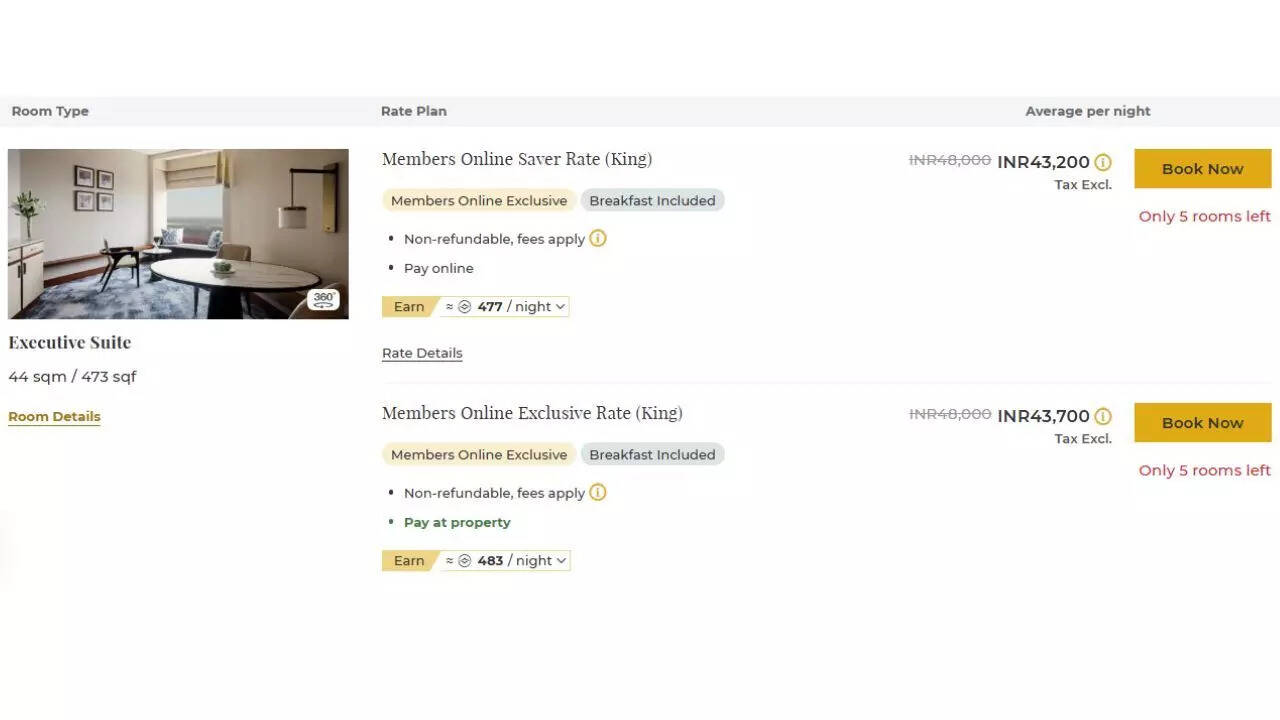
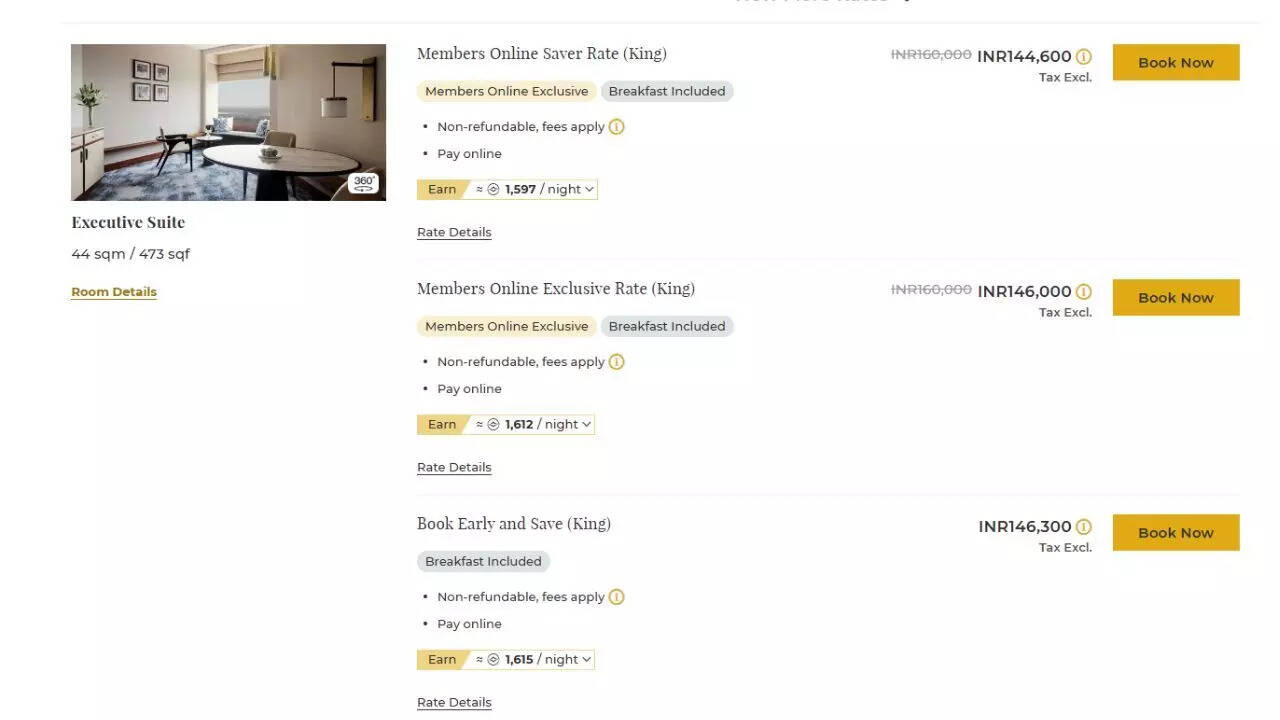
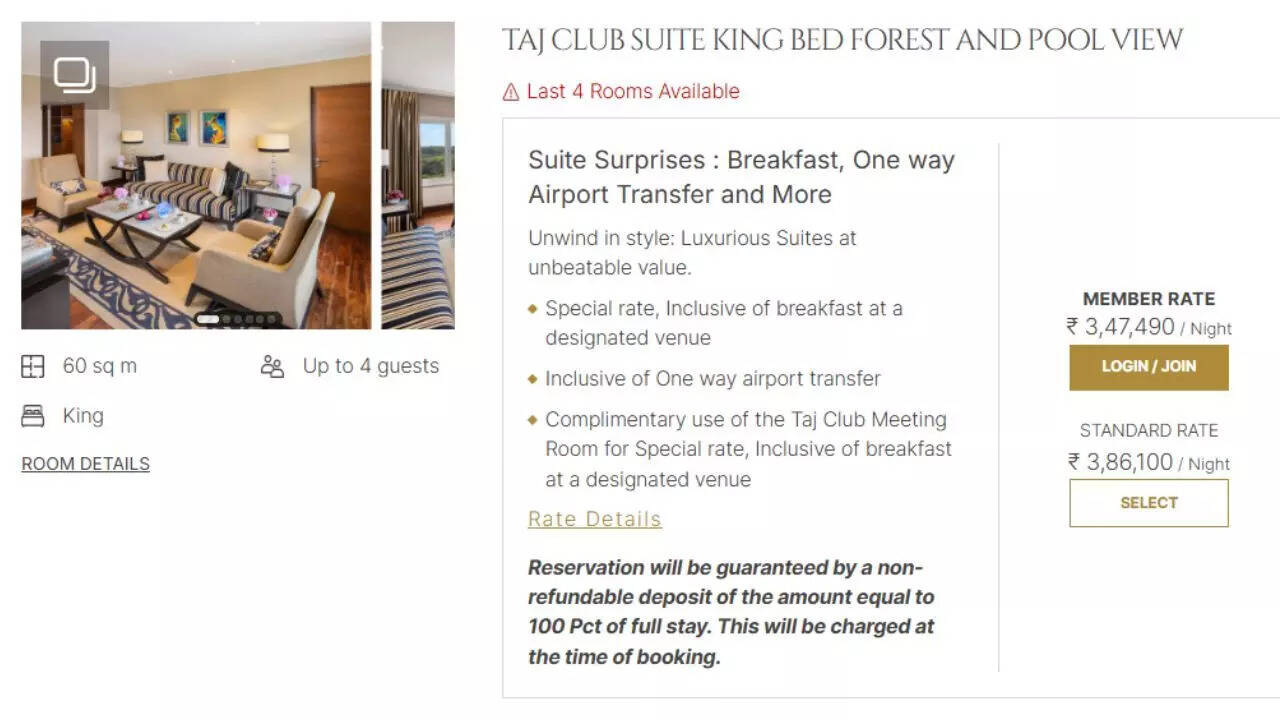
New Delhi is buzzing as it prepares for the India AI Summit 2026. The city is already feeling the effects, with people from all over, including government officials, tech experts, researchers, and business leaders, expected to arrive. AI is now part of almost everything, from government decisions to business strategies, which is putting India in the global spotlight. Beyond the meetings and speeches, hotels are under pressure. Rooms close to major venues and busy areas are filling up quickly, and prices are rising almost daily. Many places are nearly full as delegates finalise their travel plans, leaving little room for last-minute bookings.

India AI Summit 2026: Dates, venue, and what to expect

The summit will be held at Bharat Mandapam, right in central New Delhi, from February 16 to 20, 2026. The main discussions will focus on how countries handle AI, the risks it brings, its impact on jobs, and how it can be used responsibly. Thousands of delegates are expected to attend, and hotels nearby have already raised their prices, affecting both business travellers and tourists.

India AI Summit 2026: Luxury hotel prices surge with global guests arrival

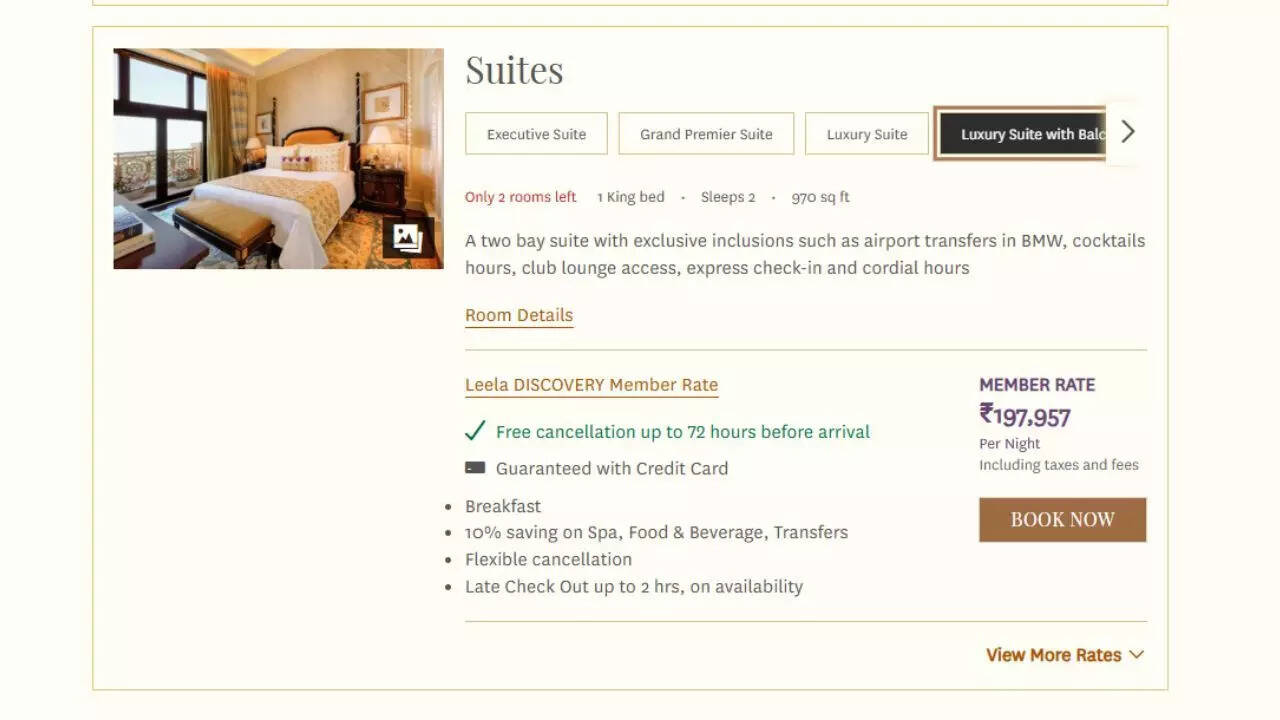
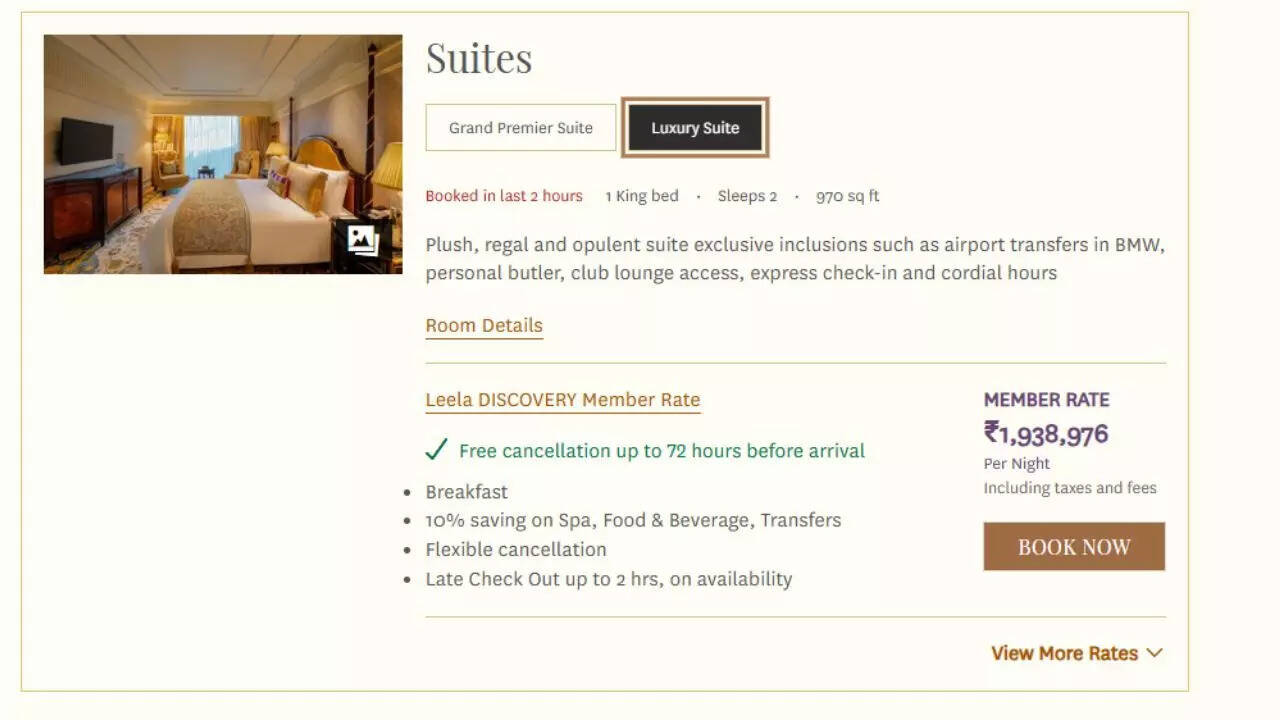
The Leela Palace New Delhi

The Leela Palace in Chanakyapuri is no stranger to diplomats. But during the AI summit, with delegations arriving from across the world, room prices have jumped quickly. The location plays a big role.

The Leela Palace New Delhi

Official website

The Leela Palace New Delhi

Official website

The Oberoi New Delhi

The Oberoi has always been about quiet comfort rather than noise or show. That’s part of its appeal for diplomats. As the AI summit nears, though, the calm comes at a much higher cost. Located near central Delhi, the hotel offers easy access to meeting venues and government offices.

The Oberoi New Delhi

Official Website

The Oberoi New Delhi

Official website

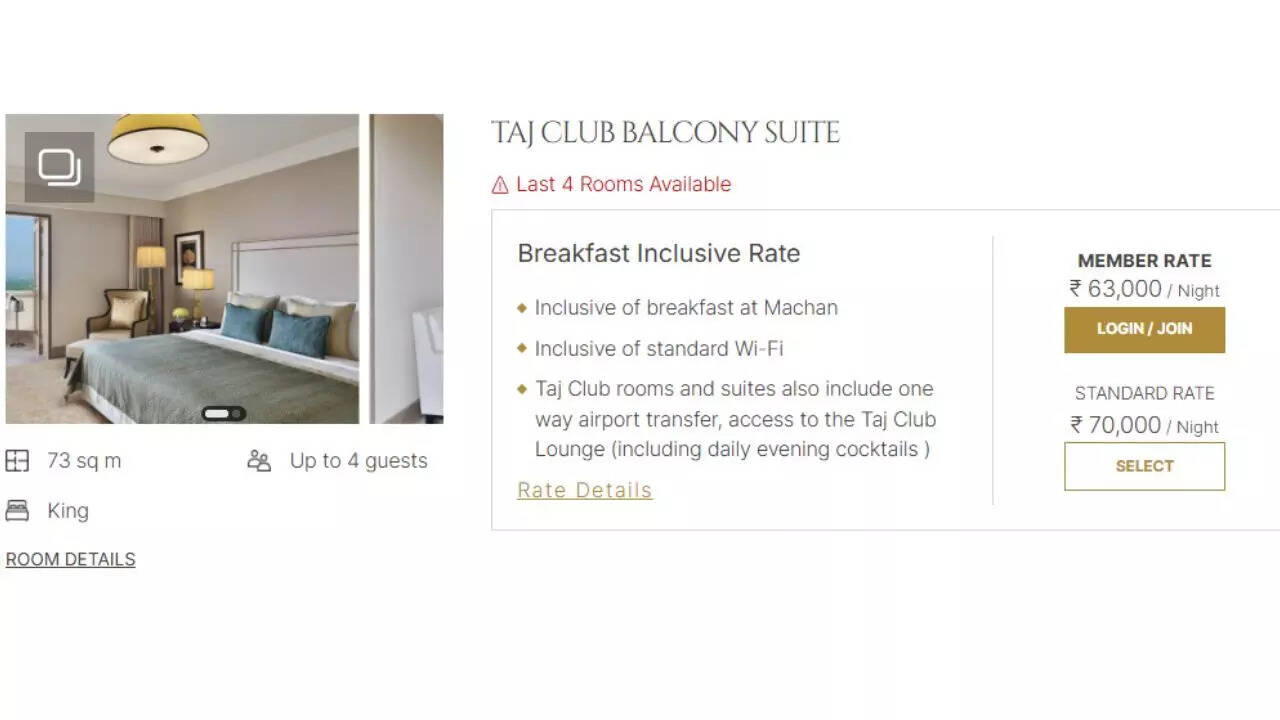
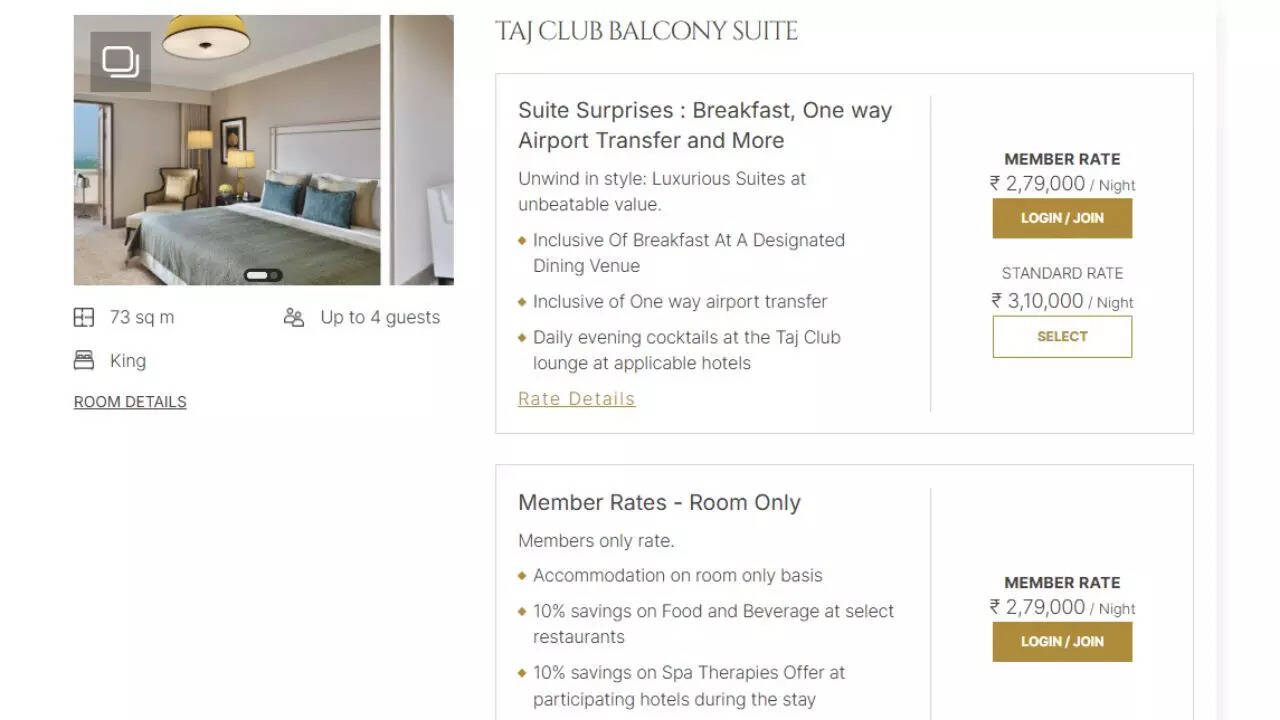
Taj Mahal, New Delhi

Facing the greenery of Lodi Gardens, the Taj Mahal Hotel has long been a familiar stop for visiting dignitaries. The AI summit has pushed demand up, and prices have gone with it. Its central location makes moving between meetings simpler, which diplomats tend to value.

Taj Mahal, New Delhi

Official website

Taj Mahal, New Delhi

Official website

ITC Maurya, New Delhi

ITC Maurya has hosted top officials and leaders for many years, so a busy summit isn’t new. This time, with the AI event, room prices have gone up noticeably. The hotel’s location near diplomatic areas makes it convenient, especially when schedules are packed. On top of that, its security and ability to handle official visits make it a preferred choice for many delegates.

ITC Maurya, New Delhi

Official website

ITC Maurya, New Delhi

Official website

JW Marriott Hotel New Delhi Aerocity

The JW Marriott at Aerocity has become popular with summit delegates arriving on tight schedules. Its closeness to the airport is a major factor and as AI summit traffic builds, prices have risen sharply.

JW Marriott Hotel New Delhi Aerocity

Official website

JW Marriott Hotel New Delhi Aerocity

Official website

Shangri-La Eros New Delhi

Shangri-La Eros offers some distance from the city rush while still staying central. That balance has made it appealing during the AI summit. With diplomats trying to avoid long travel times, bookings have picked up and prices have followed.

Shangri-La Eros New Delhi

Official website

Shangri-La Eros New Delhi

Official website

Taj Palace, New Delhi

Taj Palace is often chosen by larger delegations, and the AI summit has reinforced that trend. Located near Chanakyapuri, it offers space and security, both important for official stays. Prices have risen, but guests say it’s less about luxury and more about timing. When Delhi hosts global diplomacy, rates rarely stay calm for long.

Taj Palace, New Delhi

Official website

Taj Palace, New Delhi

Official website


Source link

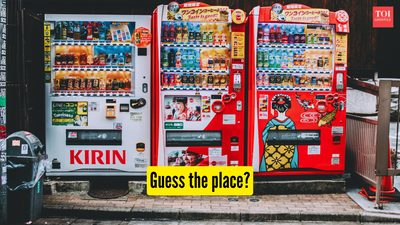
Guess the place: It has vending machines selling everything from eggs to umbrellas |


Guess the place: It has vending machines selling everything from eggs to umbrellas

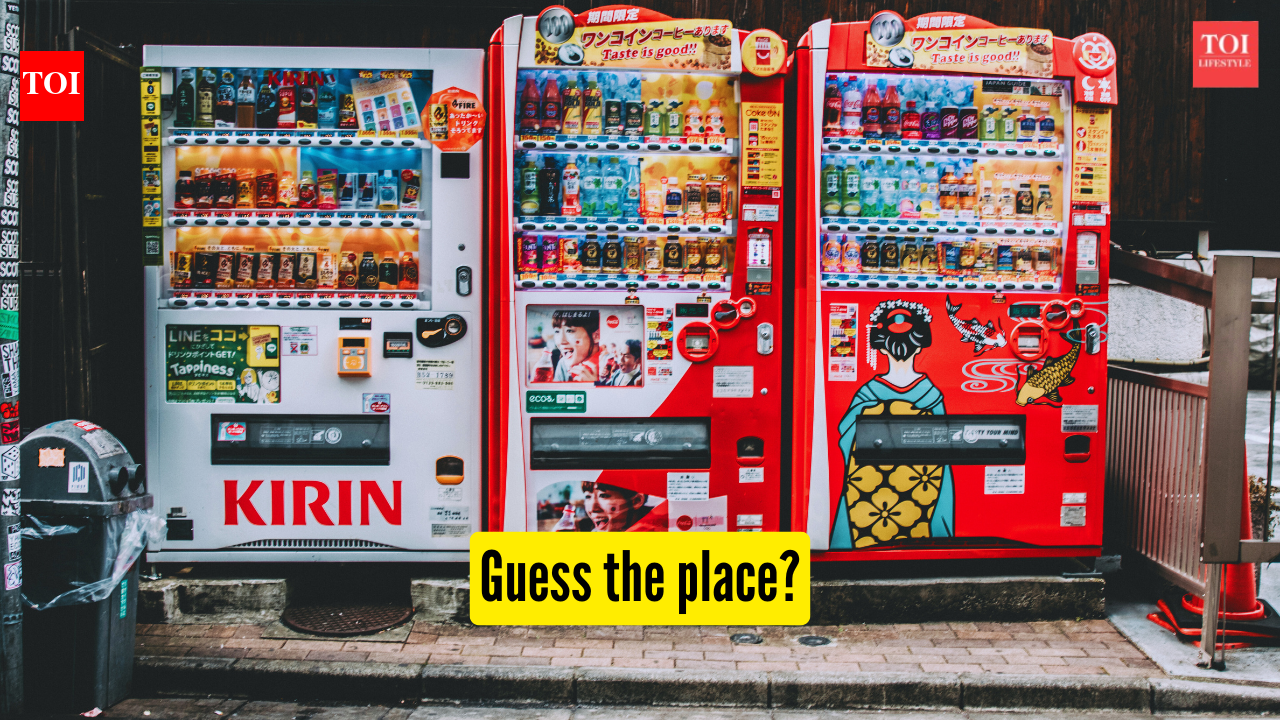
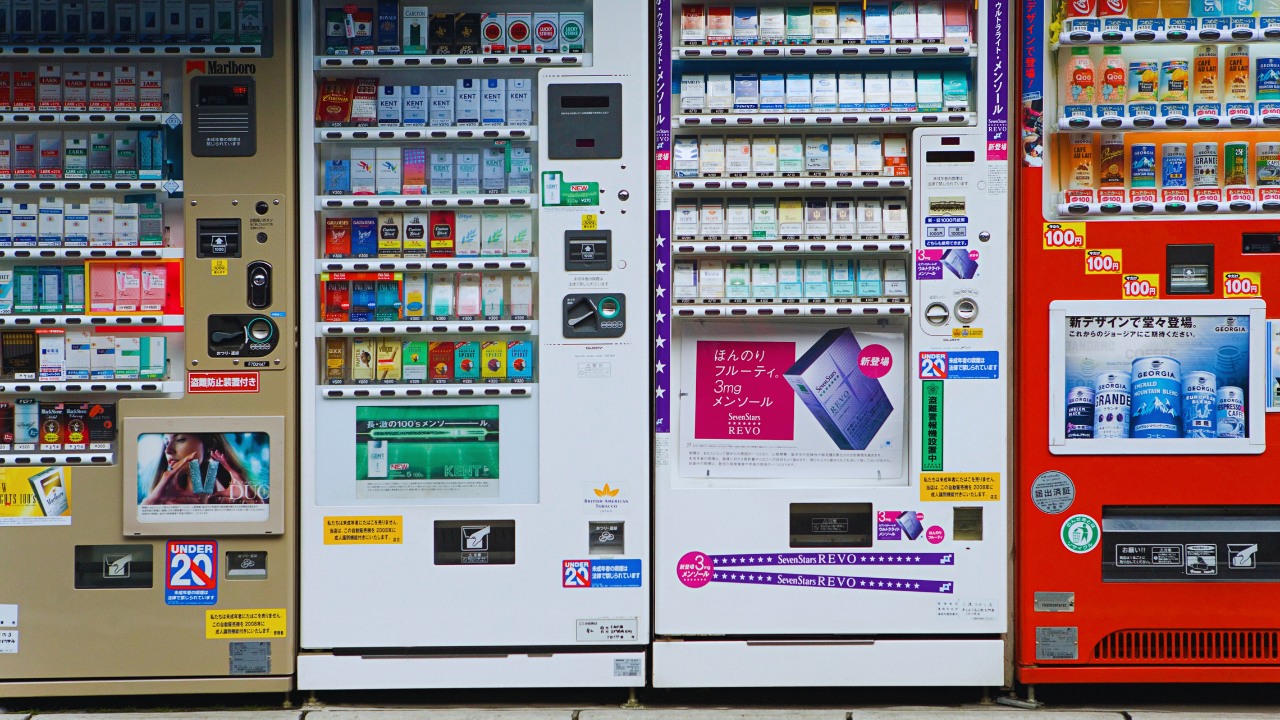
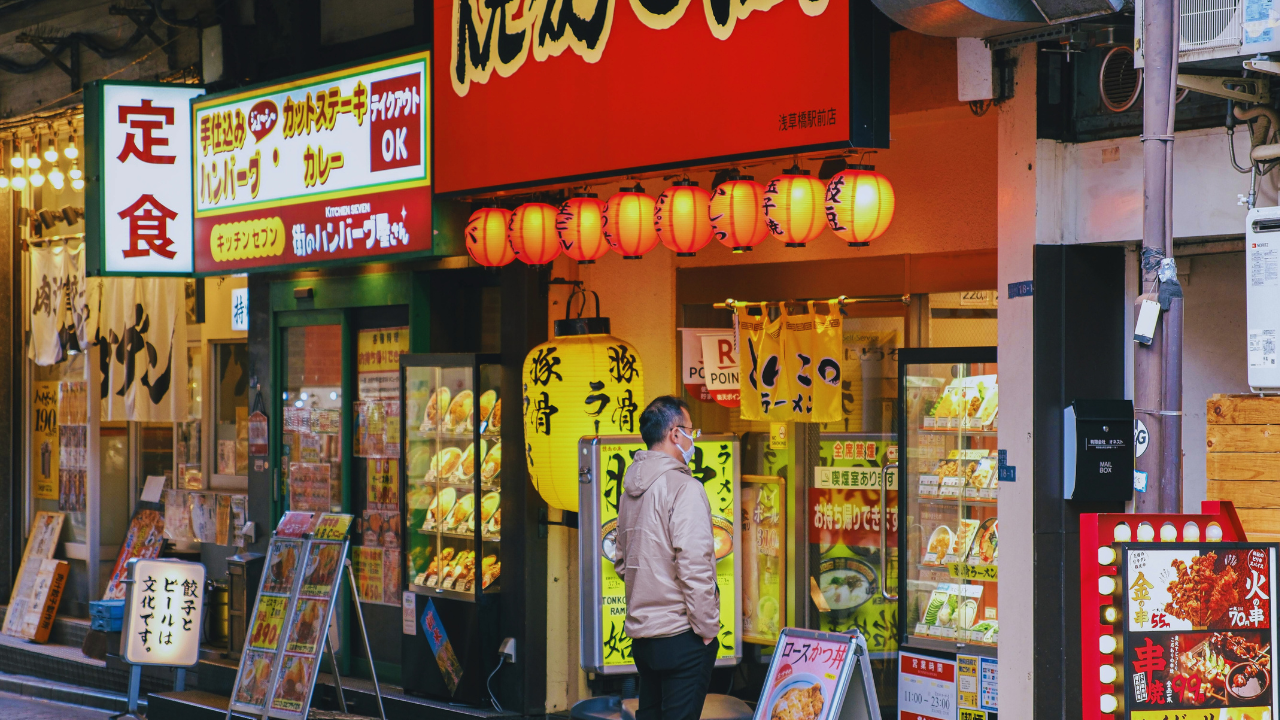
Airports, train stations, and street corners around the world have vending machines, but they usually stop at chips and cold drinks. But, this country does this very differently and takes it up to the next lever. In short, they go much further. Here, vending machines appear in the middle of crowded cities, quiet rural roads, and almost everywhere where you can’t even imagine—and what they sell can be genuinely surprising. From fresh eggs and hot meals to umbrellas and collectibles, Japan has turned vending machines into an everyday curiosity.

A country powered by vending machines

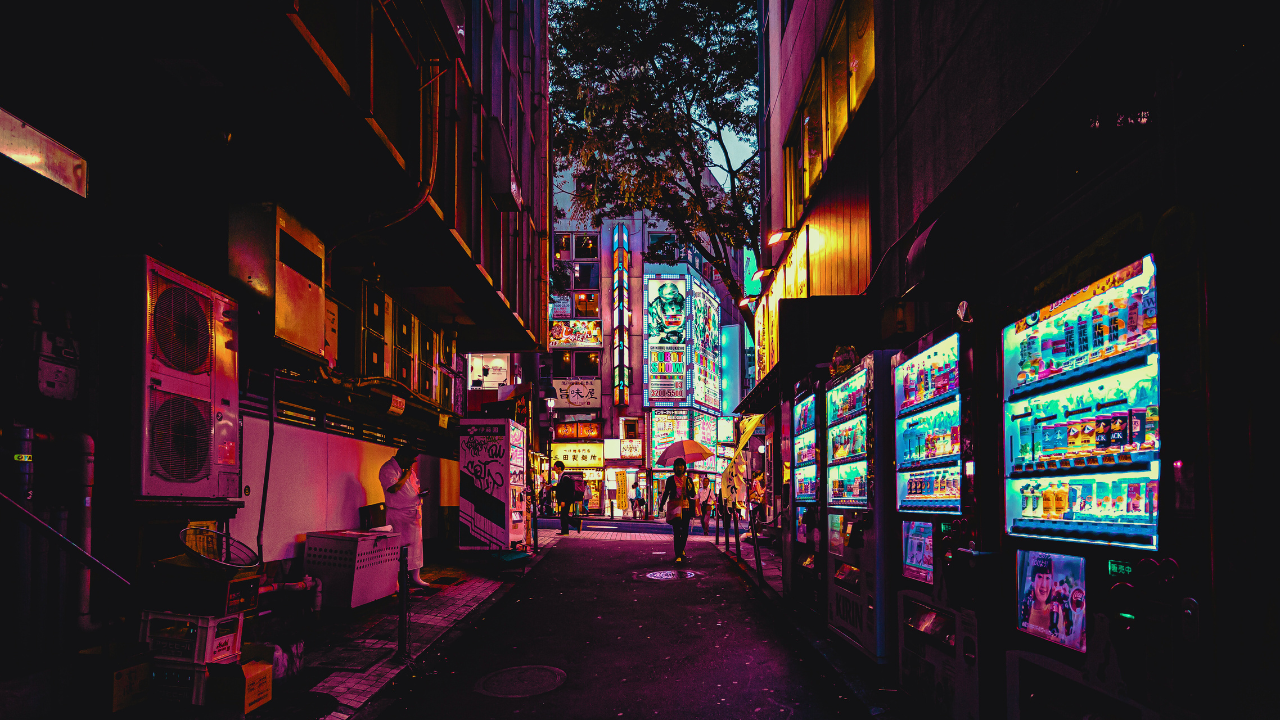
With an estimated four million vending machines nationwide, Japan has one of the highest machine-to-people ratios in the world. They are so deeply woven into daily life that you might often come across them where you least expect them, and sometimes, what’s inside is far from ordinary.

vending machine

Drinks, but not just cold cans

Most machines do sell beverages, but even the basics feel elevated. Hot and cold canned coffee, tea, and soup are common, and machines adjust their offerings based on the weather. Brands such as Kirin, Asahi, and DyDo operate machines that shift inventory with the seasons, serving warm drinks in winter and chilled ones in summer.Alcohol also makes an appearance. In certain neighbourhoods and rural areas, vending machines dispense beer, sake, shochu, and chu-hai cocktails. Some require age verification through a TASPO card, reflecting Japan’s strict alcohol regulations. Read more: This Karnataka village found buried gold during construction—but it’s not a treasure. Here’s why

Full meals at the press of a button

Japanese food vending machines do not stop at vending treats such as snacks. They can be used to heat up meals like soba noodles, curry dishes, rice meals, hamburgers, among others. Some can be found in Gunma, which have remained operational since the 1980s. New ones are equipped with advanced equipment.Cup noodle vending machines by Nissin can frequently be seen in train stations as well as dormitory rooms. Dessert vending machines can provide customers with jarred cakes, mochis, canned bread, as well as ice cream. This can especially be seen in areas such as Harajuku and Shibuya, where appearance is just as important as taste.

vending machine

Eggs, bananas, and bottled broth

Fresh produce is where Japan’s vending machines become truly unexpected. Bananas are sold daily from machines inside Shibuya Station, stocked by Dole Japan. In rural areas, simple vending huts sell fresh eggs and rice around the clock, often operated directly by local farmers.Some machines take novelty further. Dashidouraku sells bottled dashi broth containing a whole flying fish inside the bottle. Takeo Tokyo operates insect vending machines offering edible crickets and beetles, marketed as protein-rich snacks.

Built for emergencies

Japan’s vending machines are also used during disaster situations. In several districts across Hyogo Prefecture, for instance, vending machines are equipped with a function that unlocks during disasters, providing free food and drink items near the shelters. Others are equipped to function during power outages, utilizing solar panels to provide services.Read more: This traveller spent 13 days in Afghanistan and says online narratives miss the truth; challenges the misconception that women can’t travel there safely

Anime, souvenirs, and surprises

In Akihabara and other areas dedicated to pop culture, vending machines are used to sell anime-themed products, capsule machines, mystery boxes, and other collectibles. Gachapon machines are abundant in entire buildings. They sell all sorts of things, such as figurines and enamel pins.Tourist spots are placed with these machines carrying local specialties such as momiji manju from Hiroshima, jingisukan from Hokkaido, matcha sweets from Kyoto, and street food-flavored snacks from Osaka. Even major transport hubs are now home to souvenir vending machines for the busy tourist.

Umbrellas, shirts, and commuter fixes

Vending machines also cater to daily emergencies. Face masks, toothbrush kits, deodorant, socks, neckties, and dress shirts are commonly available in business districts and transport hubs. During the rainy season, umbrella vending machines appear in select locations, offering quick relief when the weather turns.

Cashless, convenient, and everywhere

vending machine

Although older machines or machines in rural areas still offer coin and note options, modern machines in cities like Tokyo offer IC card systems like Suica and PASMO, credit card systems, and mobile payment systems. The machines are user-friendly due to the availability of English language options and the convenience of using credit cards.One might think little of vending machines, but they say a great deal about Japan—who values convenience, dependability, and ingenuity above all, sometimes serving up an umbrella for sale or a meal or a tale you weren’t expecting.


Source link

7 buildings in Dubai that are architectural marvels


Dubai Opera reflects contemporary elegance with a design inspired by the traditional Arabian dhow boat. Situated in Downtown Dubai, the venue hosts concerts, theatre, and cultural performances in a transformable interior space. Its architecture blends cultural heritage with modern engineering, making it a prominent artistic landmark within the city’s urban core.

Dubai is a standout example of how visionary planning and design can change and redefine a city. Among these seven structures, each represents something unique in innovation, whether it be height, luxury, sustainability, or symbolism. These structures represent Dubai’s transformation to an architectural and tourism hub of creativity to reinvent what is possible in urban design.

Image Credit: Canva


Source link

5 ways to help a partner who is dealing with depression


Sometimes, the greatest gift you can give to your partner is to simply listen without judging. Your silence and patience can help your partner open up about their darkness to you. Instead, say, “I’m here, tell me more,” and let them vent. Nod, hold their hand, validate feelings: “That sounds exhausting – I hate that for you.” But, avoid toxic positivity; it’s dismissive. Create space weekly – no phones, cozy tea – and follow their lead. This builds intimacy, reminding them they’re not alone in the shadows.


Source link

What attracts snakes to homes and gardens, and what are their hiding spots |


What attracts snakes to homes and gardens, and what are their hiding spots
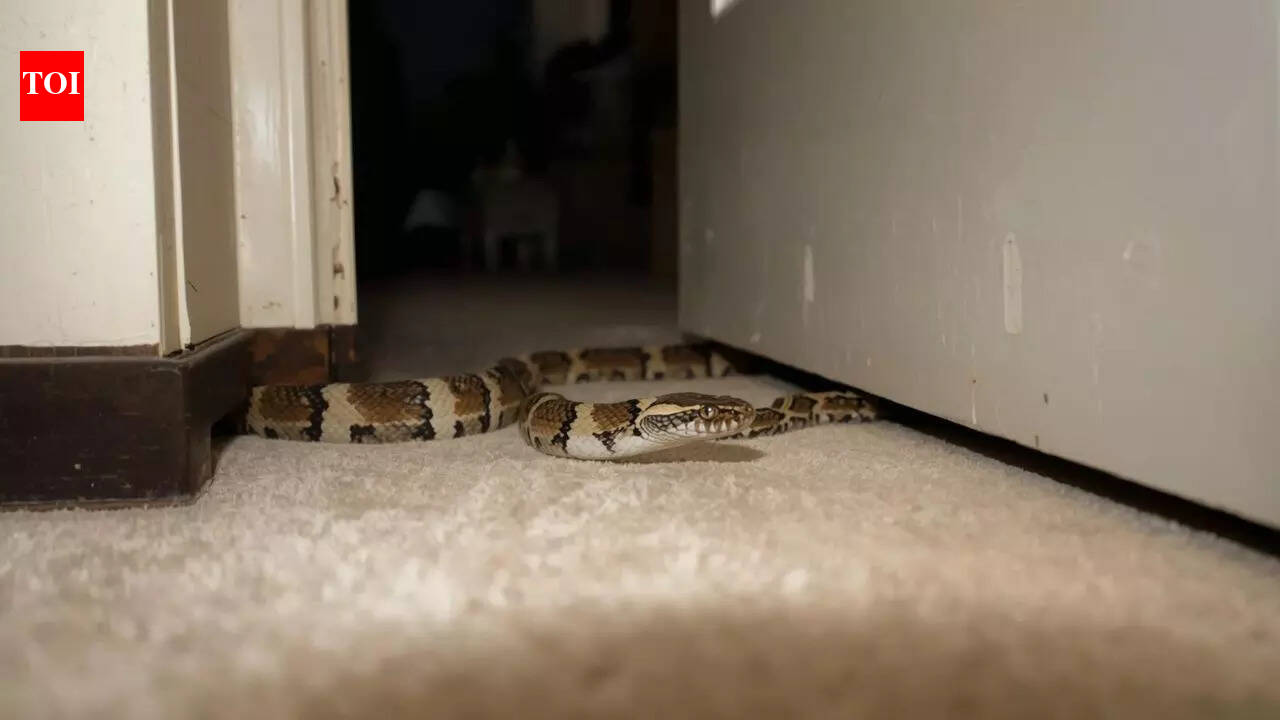
Snakes hiding spots in homes

Snakes are among the most misunderstood animals in human surroundings. For many people, the fear begins not with an actual encounter, but with the uncertainty of where a snake could be hiding and why it might appear near a home at all. In reality, snakes do not seek out humans. They are quiet and careful animals that spend most of their lives trying to stay out of sight and save energy. But snake sightings are becoming more common near homes, gardens, construction sites, and farms in cities, towns, and rural areas.This rise in encounters is often linked to changing landscapes, seasonal weather patterns, and the availability of shelter and food. Snakes respond strongly to temperature. Extreme heat and cold influence where they rest, hunt, and hide. Human environments unintentionally provide many of the conditions snakes look for, such as shade, moisture, warmth, and small prey like rodents and frogs.Understanding where snakes prefer to take shelter, how weather affects their movement, and what attracts them to gardens can help reduce surprise encounters. It also helps people do things that will keep them safe and working. Families can reduce the risks and let snakes stay in the ecosystem without any problems by learning how they act instead of being afraid of them.

The most common places snakes like to hide

Snakes like places where they can hide from predators, the temperature stays the same, and they can easily get to food. They don’t stay in open spaces for very long. They stay hidden by using both natural and man-made cover.Rock piles, thick bushes, tall grass, fallen logs, wood stacks, debris piles, and abandoned burrows made by rodents are all common places to hide. Snakes can hide in urban and semi-urban areas under concrete slabs, in drains, under stairs, or along boundary walls that have cracks and gaps.The weather is a big factor in these choices. When it’s hot outside, snakes look for cooler places to stay so they don’t get too hot. Preferred shelters include underground burrows, shaded corners of gardens, compost pits, and places near water sources. Basements, crawl spaces, garages, and areas under floors stay cooler than the ground outside and may attract snakes in the summer.In colder weather, the shelter pattern changes. Snakes move toward insulated spaces that protect them from falling temperatures. They retreat deeper underground into burrows, rock crevices, gaps under foundations, and unused drainage lines. Brumation is a time when many species stop moving around and stay hidden for weeks or months until things get better. These shelters help them stay alive during cold spells without having to move around all the time.

Why snakes seek shelter in human spaces

Snakes do not enter homes or gardens by intention. They are drawn in by conditions that match their basic survival needs.One of the main reasons is the presence of food. Rodents, lizards, frogs, and insects thrive near human settlements, especially where waste is poorly managed or vegetation is overgrown. Snakes follow this prey.Shelter is another factor. Construction activity, deforestation, and land clearing destroy natural hiding spots. As a result, snakes adapt by using alternative shelters such as sheds, storage areas, unused rooms, and stacked materials near houses.Changes in temperature throughout the year also affect movement. When it’s hot outside, snakes go to places that are shady and wet. When it’s cold outside, they move toward warmer, more protected areas. Homes, garages, and gardens often provide both, making them safe places to stay during bad weather without meaning to.The amount of water available is also important. Leaking pipes, garden ponds, water tanks, and open drains draw in both prey animals and snakes, especially when it’s dry.

Common places where snakes like to hide

Piles of wood or debris

  • Stacked firewood, lumber, broken boards or unused bricks provide perfect hiding spots. The spaces between objects trap heat and offer shade at the same time. Snakes also have a ready food supply in these piles, because rodents use the same hideouts. This makes wood or debris piles a dual attraction.

Compost heaps and leaf litter

  • Compost piles and thick layers of leaf litter create warm and moist conditions that are ideal for snakes. The decomposition process warms the inside of a compost heap, and insects and small animals are often present as well. This makes it a welcoming environment for snakes.

Long grass and dense vegetation

  • Tall grass, ground covers and dense plantings hide snakes from view and provide shade. In late summer and early autumn, these areas can become warmer than the surrounding spaces, especially if the ground is covered by plants. Snakes will use this cover to shelter during the heat of the day and hunt for food.

Under rocks and garden containers

  • Loose stones and potted plants that are not moved often create small, cool shelters. When stones are stacked or pots are set close to the soil, a cool gap is created that snakes can slip into. On hot days, the temperature under rocks and heavy pots stays lower than the surrounding ground, which attracts snakes.

Hollow spaces in walls and foundations

  • Gaps in house foundations, stone borders and retaining walls provide safe passage routes for snakes. They allow snakes to move unseen and are especially attractive at night. If gaps are large enough for a small animal to squeeze through, it is usually large enough for a snake as well.

Water sources and irrigation systems

  • Snakes need water and are naturally attracted to ponds, bird baths, irrigation channels and leaking pipes. A garden that is watered regularly or that has areas of standing water becomes a draw for frogs, insects and other prey animals. Where prey gathers, snakes follow.

How to snake-proof your home and garden

Snake-proofing does not mean sealing a space completely. It means making it less likely for snakes to come in the first place.Trim your plants and don’t let your lawn get too big. Get rid of piles of trash, extra wood, and building materials. Store firewood off the ground and away from walls.Fill in cracks in walls, floors, and foundations. Put a fine mesh over drains, vents, and other openings that are close to the ground. Make sure the doors fit tightly, and there are no gaps under them.Keep your home clean and keep food waste safe to keep rodents away. Stop water from sitting still and fix leaking pipes. In gardens, cut back on thick ground cover close to the house and keep the edges clear.Extra caution is helpful during bad weather. Check shaded storage areas often in the summer. In the winter, check basements, garages, and crawl spaces that stay warm and don’t get disturbed.

Understanding snake behaviour reduces risk

Snakes are very important for keeping pests under control and the environment in balance. Most snake bites happen when the snake is scared, cornered, or stepped on by accident. People can stay away from those situations if they know where they hide and why they move.Households can greatly cut down on unwanted encounters by taking care of their shelter, food sources, and seasonal risks. Being aware, not afraid, is still the best way to live safely with wildlife.

Herbs you can easily grow in your Kitchen Garden


Source link

5 succulents that bring you good luck and prosperity


In many cultures, houseplants are treated as more than decorative items. These are believed to attract luck, and prosperity. Among these, succulents hold a special place in both Vastu and Feng Shui. Succulents are known for their resilience and longevity and their presence adds to the overall wellbeing and reduces stress along with purifying air.

Bringing succulents into your home isn’t just about beauty or decor. These are also a symbol of resilience, luck and prosperity. While the “good luck” they bring isn’t guaranteed, these plants can improve the environment and boost wellbeing. With proper care and right placement (according to traditions like Feng Shui or Vastu), these plants can bring positive energy to your space. Let’s have a look at five succulents that are believed to bring prosperity and good luck.

(Canva)


Source link