
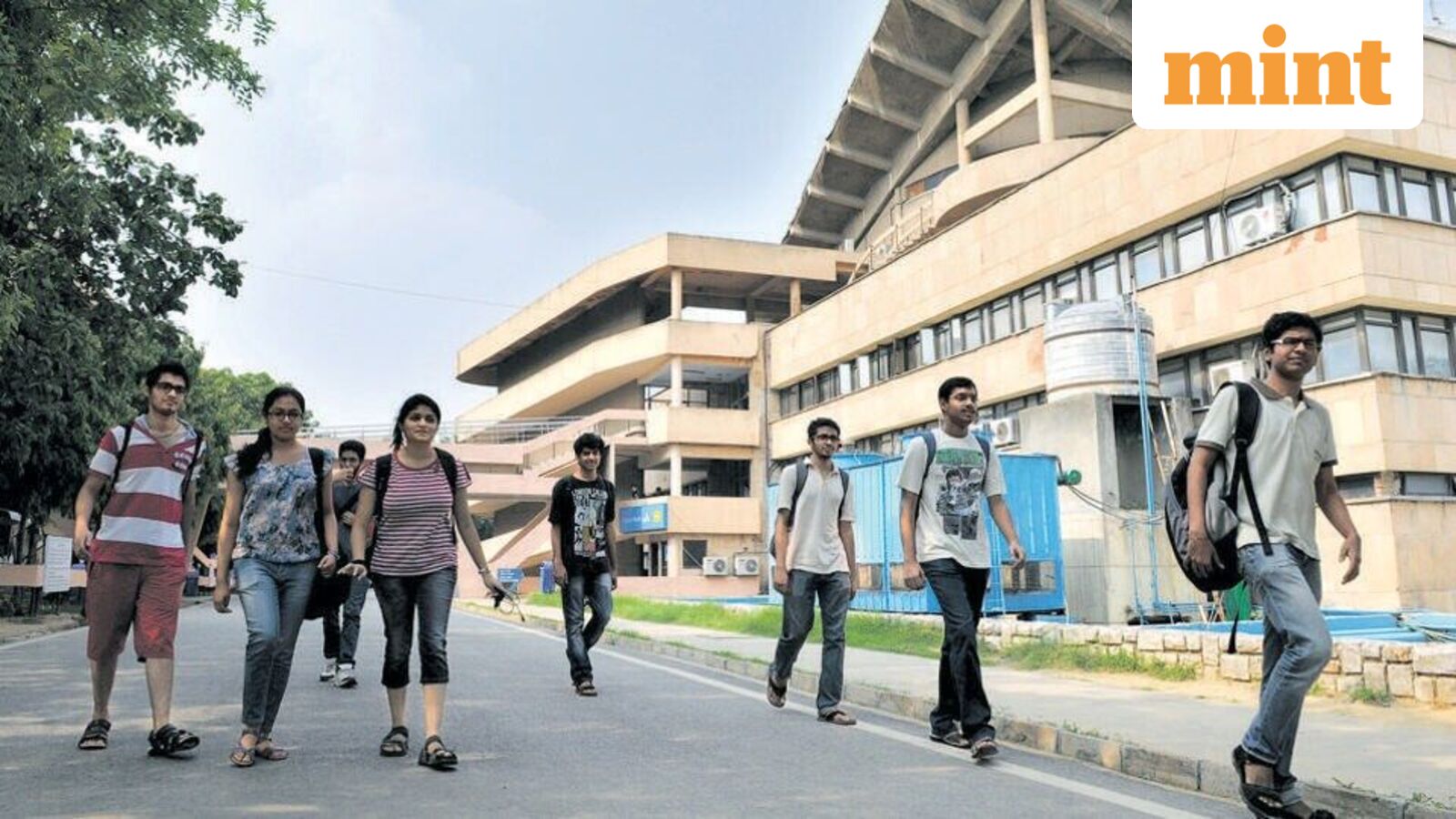

Candidates using AI? Not on IIT campuses as placement season gets stricter
Ahead of the placements starting on 1 December, IITs have established testing venues with biometric entry and restricted Wi-Fi networks to block AI tools in online tests, multiple placement coordinators at IITs said. Companies are also deploying sophisticated software to monitor and prevent cheating behaviours such as unauthorized internet searches and tab switching.
Organizations looking to prevent AI use primarily deploy authentication tech and firewalls, said Jaspreet Singh, chief revenue officer at Grant Thornton Bharat who specializes in AI and tech. When a candidate connects to a centralized system, the organization will block the usage of certain websites and applications.
“This is being done at IITs through the common WiFi they use to give examinations on campus. Further, proctoring and motion-sensing detects your movements and makes sure you are not switching tabs. Even if students bypass this, there are plagiarism detection software that campuses and recruiters use to ensure that responses submitted by students are original,” Singh said.
For now, recruiters want to build upon students’ foundational knowledge once the employees are onboard, making tech school recruitment distinct from B-schools, where AI is often utilized to test higher-order analytical skills. Some of the Indian Institutes of Management (IIMs) actively increasingly integrate and encourage the use of AI. The rationale for the divergence between IIT and IIM hiring is rooted in the desired output from a tech graduate.
“Recruiters aim to evaluate students based on their raw thinking abilities, rather than their AI capabilities, during the screening phase,” said John Jose, head of the Centre for Career Development at IIT Guwahati and co-convener at the All IITs Placement Committee (AIPC). “They are seeking candidates whose basic concepts are clear, who possess the necessary technical skill set, and who demonstrate sharp logical reasoning.”
However, Singh of Grant Thornton Bharat LLP believes that recruiters should allow the use of AI at campus exams, since it is the most important skill in the market right now and the mechanisms to avoid AI usage aren’t foolproof. “Eventually, students may find their way around it; so, it is better to democratize and allow use of AI for a better assessment of candidates.
A student placement coordinator highlighted that the real pressure test is not about solving an isolated, complex problem, but about speed and performance under time constraints. For example, a typical probability question from a placement test, which a student might be able to solve given ample time, becomes a test of efficiency when dozens of similar questions must be tackled within strict, career-defining time limits. Students, the coordinator admitted, are tempted to use AI not to skip solving problems, but to accelerate the process and finish exams on time.
Alongside, another shift is under way: beyond stellar coding scores and math prowess, the class of 2026 is finding itself increasingly judged on personality, team compatibility, and cultural fit, a move driven by corporate demand for long-term retention and high-performing hires.
The heightened focus on non-technical skills follows last year’s challenging hiring cycle, which saw hundreds of rigorously prepared students fail to secure positions at the end of the placement season at established IITs—including Bombay, Delhi, Guwahati, Kanpur, Kharagpur, Madras, and Roorkee. While a slight uptick in pre-placement offers this year has thinned the candidate pool, the IITs are intensifying efforts to ensure maximum placement success.
Recruiters are moving past the hunt for mere “coding wizards” and “tech geniuses,” shifting their emphasis to team players who demonstrate resilience and commitment. This preference is translating into the widespread use of psychometric and behavioural analyses to identify students with a well-rounded profile.
“Recruiters are broadening their evaluation beyond technical competency to assess if our students are culturally fit for group work,” Jose of IIT Guwahati said. “This involves testing their sensitivity and emotional quotient (EQ) to ensure the employee’s long-term career success within the organization.”
The queries emailed to the IITs mentioned above remained unanswered.
Placement heads confirm that the demand for evaluating these softer competencies has strengthened this year. According to one IIT placement official, approximately 25% more recruiters are insisting on these skills, with major financial institutions like Standard Chartered and HSBC cited as examples of firms employing these assessment methods. Emails sent to both firms remained unanswered.
In response, the IITs are actively investing in bridging the skill gap, engaging management consultants and professional trainers to polish candidates’ interpersonal skills and interview delivery. These professionals also provide crucial guidance to students on assessing whether a prospective company aligns with their career goals, a proactive measure aimed at mitigating costly job hopping and early attrition.
“We have recently hired a new Training and Placement Officer and a Personality Development Trainer to conduct specialized training,” Jose of IIT-Guwahati added. “This is necessary because in the past, our students have generally been exposed only to technical knowledge and not these essential skill-based courses.”
The institutes are also leveraging their extensive alumni networks to host dedicated workshops, talks, and training sessions, helping students prepare for specific roles and organizational cultures within their own companies.
Student placement coordinators also noted the growing interest in extra-curricular activities and sports. One coordinator pointed out that participation in student clubs—ranging from debating and music to robotics and finance—has noticeably increased, driven by the realization that placement evaluations now prioritize holistic development. The current season’s high demand for data analyst and quantitative (quant) finance roles has, in particular, galvanized members of finance clubs to specialize in those domains.
“Employers are investing serious money and time into every campus hire, so if a new recruit becomes disillusioned and quits quickly because they are not a good fit, the organisation loses that investment and the value never really accrues,” commented Hardeep Singh, president at Right Management India, which partners with engineering and management institutes for placement preparation.
Singh said the rigorous process, starting with comprehensive assessments, helps students gain clarity on their true strengths, interests, and fit with potential employers. This ensures they make informed career decisions based on competence and personality rather than succumbing to peer pressure or market trends.
“Once this clarity is achieved, the next phase focuses on thorough placement preparation, including resume crafting, interview coaching, and mock sessions,” Singh of Right Management explained. “Employers increasingly look for candidates who demonstrate a clear purpose and alignment with the role, which enhances their confidence in long-term success and retention.”
In addition to advanced screening, companies are restructuring pay packages to boost retention. Many firms are now implementing a staggered bonus structure, splitting joining bonuses across multiple years. This involves an initial signing bonus, followed by subsequent installments upon the completion of each year, incentivizing new hires to stay longer.