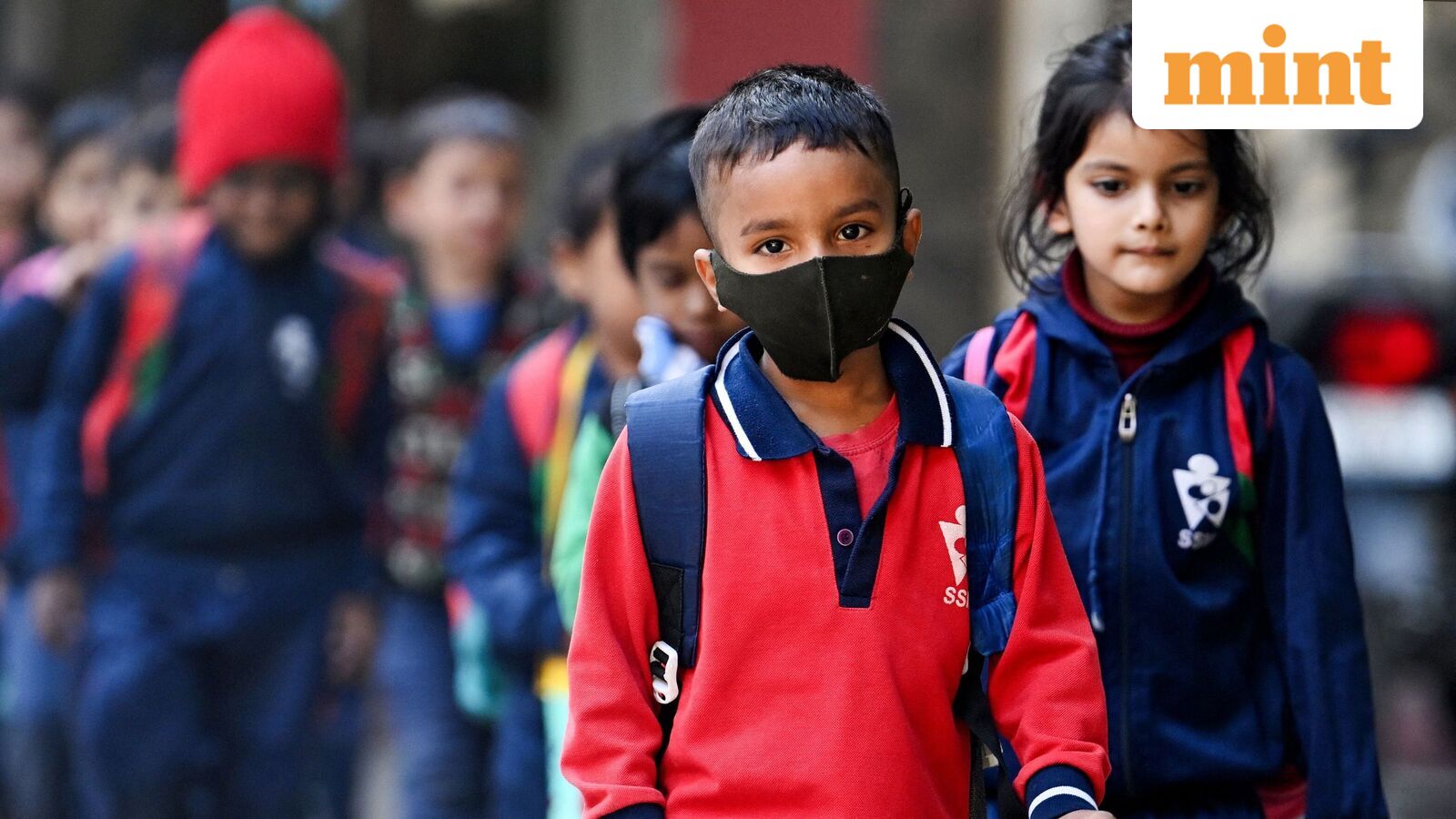
In anticipation of a massive gathering of pilgrims for the current Magh Mela, the Prayagraj district administration on Wednesday declared a holiday for all primary and middle schools until 20 January.
Anil Kumar, the District Basic Education Officer, said that this measure was enacted to account for the enormous crowds arriving for Makar Sankranti and Mauni Amavasya, which will likely necessitate significant traffic diversions and hinder local transportation, as reported by news agency PTI.
He clarified that Classes 1 to 8 are set to shut from 16 to 20 January, though educational sessions will transition to online platforms during this interval to maintain academic progress.
The Magh Mela, an annual religious assembly held at the Sangam and along the Ganga banks, draws millions of spiritual seekers from every corner of the nation.
Current government projections suggest over 10 million devotees will participate in the sacred immersion at the Sangam for Makar Sankranti, with attendance expected to peak on 18 January for Mauni Amavasya, a day viewed as the most spiritual bathing date of the festival.
Authorities have stepped up management strategies to oversee the crowds and guarantee the peaceful execution of these major religious rituals, according to senior officials.
9 lakh devotees take holy dip at Magh Mela on Ekadashi
Marking the spiritual occasion of Ekadashi on Wednesday, a vast gathering of pilgrims converged at Prayagraj’s Sangam Ghat for a ritual immersion during the ongoing Magh Mela. Aerial drone footage from the festival grounds captured thousands of worshippers at the confluence, braving freezing temperatures to perform their sacred ablutions.
Magh Mela Officer Rishi Raj reported that over 9 lakh individuals had already bathed by 6 AM, noting that the full police contingent is currently stationed on-site to manage the crowds.
“Even on the occasion of Ekadashi, many people are taking a bath. By 6 AM, around 9,50,000 people have already taken a bath, and devotees are bathing at all our ghats…Makar Sankranti is tomorrow, but since it’s 14 January, people are still coming to bathe today, and our entire police force is deployed on the spot…and monitoring is being done at all places,” the officer said.
SP Magh Mela Neeraj Pandey said that around 10,000 police personnel have been deployed and surveillance is ongoing to ensure “a safe snaam.”
“Keeping Makar Sankranti in view, the police have made complete arrangements. Around 10,000 police personnel are deployed. 22 PAC, 6 RAF, NDRF, ATS, and civil police personnel are deployed in large numbers. The water police are continuously patrolling… Surveillance is being conducted through drone cameras and CCTV cameras… Full preparations are in place, and everyone is being ensured a safe ‘snaan’,” the SP told ANI.
The second major bathing event of the Magh Mela, the Makar Sankranti snan, is scheduled for 15 January in Prayagraj. Following the successful Paush Purnima bath, which saw over 31 lakh devotees participate, fair organizers are now finalizing arrangements for the upcoming Makar Sankranti rituals.
Security has been significantly bolstered across the site, with specialized UP ATS mobile units conducting patrols to oversee the expansive Mela grounds.
High-frequency trading (HFT) firms, global technology companies and venture-backed startups are expanding recruitment beyond the IITs to secure the top percentile of non-IIT institutions, often at pay levels comparable to IIT campuses. While IITs still dominate in volume and brand, recruiters say the gap at the very top of the talent pool is narrowing.
That change is being driven by a tightening supply of high-calibre engineers, the rising premium on niche skills and a pragmatic reassessment of hiring risk and retention. With placements at older IITs beginning later in the year and competition for top candidates intensifying, employers are moving earlier and casting a wider net—targeting standout performers at NITs and select private universities before the market clears.
“Two students from the batch of 2026 got crore offers exceeding ₹1 crore so far, while six students received a package over ₹70 lakh, and 34 students secured jobs with CTC exceeding ₹50 lakh,” highlighted P Venkata Suresh, head of the Centre for Career Planning and Development at NIT Warangal, one of the country’s oldest NIT.
Alongside the IITs, institutions such as the NITs, Indian Institute of Engineering Science and Technology (IIEST) Shibpur, Vellore Institute of Technology (VIT), Birla Institute of Technology and Science (BITS) and SRM Institute of Science and Technology are also drawing attention from high-paying recruiters.
“Elite quantitative trading institutions like Graviton, Quad eye, and IMC Trading drove the compensation package with niche roles paying over ₹1 crore. Within the Pilani campus itself, there were six offers over ₹1 crore,” said BITS Pilani, in a release on Tuesday.
The institute that has engineering campuses in Pilani, Goa and Hyderabad in India also saw international offers from players such as MEDIATEK (Taiwan) and Toyoda Gosei (Japan).
Queries emailed to other institutes remained unanswered, while NIT Karnataka, Surathkal declined to comment.
“Our engineering hiring approach focuses on skills, problem-solving ability, and a learning mindset, rather than campus labels. For the 2026 cohort, we’ve continued to hire from IITs and BITS, while also building strong pipelines through NITs, IIITs, and other leading institutions,” said Chitbhanu Nagri, senior vice president for people operations at Razorpay.
“We’ve seen strong performance across both IIT and non-IIT hires, underscoring the importance of a consistent and rigorous selection process,” Nagri further said adding that they focus on identifying engineers with strong problem-solving ability, technical curiosity, and the resilience to build at scale, and back that with competitive pay, ownership, and opportunities to work on high-impact problems early in their careers.
Who’s hiring
According to placement team members at some NITs, quantitative analyst firms such as NK Securities, D.E. Shaw and AQR Capital offered compensation in the range of ₹55–75 lakh.
Global technology companies including Apple, Texas Instruments, Atlassian, Nvidia, Nutanix and Oracle were among the top recruiters at many non-IIT campuses due to their high pay packages. Queries emailed to the companies on Monday remained unanswered.
HFTs and quant firms—known for hiring candidates who analyse markets using mathematical and statistical models—have been among the top-paying recruiters at IIT campuses over the past few years, largely unaffected by global economic cycles. Quant researcher roles typically include core engineering profiles and candidates well-versed in artificial intelligence, with a foundational understanding of finance.
Most of these firms also visited IIT campuses, where the final placement process begins as early as September, while older IITs—Madras, Kharagpur, Delhi and Bombay—start in December. To get a head start, many non-IIT institutions begin placements from August onwards.
Pay parity
Established companies such as e-commerce firm Meesho, which went public in December, offered similar packages of around ₹60 lakh across both IIT and non-IIT campuses.
“Companies and startups like Meesho, Harness and Okta, that were established in the last 10–15 years, are paying competitive salaries of over ₹50 lakh, at par with software and tech majors like Oracle and Qualcomm. However, these firms are more picky in the talent they pick and do not hire in high volumes compared to traditional firms,” Suresh of NIT Warangal added.
“Expanding hiring beyond the IITs allows us to tap into a broader pool of high-calibre engineering talent. NITs and similar institutions produce engineers with strong fundamentals and practical skills who can deliver meaningful impact at scale, while also bringing diversity of experience and perspective to our teams,” said Harness in a response to queries sent by Mint. The firm, an AI software delivery platform, hired from BITS Pilani, IIIT Hyderabad, NIT Warangal and NIT Surathkal, apart from the IITs.
“While IIT graduates benefit from a highly rigorous academic environment, we consistently see exceptional talent across a wide range of engineering colleges. Our hiring decisions are driven by individual capability, problem-solving skills and potential, and we have seen engineers from diverse institutions perform and grow exceptionally well,” the company added.
Queries emailed to Okta, an identity and access management company, on Tuesday morning remained unanswered.
Wider net
Education analysts say expanding hiring beyond IITs is a strategic move.
“Once the initial placement phase concludes and the top 15–20% IIT students are off the market, the talent pool shifts. For employers seeking high-caliber talent, Tier 1.5 and Tier 2 institutions become the strategic choice. The top 5% of students at these colleges often rival the top 15–20% of IITians,” said Avantika Tomar, partner at EY-Parthenon India, who tracks the education sector.
The analysts point out that diversifying recruitment beyond the IITs can enhance workplace diversity and lower turnover rates.
“While IIT students possess exceptional technical skills, candidates from other institutions bring specific temperament and soft skills around resourcefulness, result-orientation and adaptability,” said Narayan Ramaswamy, partner at KPMG in India, who leads their education advisory services.
Since companies must invest in internal training regardless of a recruit’s background, the initial technical edge of an IIT education often fades over time. He also described IIT graduates as “riskier hires” given their strong market demand, which can lead to job-hopping within two years. Hiring from a broader set of campuses, he said, often delivers greater long-term retention.
“Our experience shows that talent from multiple institutions performs at par when given the right platform and resources,” said Faiz Shakir, vice president and managing director for India and ASEAN at cloud computing firm Nutanix. “Exceptional talent is not limited to a single set of institutions—it is spread across multiple top-tier colleges.”
Shakir said the focus for employers has shifted to identifying talent early and providing the right learning opportunities. “We are building a robust talent attraction engine for long-term hiring, and that means engaging deeply with a curated set of leading colleges across India, including the NITs,” he said.
Nutanix has hired about 150 interns from 30 premier institutions across the country—including IITs, NITs and other top-tier engineering colleges—and has offered pre-placement offers (PPOs) to a portion of them, Shakir added.
Deloitte India echoed a similar shift.
“India’s young talent can be found far beyond its metros and not only in Tier 1 colleges. As our business scales, we have been actively widening the aperture, hiring from every deserving campus for skills across AI, cloud, data and analytics, cyber, full stack, ERP, testing and emerging digital technologies,” said Deepti Sagar, chief people and experience officer at Deloitte India.
She added that the firm partners with colleges and government-backed skill institutes in Bhubaneswar, Tripura and Chennai to onboard high-potential talent through one of its flagship programmes.
Macro context
A placement team coordinator at one NIT said the median salary has risen 15–20% compared with the batch of 2025.
“Earlier, the median salary for our NIT was around ₹15 lakh, now it is around ₹17.5 lakh,” the student said, requesting anonymity.
With the Reserve Bank of India projecting inflation to fall to 2% for FY26, these double-digit placement hikes align with the 14–15% increases seen at entry-level wages. They also help offset the impact of new labour codes, ensuring purchasing power remains intact despite higher statutory deductions and social security costs.
Placements at IITs remain a barometer for how campus hiring will shape up nationwide. While business school placements typically begin in February–March, engineering colleges offer an early signal of India Inc.’s hiring appetite.
Over the past few years, IITs have attracted a growing number of artificial intelligence firms after the post-pandemic hiring frenzy cooled amid global uncertainty. Last year, however, campus recruitment picked up again—bringing relief to India’s premier engineering institutions.
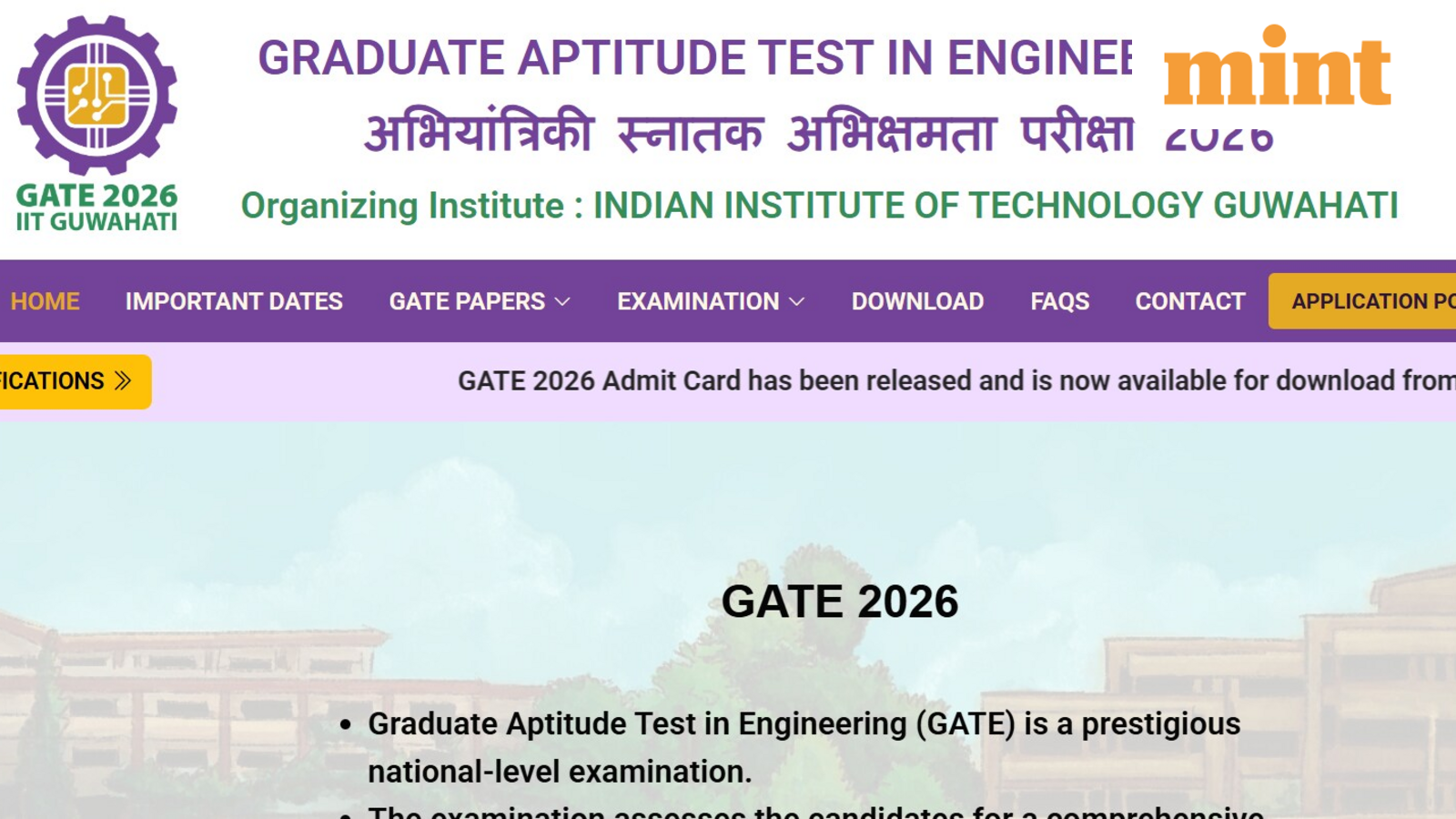
The Indian Institute of Technology (IIT) Guwahati has released the GATE 2026 admit card.
Candidates who have registered for the Graduate Aptitude Test in Engineering can download their hall tickets from the official website gate2026.iitg.ac.in by logging in with their credentials.
“GATE 2026 Admit Card has been released and is now available for download from the GOAPS Portal,” reads a message displayed on the official website.
GATE 2026 admit card download – What login details are required?
Candidates would need their enrollment ID and password to login to the portal from where they can access the admit cards for this year’s exam.
GATE 2026 admit card – How to download – a step-by-step guide
Candidates appearing for the GATE 2026 exam can download the admit card via the following steps:
Candidates appearing for the GATE 2026 exam are required to print a A4-size copy of the GATE 2026 admit card along with a valid original photo identity proof to the examination centre. Failure to produce the required documents may result in denial of entry.
Applicants are advised to verify all details carefully and contact the authorities in case of discrepancies.
GATE 2026 exam dates
As per the official schedule, the GATE 2026 exam will be held on February 7, 8, 14 and 15, with results set to be announced on March 19, 2026.
GATE serves as a key entrance exam for admission to MTech and other postgraduate engineering programmes offered by the IITs and several other engineering institutes across India.
The examination will be conducted in computer-based test (CBT) mode, across two sessions each day, in over 200 cities nationwide, under the coordination of eight zonal IITs.
A Reddit user, giles676, has recently highlighted the increasingly challenging employment landscape for Indian students graduating from educational institutions in Ireland. He strongly advised aspiring Indian scholars planning to pursue higher education in Ireland through student loans “not” to relocate there.
The user detailed his own experience, noting that he completed a Master’s in Computer Science at the University of Galway in 2025. Out of a cohort of 130 graduates, technology-related employment was secured by only 15 students. Those unable to find professional roles are currently working in supermarkets and restaurants.
This report is based on user-generated content from social media. Livemint has not independently verified the claims and does not endorse them.
He further clarified that he managed to secure a position only due to his five years of prior international experience; however, visa sponsorship was not granted to him or any of the other successful candidates.
According to the Reddit post, more than 500 previous graduates have been compelled to return to India once their visas expired. Many of these individuals now face massive, unpaid educational loans. Furthermore, the hiring of non-EU candidates has been severely hindered by a recent government-mandated increase in the minimum salary threshold required for sponsorship.
What giles676 wrote on Reddit
“I’ve been in Ireland for some time now and studied at the University of Galway. I graduated in 2025 with a Master’s in Computer Science. Out of a batch of around 130 graduates, only about 15 managed to secure jobs in tech. The rest are working in supermarkets, restaurants, bars, and other non-tech roles.”
“I was able to get a job only because I had nearly five years of prior experience, having worked in London and Dubai before coming here for my master’s. Even then, my role is not visa-sponsored. To my knowledge, none of the 15 graduates who found tech jobs have visa sponsorship either. More than 500 graduates from the same program across previous years have already been forced to return to India after their visas expired. Many of them are still unable to repay their education loans.”
“Recently, the Irish government increased the minimum salary threshold required for visa sponsorship, which has made employers even more reluctant to hire non-EU candidates.”
“The situation is extremely difficult. If you are coming here after taking a student loan, you are at a very high risk of defaulting. If your parents are co-sponsors, you may be putting their financial security at risk during their retirement years.”
“Realistically, over 95% of non-EU graduates are forced to leave Ireland within three years. Please think very carefully before making this decision. Stay in India.”
Here are some reactions to the post
– “In before the clown crowd comes in and accuses you of gate keeping with stupid comments like those are not bad odds I’ll be one of the 15 … You haven’t even spoken about the housing crisis in Ireland which I’ve read about previously as well (sic).”
– “Unfortunately you will be accused of gate keeping like me when I made similar thread last week about Ireland. I work in FAANG and our HR department are AI scanning resumes /applications and Indian names /Indian graduates are automatically rejected now (sic).”
– “The housing situation is terrible and the economy is heavily dependent on foreign companies around 61% of revenue coming from overseas companies that have set up their hqs and pharmaceutical units there. Recent trade issues have affected them (sic).”
– “Please understand how TINY Ireland is. The entire population of Ireland is 5.5 million, the population of greater New Delhi alone is 35 million. Ireland is not an alternative UK (sic).”
Varanasi: Regular Tamil language classes are likely to be introduced in schools and colleges here as part of efforts to deepen cultural and linguistic exchanges, officials said.
The initiative is in line with Prime Minister Narendra Modi’s vision of the Kashi Tamil Sangamam. The prime minister, in his ‘Mann Ki Baat’ radio programme, on December 28, mentioned Payal Patel, a student of Government Queen’s College here, for learning Tamil in a short span of time.
Inspired by Prime Minister Modi’s vision, the Government Queen’s College is planning to start daily evening Tamil classes. The district inspector of schools has directed the institution to run the classes, college principal Sumit Kumar said.
Around 50 teachers from Varanasi are also likely to be deputed to Tamil Nadu to teach Hindi as part of the initiative, officials said.
“Keeping in mind the prime minister’s vision of cultural integration, Tamil classes will be started at the college,” principal Kumar said.
He said discussions have been held with Sandhya Kumar Sai from Tamil Nadu, who earlier taught Tamil to the student, and she has agreed to take online classes. The head of the Tamil Department at Banaras Hindu University has also assured cooperation, Kumar added.
According to officials, preparations are also underway to send 50 teachers from Varanasi to Tamil Nadu to teach Hindi. This proposal has been discussed in meetings chaired by the Varanasi commissioner and district magistrate.
Kumar further said that students of the college recently conveyed New Year greetings in Tamil to the Prime Minister and Uttar Pradesh Chief Minister Yogi Adityanath as part of a programme showcasing Kashi-Tamil cultural integration.
The programme was led by Payal Patel and featured rangoli and dance performances set to Tamil music.
Principal of Harish Chandra Girls Inter College, Priyanka Tiwari, said a 15-day Tamil language programme was conducted at her institution during the Kashi Tamil Sangamam, in which 50 students participated. The students later presented what they learnt through poems and songs.
Encouraged by the students’ enthusiasm for language learning, the college is considering launching a formal Tamil course from the next academic session, she added.
The Kashi Tamil Sangamam is a cultural exchange initiative aimed at highlighting the age-old civilisational, cultural and educational links between Kashi and Tamil Nadu.
The programme brings together students, scholars, teachers and artists from Tamil Nadu to Varanasi through academic sessions, language workshops, literary interactions and cultural performances, with a focus on promoting linguistic learning, mutual understanding and national integration.
The Uttar Pradesh government has made admission process easier for underprivileged children by eliminating the need for children’s Aadhar cards. The state government has revamped the admission process for enrolment in private schools under the Right to Education (RTE) Act.
To remove the obstacles and contingencies in the admission process of disadvantaged groups and address the woes of parents seeking admission of their wards, UP government made this landmark move. Previously, Aadhar card of both parents and that of the child seeking admission were mandatory requirement while filing online application form for RTE admissions.
Reacting to the modification of admission process, Basic and Secondary Education Additional Chief Secretary Partha Sarthi Sen Sharma said, “Our effort is to make ‘ease of living’ a reality as far as possible, especially for the families genuinely belonging to disadvantaged groups, in the spirit of RTE,” Times of India reported.
Partha Sarthi issued a fresh set of directives declaring that the govt will provide financial aid under RTE only into the Aadhar-seeded bank accounts of parents. Those applying for admissions under the above-mentioned category will need to mention the Aadhar-seeded bank accounts while applying for admissions. This implies that the Aadhar card of one of the two parents will be needed as proof in the online application form for RTE admissions.
According to the order, Section 120(c) of the Right of Children to Free and compulsory Education Act, 2009, the district-wise annual targets for the admission of children will be determined up to a limit of 25% of the total capacity of the lowest entry class (Class 1 or pre-primary) of all unaided private schools operating in the district.
The directive detailing the new guidelines was issued to all DMs, who are also president of the District Education Project Committee (DEPC).
Besides the age limit, the order mentions that all document verification will be done at the level of the Block Education Officer and Basic Shiksha Adhikari. Online lottery system will be used for the process of school allocation for applications approved by the DM/CDO.
The directive outlines a two-stage lottery process for school allocation
SSC exam calendar 2026: The Staff Selection Commission (SSC) recently released the most awaited SSC Exam Calendar 2026. Aspiring candidates can check the exam calendar at the official website of SSC at ssc.gov.in. The Commission shared the date of advertisement, closing date and exam month in its official tentative calendar.
This schedule includes tentative dates of the crucial Combined Graduate Level (CGL) Examination as well as those of Constables General Duty (GD) posts in Central Armed Police Forces (CAPFs), National Investigation Agency (NIA), Secretariat Security Force (SSF) and Rifleman (GD) in Assam Rifles Examination, 2027. The official tentative SSC exam calendar 2026 is given below:
How to check SSC exam Calendar 2026
Steps to check SSC exam Calendar 2026 are given below:
Step 1. Visit the official website of SSC at ssc.gov.in.
Step 2. Select For Candidates tab followed by “Examination Calendar” in the drop-down list.
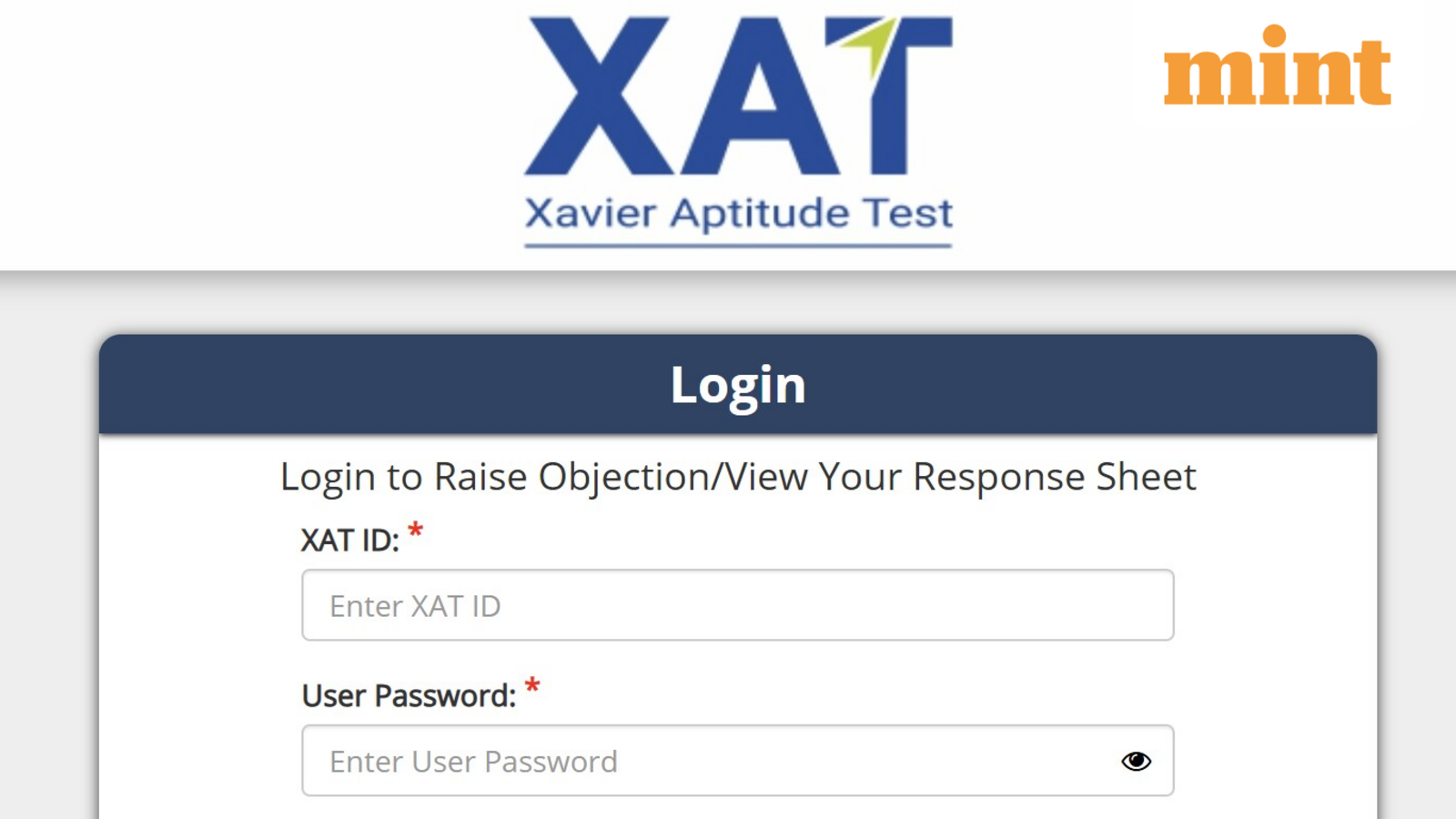
XAT 2026 Answer Key out: The provisional answer key for the Xavier Aptitude Test (XAT) is now available at the entrance exam’s official website, xatonline.in.
Candidates who appeared for the examination can now download the provisional XAT 2026 answer key and raise objections, if any.
XAT is conducted by XLRI Jamshedpur on behalf of Xavier Association of Management Institutes (XAMI) members for over 75 years. It is one of India’s most trusted national-level entrance exams for admission to MBA/PGDM programs.
XAT Answer Key 2026: Step-by-step download guide
To download the XAT Answer Key 2026, candidates need to
Visit the official website at xatonline.in
Click on the answer key link available on the homepage
Enter the required login credentials
A provisional XAT Answer Key 2026 will be displayed on the screen
XAT Answer Key 2026: Essential login credentials
Candidates will have to log in to their XAT account to access the provisional XAT Answer Key 2026. Here are the essential details required to login:
XAT Answer Key 2026: Do’s & Don’ts
Each candidate must check the XAT Answer Key 2026 carefully and download a copy for future reference.
Candidates must challenge the answers in the XAT Answer Key 2026 if they have an objection to any.
Candidates are advised to keep track of the objection window and submit their challenge within the stipulated time.
Candidates must regularly visit the official XAT website xatonline.in for regular updates related to objections, final answer key, and result announcements.
XAT Answer Key 2026: Objection window open
The objection window for the XAT Answer Key 2026 is now open. It will reportedly remain open for the next two to three days. However, the official website has not specified the exact closing date of the objection window.
Candidates can challenge any answer by raising objections on the official website and by paying a processing fee for each objection submitted.
About XAT 2026
The Xavier Aptitude Test 2026 was conducted on 4 January 2026 in a single shift from 2 pm to 5 pm. The examination was held in computer-based mode, with the question paper set in English.
The XAT 2026 question paper consisted of 95 multiple-choice questions, each carrying five options with one correct answer. The paper was divided into two time-bound parts — Part 1 and Part 2.
On 6 January, the XAT response sheet was released.
Kerala government’s education department has approved the draft report on measures to reduce school bag weight. The state government’s Curriculum Steering Committee has also decided to take steps to abolish the concept of backbenchers from the next academic year
Making these annoucements on Thursday, Kerala’s General Education and Labour Minister V Sivankutty said these two reforms are being taken to bring qualitative changes in the state’s general education sector.
The proposed measures focus on reducing the weight of school bags to ensure the physical and mental well-being of students, and creating a classroom environment without ‘back benchers’ as part of the democratisation of classrooms, an official statement by the department cited by news agency ANI said on Thursday .
Earlier, the State Council of Educational Research and Training (SCERT) had been entrusted with studying these proposals in detail. Based on this, reports were prepared and discussed in detail at today’s State Curriculum Steering Committee meeting. The committee subsequently approved the draft report.
“We want to make the schools more child-friendly and democratic. Accordingly, there is a recommendation to reduce the weight of the schoolbags. There will be steps to scientifically reduce the weight after factoring in the physical fitness of the students. Besides, back benches in classrooms will be abolished to ensure that all students get equal attention and there is a democratic academic atmosphere in the classes. Accordingly, seating arrangements in classrooms will undergo changes,” Sivankutty was quoted as saying by Indian Express.
Draft to be made public soon
To ensure broader social participation in the education process, the draft report has been placed on public consultation. The report will be made available on the SCERT website. Teachers, parents, students and the general public can submit their suggestions and opinions on the proposals until January 20.
After considering public feedback, the General Education Department aims to implement these changes in schools from the start of the next academic year. The Minister said that these reforms would help make schools more child-friendly and democratic.
‘Horseshoe’ seating arrangement
Already some schools in Kerala have decided to go for a “horseshoe” seating arrangement in classrooms. A few schools in Kannur, Thrissur and Kollam districts have introduced the horseshoe, or semi-circle, seating arrangement, the Indian Express report said.
In this arrangement, students are seated in the perimeter of the classroom, facing each other. The teacher is also able to have a face-to-face interaction with all students who happen to sit in such a layout, with the teacher moving in the middle of the room. This is unlike using seating arrangement in classrooms where teacher stands at the front at the students sit in rows one after another in a room.
These reforms would help make schools more child-friendly and democratic.
Movie Inspiration?
The new seating arrangement in some of the schools is said to inspired by a 2024 Malayalam film, Sthanarthi Sreekuttan. The film, directed by Vinesh Viswanathan, is about a ‘backbencher’, Sreekuttan, who revolts against the traditional classroom arrangement.
In the climax of the movie, the row seating in the classroom is replaced with a U-shaped arrangement.
The concept can be traced to the District Primary Education Programme (DPEP). The programme, launched by the Union Government in 1994 in five other states besides Kerala, recommended flexible seating arrangements. However, an inclination towards the traditional row system could not make its mass adoption a reality.
The National Testing Agency (NTA) has released the city intimation slips for the JEE Main 2026 Session 1 exam on its official website. Registered candidates can check and download their slips using their login credentials at https://jeemain.nta.nic.in
These slips provide advance information regarding the city where the candidate’s JEE Main examination centre will be located. NTA has clarified that this is not the admit card for JEE Main 2026 Session 1; the official admit card will be issued at a later date.
Candidates experiencing difficulty in accessing or downloading their city intimation slip can contact NTA at 011-40759000 or via email at jeemain@nta.ac.in
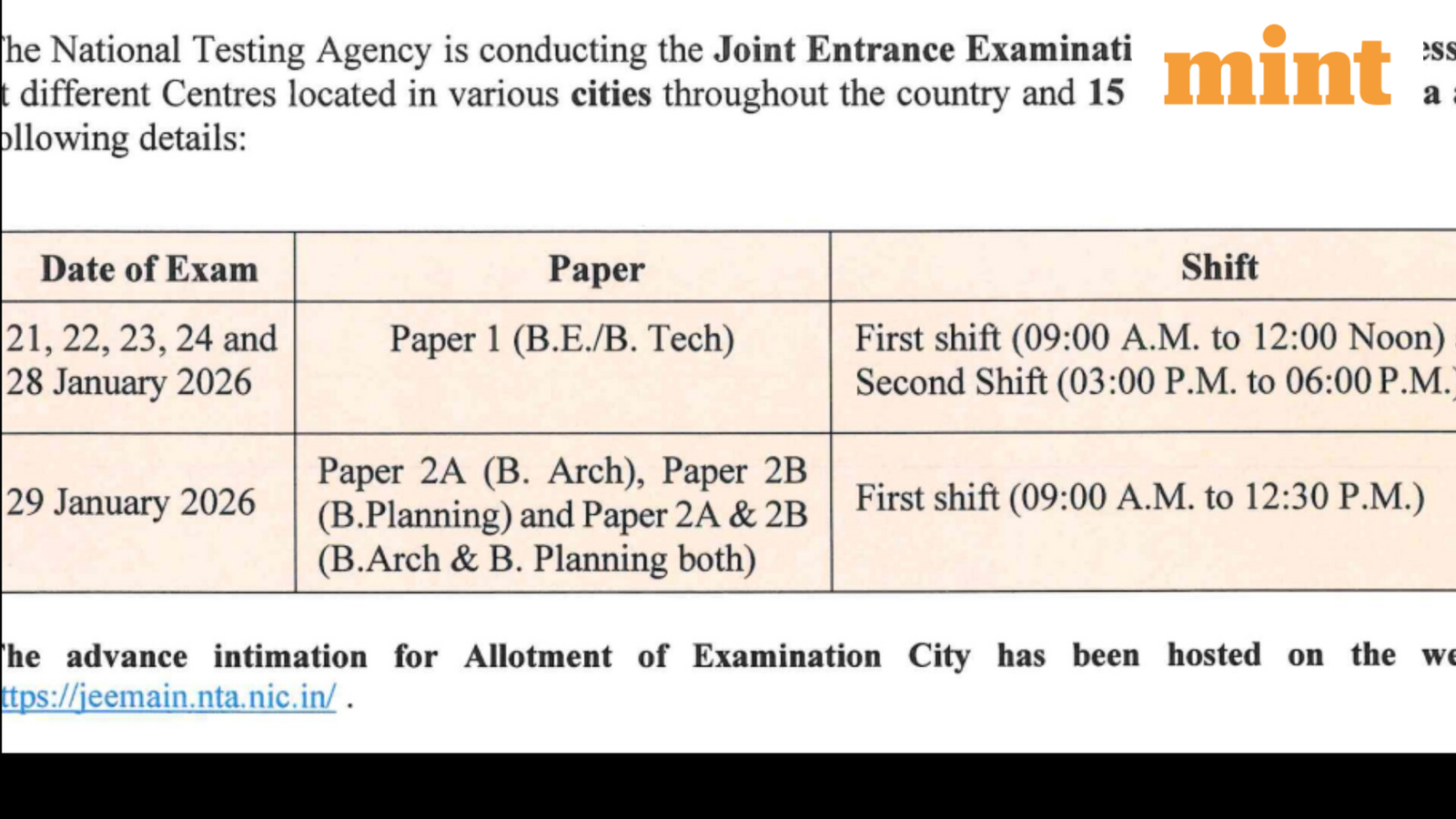
The first session of JEE Main 2026 is scheduled from January 21 to 30. Paper 1 (B.E./B.Tech) will be conducted on January 21, 22, 23, 24, and 28. Paper 2A (B.Arch) and Paper 2B (B.Planning) will be held on January 29. Results for Session 1 are expected to be declared by February 12, 2026.
The second session of JEE Main is scheduled from April 1 to 10, 2026, with results anticipated by April 20, 2026. Registrations for Session 2 will take place between April 2 and 9, 2026, with further details to be announced by NTA.
Candidates who qualify JEE Main will be eligible to appear for JEE Advanced 2026. The exam is scheduled for May 17, 2026, in two shifts: Paper 1 from 9 am to 12 pm and Paper 2 from 2:30 pm to 5:30 pm. Registration for JEE Advanced will begin on April 23, 2026.
JEE Main is the national-level entrance exam for students to enter undergraduate engineering and architecture programs throughout India. All NITs, IIIT’s, CFTI’s, and other engineering colleges require students to take the JEE Main as part of their admission process, and to qualify for taking JEE Advanced, to qualify for the IIT’s (Indian Institute of Technology). The JEE Main provides students with a platform on which they are evaluated in Physics, Chemistry, and Mathematics. The exam is offered to students online at least twice per year, allowing students who are not satisfied with their performance to take another opportunity