What is the 2% rule in Real Estate and why it matters?


What is the 2% rule in Real Estate and why it matters?

Some real estate terms and rules can leave people confused; especially for those from non-real estate background wanting to rent property. So there is a 2% rule which not many must be aware of. The 2% rule is a simple guideline that helps people assess the potential profitability of a rental property before diving into detailed calculations.Understanding the 2% RuleIn simple words, the 2% rule says that a rental property is financially profitable if the monthly rent is at least 2% of the total purchase price of the property, which includes acquisition and basic repair costs too.To understand it better, here is an example.Say you have bought a property for INR 60 lakh. Now as per the 2% rule the monthly rent should be around INR 1,20,000 (2% of INR 60 lakh). If the expected rent is less, the property may struggle to deliver strong cash flow.However, you should also know that the 2% rule is not a guarantee of profit. In fact, it acts as a screening tool which helps investors shortlist properties worth deeper analysis.Why do investors use the 2% Rule?The main feature of the 2% is its very simple rule as compared to several variables like loan interest, maintenance and taxes, among others. The 2% rule allows investors to choose properties that are unlikely to perform well. The rule came in markets where property prices were relatively low compared to rents. How the 2% Rule works Understand it with an example:Purchase price (including repairs): INR 60 lakhExpected monthly rent: INR 1,20,000Since INR 1,20,000 is 2% of INR 60 lakh, the property meets the 2% rule. This means that the rental income may be sufficient to cover mortgage payments, maintenance and taxes, while still leaving room for profit. If the rent were only INR 60,000 (1%), the property might still work, but it would be over expensive.Is the 2% Rule practical in today’s timeWell the answer is no, not really. It’s only a rule on papers not in practical life. In many metro cities, meeting the 2% rule is not possible. It is because of high property rates and regulated rental growth. In rare cases, the yields are closer to 2–4% annually, not monthly. As a result, the 2% rule is more commonly achievable in smaller cities or emerging markets. However, this doesn’t mean that it’s an outdated rule. Limitations It does not account for interest rates or tenure of the loan Operating expenses do not countIt does not factor in capital appreciationIt may not reflect local rental laws or vacancy risksIn short, the 2% rule works as a first-level filter when comparing many properties.




Source link

What are the important steps involved in buying a home?


What are the important steps involved in buying a home?

Buying a house is a dream of many. It is among the most important and biggest financial decisions most people make in life because of course, it involves a major financial investment, legal understanding, careful negotiations, and so much more. With myriad steps involved, it is easy to feel overwhelmed. Many homebuyers, mostly first-timers, have no idea how to begin their journey. From where to start is their biggest issue. Understanding this, we decided to walk you through the entire process, from first to last, the important steps involved in buying a house.Read on:Financial planningAssuming that you have enough savings for downpayment, review your finances and debts: find out how much is your current savings and how much more you need for the down payment, stamp duty, registration fees, and other related charges. Also check your credit score because a good credit score makes your chances better in getting a home loan.Know your budget and stay in it: Now be realistic, because it’s easy to get carried away. Understand your financial capacity realistically as how much you can afford without compromising on essential expenses in future. This Includes EMIs and maintenance costs, among others.Pre-Approved Home LoanHome loan pre-approval gives a clear view of how much a bank or NBFC is willing to lend. This makes your position strong when negotiating with home sellers.For applying you need to get all important documents, identity proofs such as PAN and Aadhaar, income proof and tax returns, among others.Now it is the bank’s turn to check and verify all the submitted documents. Choose the Right Location and Property TypeOnce you have your finances done:Check the location after deciding what property type you want to buy, for example, flat, house, or villa. Check the features also Think from a long-term perspective like proximity to work, availability of good hospitals and schools and public transport.Find a genuine Real Estate AgentThen you need a good and genuine real estate agent:They help you shortlist properties under your budget.Agents also help in negotiations and understanding the legal framework. There is a number of paperwork involved in this whole process. and guiding you through each step, including discussions with sellers.Shortlist properties and site visitsShortlist options and plan a site visit. Check quality, surroundings, and features.Check the certificates, do a legal checkNow this is one of the most important steps to avoid future disputes:If it is a new construction, make sure the project is registered under RERA. Also see all the required certificates. Check if the builder has all necessary approvals (like NOCs, Occupation Certificate (OC) and layout approval).For resale properties, check the title deed, encumbrance certificate, and make sure there are no legal issues.Inspect the propertyThis is for both new or resale properties:Schedule a professional home inspection to inspect the condition of the house. Check plumbing, electricals, among other things.Offer and negotiationOnce you are satisfied with above mentioned features, now comes the important part. Make your offer and be ready to negotiate. Also know the final timelines.Closing the deal, the last stepAfter the deal is finalised, complete the official home loan application with your chosen bank.The loan lender will order an appraisal to confirm the property’s market value.The bank will finalise the legal and technical verifications.Now you sign documents, pay the balance amount, stamp duty, and registration fees.Congratulations! Now you are a home owner. Collect your keys and celebrate.Buying a home is a rewarding yet complex process. It requires a lot of financial readiness and legal understanding. But with the above mentioned steps, you can also make your dream of buying a home come true.


Source link

India expected to have more than 400 airports by 2047 as UDAN, seaplane plans expand: PM Narendra Modi |


From NCC Roots To Op Sindoor: How PM Modi Linked Youth, Technology And India’s Future Wars

Prime Minister Narendra Modi, while addressing a gathering on Wednesday, said that India’s aviation sector has undergone a historic transformation over the past decade, evolving from an exclusive mode of transport into the world’s third-largest domestic aviation market. For more clarity, check the official press release by Prime Minister’s Office.Addressing the Wings India 2026 programme in Hyderabad via video conferencing, the Prime Minister said the rapid growth of the sector reflects the government’s long-term vision of making air travel inclusive and accessible to every citizen.

From NCC Roots To Op Sindoor: How PM Modi Linked Youth, Technology And India’s Future Wars

Recalling that air travel was once limited to a small section of the population, the Prime Minister said passenger traffic has grown rapidly in recent years, with Indian airlines placing orders for more than 1,500 aircraft, indicating strong demand and expansion across the sector.

Pib Press release

Highlighting infrastructure development, he said the number of airports in the country has increased from 70 in 2014 to more than 160 at present, while over 100 aerodromes have been activated. He said this expansion has helped connect Tier-2 and Tier-3 cities and significantly strengthened regional air connectivity. The Prime Minister said the UDAN scheme has played a key role in making air travel affordable and accessible. Under the scheme, around 1.5 crore passengers have travelled on air routes that did not exist earlier, he noted. Looking ahead, the Prime Minister said the government is working on the next phase of the UDAN scheme to further expand regional and affordable air connectivity. He also referred to plans for the development of sea-plane operations across the country to improve connectivity to remote and coastal areas. By 2047, he said, India is expected to have more than 400 airports, creating a vast air connectivity network.

udan

Emphasising that the expansion of air connectivity will multiply as India moves towards becoming a developed nation, the Prime Minister said the aviation sector will see unprecedented growth in the coming years, generating new opportunities for investment. He also highlighted the government’s focus on developing tourism infrastructure nationwide, which is driving increased demand for air travel. Regarding self-reliance in aviation, the Prime Minister stated that India is giving “strong emphasis to aircraft design, manufacture, and the MRO sector. India is already a large supplier of aircraft components and has started domestic production of military and transport aircraft, and is making progress in the manufacture of civilian aircraft. He said India’s strategic geographic location in global air corridors, a strong domestic feeder network and the expansion of long-haul aircraft fleets are helping the country emerge as a major global aviation hub.Talking about the future technology, the Prime Minister said that the electric vertical take-off and landing aircraft designed and developed in India could soon give a new direction to the aviation industry by reducing the travel time significantly. The Prime Minister also said that India is working extensively on sustainable aviation fuel and could soon become a major producer and exporter of green aviation fuel. Mentioning the reforms in the sector, the Prime Minister said India is poised to become one of the major aviation hubs connecting the Global South and the international community. This presents a huge opportunity for international investors and manufacturers. The Prime Minister also emphasized the importance of air cargo development, including digital cargo platforms, warehousing, and logistics reforms to make the transportation of cargo faster and more efficient. This will help India become a competitive transshipment hub, he said.


Source link

How to identify lizard eggs indoors and get rid of them safely |


How to identify lizard eggs indoors and get rid of them safely

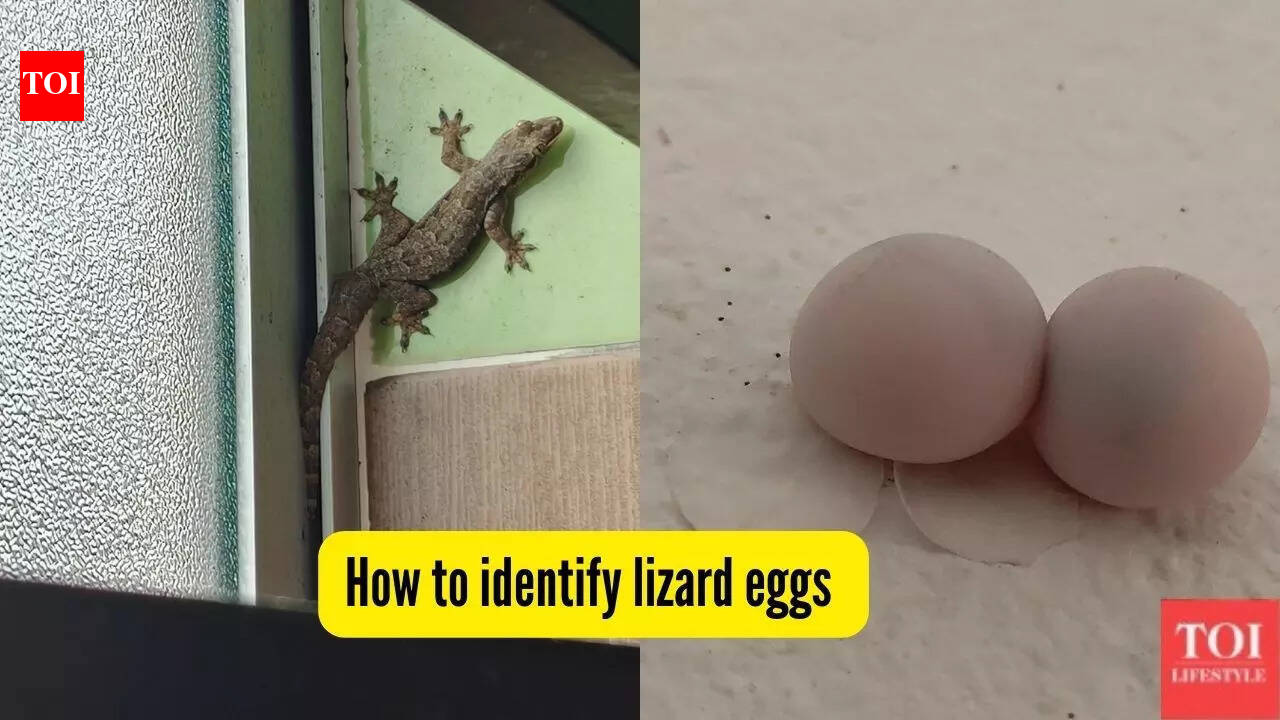
Lizards on walls are a common sight in Indian homes, especially during warm and humid seasons. Though house lizards are harmless, finding their eggs on your walls and door cracks or anywhere inside your home can be an uncomfortable view. If you see lizard eggs anywhere, it means that the reptile has found your house safe enough to breed. Now this might be a problem as it means more lizards in the near future. It is important to identify these eggs and remove them safely for hygiene purposes. On this note, let’s have a look at how to identify lizard eggs and how to eliminate them from your home.How do lizard eggs look likeThe main issue is that lizard eggs are small, sometimes as small as your fingernail! It is very easy to overlook or walk over them and make a mess. Of course you do not want that. These are mostly oval-shaped and have white or off-white outer shells. Unlike bird or snake eggs, lizard eggs do not possess a hard exterior. But these are soft to touch, have a leathery, or slightly rubbery feel. Not many must be aware of the fact that most house lizards lay two eggs at a time. So you’ll often find them in pairs or small clusters.Also, another prominent feature of the lizard eggs is that it sticks lightly to surfaces such as on walls, on the corners, or door cracks. When these eggs mature, you can also find faint vein-like patterns through the shell, which means a developing embryo.Common places in house where lizards lay eggs House lizards like dark and warm locations to lay their eggs. These eggs are commonly found:In wall cracks, crevices, or ceiling gaps Behind cupboards, wardrobes, and bookshelvesBehind wall hangingsUnder kitchen sinks or bathroom cabinetsBehind refrigerators, microwave or washing machinesInside shoe racksAre lizard eggs poisonous?So the answer is no. Lizard eggs themselves are not poisonous but lizards carry bacteria such as Salmonella. So it is suggested not to touch the eggs with bare hands. Avoid direct contact. The main concern is quickly increasing the lizard population in your home.Safe removal Here’s how you can safely remove the eggs from your house:Wear gloves: Wear disposable or reusable gloves. Protect yourself first.Lift gently using paper or cardboard: Lizard eggs are extremely fragile. Use a piece of paper, cardboard, or a spatula to carefully slide under the eggs. Avoid moving or rotating the eggs: Lizard eggs are sensitive to movement. Make sure you don’t damage the embryo.Disposal: Place the eggs in a sealed bag or container and dispose of them in outdoor garbage.Relocate: You can also relocate them outdoors to a shaded or protected area, far away from your home.When you are done removing, clean the whole region with disinfectant spray.How to prevent lizards from laying eggs in your housePrevention is always better than cure: Find the all the cracks and gaps, seal them immediatelyKeep kitchens and bathrooms dryMake your house insect freeDeclutterYou can also crush egg shells on the corners Seek professional help

Lizards

Canva

If the problem persists, seek help from a professional pest control service. There is no doubt that lizard eggs inside your house can be creepy, but with the right approach, the problem can be solved.


Source link

Delhi Traffic Police issues traffic advisory for Beating Retreat Ceremony on January 29; check which roads are closed, and bus diversions |


Delhi Traffic Police issues traffic advisory for Beating Retreat Ceremony on January 29; check which roads are closed, and bus diversions

Delhi Traffic Police has issued a traffic advisory in view of the Beating Retreat Ceremony to be held on January 29 at Vijay Chowk. For those of you who are commuting tomorrow, try to plan your routes accordingly. As per the post shared on X by Delhi Traffic Police, a detailed traffic advisory has already been issued to facilitate the smooth conduct of the ceremony. Traffic restrictions would be in place from 2 PM to 9.30 PM on January 29, as per the advisory. Vijay Chowk would be completely shut for movement of the general traffic during this period.A number of key sections of road around the ceremonial area will also be restricted. The traffic flow will be restricted on Rafi Marg from the roundabout of Sunehri Masjid to the roundabout of Krishi Bhawan. Raisina Road, from Krishi Bhawan roundabout to Vijay Chowk would remain closed. The roads beyond the roundabouts at Dara Shikoh Road, Krishna Menon Marg and Sunehri Masjid leading up to Vijay Chowk will remain shut for traffic as well.

delhi traffic police

Similarly, Kartavya Path from Vijay Chowk to ‘C’ Hexagon will also be closed down in the restricted hours.Motorists travelling from New Delhi towards India Gate are requested to take alternative routes such as Ring Road, Ridge Road, Aurobindo Marg, Madarsa T-Point and Safdarjung Road – Kamal Ataturk Marg and Ram Jessore Road. DTC and other city buses will not be travelling on their regular routes, and will also face diversion from 2 PM to 9.30 PM, as per the post. The measures are being taken to allow for the smooth passage of invitees and general public and prevent overcrowding around Vijay Chowk and India Gate.Read more: How Indians can apply for the Spain’s Digital Nomad Visa: Eligibility, income and long-term stay There will be a number of bus route diversions throughout the city. Buses plying towards Central Secretariat and Connaught Place from Shanti Path, Vinay Marg and Sardar Patel Marg will be diverted through Panchsheel Marg, Simon Bolivar Marg, Vande Matram Marg, R.A. Shankar Road & Sheikh Mujibur Rehman Road. Buses heading toward the central secretariat will ply till Udyan Marg and turn back through Kali Bari Marg, Mandir Marg and Shankar Road. Buses towards Connaught Place will pass through Mandir Marg – Kali Bari Marg – G.P.O. – Baba Khadak Singh Marg and come back through Bhagat Singh Marg- Peshwa Road– Mandir Marg — Shankar Road – Vande Matram Marg.The buses from South Delhi via Tughlak Road towards Connaught Place or Central Secretariat will be diverted to Safdarjung Road, Kamal Ataturk Marg and Panchsheel Marg after Aurobindo Chowk and onwards their normal routes, the post added.


Source link

A simple “Yes, I do”: IAS and IPS officers’ in Telangana ditch lavish ceremonies, choose a minimalistic wedding instead– Here’s their story |


A simple "Yes, I do": IAS and IPS officers' in Telangana ditch lavish ceremonies, choose a minimalistic wedding instead-- Here's their story

In India, a wedding is not just between a couple but between two families. And most people are often obsessed with big-fat-Indian weddings. But contradicting this, two incredible people—IAS officer Srikanth Reddy and IPS officer Sheshadrini Reddy—choose to let their love shine over extravagant wedding celebrations by hosting a simple wedding ceremony. No blaring music, designer lehengas, or lavish feasts– but a simple wedding that showcased pure love and their unfiltered commitment to each other. Read on to know more details here:

A wedding ceremony that whispered love, not shouted splendour

Imagine this scene: Under the humble roof of the Choutuppal Sub-Registrar Office in Yadadri Bhuvanagiri district in Telangana, Srikanth and Sheshadrini exchanged garlands and vows on their wedding day. No grand mandap, no choreographed dances, no Instagram reels chasing likes. Instead, their simple wedding took place in the presence of just immediate family, a handful of senior officers, and Sub-Registrar Sandeep, sealing their bond with an official certificate, as per reports. Sheshadrini, the DCP of Quthbullapur, and Srikanth, deep in administrative training, kept their wedding real by focusing on what marriage truly means: Two hearts legally and emotionally united.It’s the kind of moment that tugs at your heart.

Ditching the drama of a big-fat-wedding

Indian weddings are known to be lavish. They are often spread across many days, blending rituals and bringing communities together. Reports suggest that the Indian wedding industry is approximately of INR 10 lakh crores. At such a time, Srikanth and Sheshadrini flipped the script by hosting a simple wedding sans the show-sha. Considering that we live at a time when costs are skyrocketing and people often succumb to social pressures of showing-off, their minimalistic wedding screams courage. It is also an inspiration for young couples who even take loans for their “dream weddings”— a reminder that commitment trumps confetti.This isn’t just personal; it’s profound. No waste, no debt, just devotion to each other. Critics whisper it’s “easy for elites,” but their restraint speaks louder: Privilege doesn’t mean indulgence, as per reports.

Why this story matters

At its core, this is a tear-jerker story about values. Srikanth and Sheshadrini’s story stirs something deep—hope, reflection, maybe a vow to simplify our own milestones. It’s emotional alchemy: From a quiet office to national inspiration. What kind of wedding would you choose–lavish or low-key? Tell us in the comments section below.


Source link

Meet the Alpine Salamander: Nature’s record holder for longest pregnancy |


Meet the Alpine Salamander: Nature’s record holder for longest pregnancy
Meet the Alpine Salamander: Nature’s record holder for longest pregnancy (Image source: Wikipedia)

If you’re looking for the animal with the longest pregnancy on Earth, don’t think of whales or elephants. It’s actually the Alpine salamander. It is a small, dark amphibian tucked away in the high mountains of Europe. This little creature is a record-breaker. Its pregnancy can drag on for years. At lower altitudes, it’s about two to three years, but climb higher, where it gets colder, and some females carry their young for four or even five years.Most amphibians lay eggs in water, but not these salamanders. They skip the whole egg stage and give birth to fully formed babies. It’s a smart move, honestly, since life in the mountains isn’t easy and their babies need every advantage they can get. This extraordinary reproductive strategy has made the Alpine salamander a fascinating subject of study for scientists and nature enthusiasts alike.

Nature’s slowest pregnancy: How the Alpine salamander carries babies for years

The Alpine salamander doesn’t just set records, they blow the competition away when it comes to gestation. These little creatures hang onto their developing young for a jaw-dropping 37 to 38 months, and that’s just the average. In the colder, higher parts of the mountains, they can stretch it out to four or even five years. That’s wild, especially when you remember humans are done in nine months. This marathon pregnancy gives the embryos time to fully develop in tough conditions. As per a study titled “Epitheliophagy: intrauterine cell nourishment in the viviparous alpine salamander, Salamandra atra (Laur.)“, published in PubMedCentral, it is believed that this long gestation actually lets the embryos grow up completely, even in tough environments. That way, they’re more likely to survive once they’re born. It’s a pretty rare case where you can see the environment shaping how wild animals reproduce.

What is gestation and why does it vary

Gestation is the time between conception and birth when the embryo grows inside the mother. How long this takes really depends on the animal, as things like metabolism, size, and how developed the baby needs to be at birth all matter. Temperature makes a big difference, too. In colder places, embryos develop more slowly because their metabolism slows down, so the gestation period becomes longer.

Unique reproductive strategy of alpine salamanders

Most amphibians lay their eggs in water, but Alpine salamanders do things differently; they actually give birth to live young. Their babies grow inside the mother for a long time, getting all their nourishment from her, so they skip the usual larval stage. Because of this, the young salamanders are born fully developed and ready to handle life on their own. Plus, since they spend so much time growing before birth, these salamanders come out bigger and stronger than most, which helps them compete and stay safe from predators. This kind of reproductive strategy is really rare for amphibians and just goes to show how creative evolution can get.

Where Alpine Salamanders live and why it matters

Where Alpine Salamanders live and why it matters (Image source: Wikipedia)

Where Alpine Salamanders live and why it matters (Image source: Wikipedia)

Alpine salamanders are found throughout the European Alps. They thrive in rocky, cool habitats, where traditional so the egg-laying process would be risky. The cold mountain climate slows their metabolism, which in turn extends the development time of their young. Their adaptation to such extreme habitats shows how environmental pressures shape not only life cycles but also survival strategies.

Alpine Salamander vs. other long-gestation animals

Elephants carry their young for almost two years, and frilled sharks can be pregnant for about three and a half. But the Alpine salamander takes things to a whole new level. No other land animal has a gestation period that long. Even creatures we usually call “slow developers” can’t keep up with this little amphibian. The salamander proves you don’t have to be big or warm-blooded to pull off some truly wild reproductive strategies. It flips the script on what we think we know about size and pregnancy, showing that the environment can matter a whole lot more than how big you are when it comes to how long it takes to develop.


Source link

Why your power outlet spark when you plug something in and when it is dangerous |


Why your power outlet spark when you plug something in and when it is dangerous
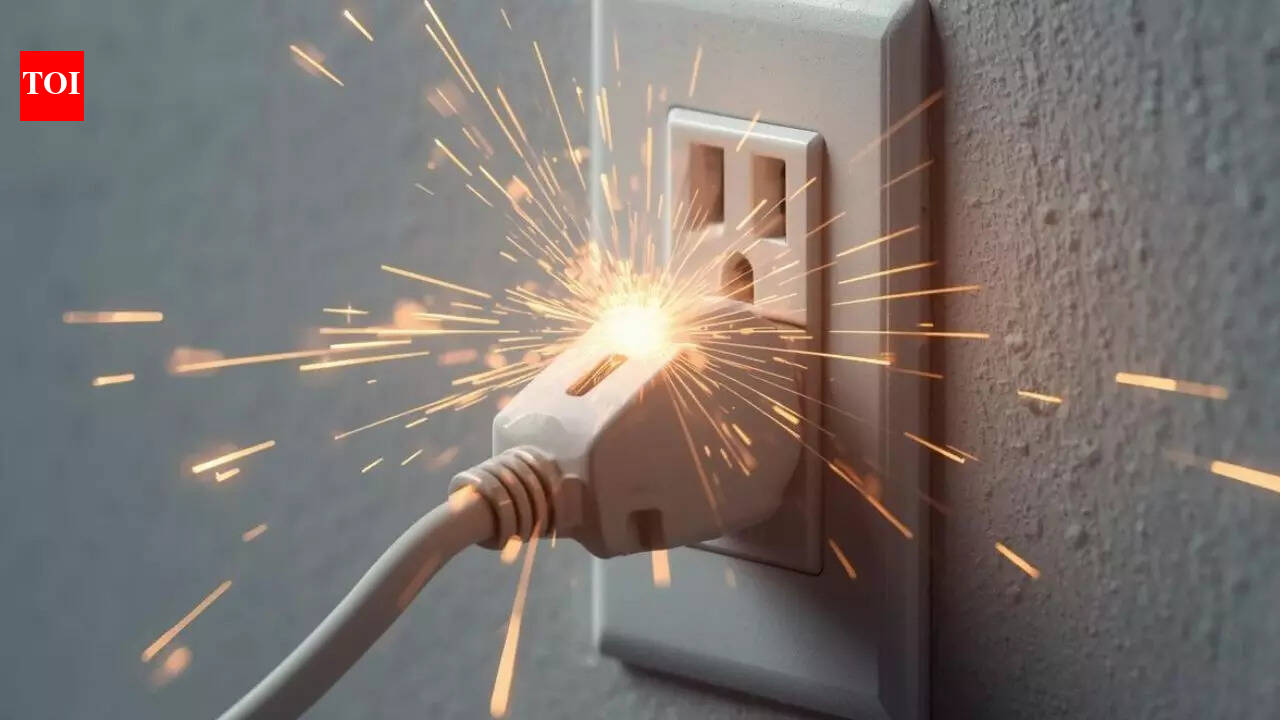
Why your power outlet spark when you plug something in and when it is dangerous (Image source: AI- Generated)

It is normal to see a small spark when you are plugging an appliance or a charger into an electrical outlet. The small spark of electricity is often unexpected, but it is not always a cause for concern.What is happening is that a small amount of electricity is leaping from the plug to the outlet as it is being plugged in. In most cases, the small spark is not a cause for concern and is simply a result of the electrical current being plugged in as the wires are being placed. But not all sparks are created equal. In some cases, a spark can be a sign of a serious electrical issue that could potentially cause damage or even pose a fire hazard if it is not addressed.

What causes dangerous sparking

The following are the most common underlying causes that can turn harmless sparks into serious ones:

  • Loose wiring: If the wiring at the back of the outlet is loose, it may cause the current to jump randomly, which will result in sparks.
  • Old or worn-out outlets: As time goes by, the contacts of the outlet may wear out, again, resulting in resistance and sparks.
  • Overloaded circuit: When too many high-power appliances are connected to the same circuit, it may cause strain on the wiring and outlets.
  • Poor installation: Poorly wired outlets or low-quality materials may cause dangerous electrical arcing.

When sparking is a real problem

The issue of sparking becomes a concern when it happens continuously or keeps happening even after the plug is fully inserted. Warning signs of a sparking issue may include loud crackling or buzzing sounds, burning smells, scorch marks around the outlet, or an outlet that is hot to the touch. These warning signs may indicate loose wiring, an overloaded circuit or other major problems with the circuit.

When a spark is not a big deal

A small and fast spark that appears when you connect a device to an outlet is usually normal and does not indicate any problem. This usually occurs at the same time when the metal prongs of the plug come into contact with the internal wiring of the outlet, enabling the flow of electricity. If the spark is small and does not recur, accompanied by unusual sounds, heat, or odour, it is usually not harmful. Devices that require an instant supply of electricity, such as hair dryers and microwaves, may cause this small spark to appear more frequently, but this does not indicate any problem with your electrical system.

What you should do if you notice problematic sparking

If the outlet is sparking unusually or alarmingly, it is always best to act quickly. Unplug any devices that are connected to the outlet and do not use the outlet. It is also not advisable to test the outlet repeatedly, as this may worsen the situation. In case the outlet appears to be hot or gives off a burning smell, it is best to contact a licensed electrician.

Tips to prevent outlet problems

To begin with, preventing sparking at the outlet requires you to use your electrical system wisely and maintain it properly.

  • Do not overload an outlet with too many high-power appliances.
  • Use high-quality surge protectors for your electronics
  • If you notice that some of your outlets are loose, worn out, or do not retain the plug tightly, replace them.

Such small precautions can go a long way in preventing sparking and keeping your home’s electrical system in good working order.


Source link

How Indians can apply for the Spain’s Digital Nomad Visa: Eligibility, income and long-term stay |


How Indians can apply for the Spain’s Digital Nomad Visa: Eligibility, income and long-term stay

Good news for Indians! In a major development, Spain has extended opportunities for non-EU professionals, including Indians, to legally live and work in the country as remote workers or digital nomads. For those who don’t know, the Digital Nomad Visa (Visado de Nómada Digital or Telework Visa) is a residence authorisation for remote workers, freelancers, and skilled professionals. Let’s have a closer look at the this development:Who is eligibleThe visa is designed for third-country nationals (non-EU/EEA/Swiss citizens) who fulfil specific professional and financial criteria. This visa mainly targets highly skilled professionals, remote employees, independent consultants, and freelancers. Working remotely for non-Spanish firms, freelancers, a professional activity mainly serving clients abroad.A relevant university degree or at least three years of professional experience in their field.An employment or freelance relationship. Contracts or client agreements.Private health insurance No criminal recordDuration If the applicant applies from outside Spain via a Spanish consulate, they receive a one-year national visa which is valid across Spain.After this first year, the visa holder must apply for a residence permit. If they apply from within Spain, they may directly obtain a three-year residence permission.How to get it renewed: The permit can be renewed to up to five years of legal residence as a digital nomad.Long-term residence may also eventually lead to permanent residency after five continuous years under Spanish law.Income requirementsThe government has linked visa eligibility to financial means so that applicants can survive. Current official guidance states that applicants must show sufficient economic funds. As of the latest update:Applicants must show monthly income at least €2,760+ (INR 3,03,961).If there are dependents, additional funds are required.Tax ConditionsThe rules are that the international teleworkers may work exclusively for foreign employers; freelancers may also perform up to 20% of their work for Spanish clients without jeopardising visa conditions.Spain also provides tax incentives. Many remote workers with this visa may qualify for a special tax regime which can significantly reduce income tax on foreign-sourced earnings during the first years of residency. Spain also offers a high standard of living and well-designed healthcare and access to the wider Schengen Area.On this note, let’s have a look at must-visit attractions in Spain:

Seville, Spain

canva

Sagrada Família, Barcelona: Sagrada Família in Barcelona is among the most famous landmarks in the world. Antoni Gaudí’s Sagrada Família is a UNESCO World Heritage Site and a must-visit attraction for art lovers. Alhambra Palace, Granada: The Alhambra Palace is a work-of-art from the Nasrid dynasty. Its palaces, courtyards and gardens here reflect Spain’s Moorish past.Prado Museum, Madrid: Prado Museum is a must visit for art enthusiasts. It is among the world’s finest art museums housing work by Velázquez, Goya, El Greco and Titian,.Royal Palace of Madrid: Royal Palace of Madrid is a symbol of Spain’s monarchy. Visitors can explore its grand halls and royal armoury.Seville Cathedral and La Giralda: Seville Cathedral and La Giralda is a UNESCO World Heritage Site. It is also the largest Gothic cathedral in the world housing the tomb of Christopher Columbus.Ibiza’s Old Town (Dalt Vila): Dalt Vila is a UNESCO-listed fortified old town with cobbled streets, Renaissance walls. The views of the Mediterranean Sea from here are simply awesome.


Source link

5 quick psychology-backed ways to spot manipulation before it drains you


Ever felt like you’re second-guessing yourself after a chat with someone, wondering why you apologised when you weren’t wrong? Manipulation sneaks in slowly like a fog and twists your reality and emotions. This is mainly done to control other people, but it also erodes their trust over time. From guilt-tripping to silent treatment, here we list some common ways people manipulate others. Spot them early to protect your peace:


Source link