Jyoti Nooran: This popular singer’s response to a child who offered her money was a lesson to parents delivered hard: Watch video


This popular singer's response to a child who offered her money was a lesson to parents delivered hard: Watch video

In a clip that keeps resurfacing online, singer Jyoti Nooran is seen performing live when a small child comes forward and offers her money, a gesture that is often understood as a form of appreciation in some performance settings. Instead of reacting with irritation or embarrassment, she responds with warmth, kisses the child on the forehead, and returns the money to him. She also gathers the cash that had been laid out in front of her and gives it back to the boy, turning the moment into something quietly unforgettable.What made the video travel so widely was not just the child’s gesture, but Nooran’s restraint. Online write-ups described the moment as one in which she chose dignity over offense, reading the child’s action not as disrespect to be punished but as innocence to be gently corrected. That soft response is what many viewers found most powerful.There is a cultural layer to the clip as well. In some regions, showering cash on performers can be treated as a sign of admiration. But once a child copied the gesture, the meaning changed. Nooran’s response seemed to signal that appreciation should come with understanding, not imitation without context.That is why the moment resonated so deeply with viewers. It was not a dramatic confrontation, and that may be exactly why it landed. Nooran did not shame the child, did not turn the incident into a public scolding, and did not let the energy of the stage become harsher than it needed to be. She simply redirected the moment with grace, leaving behind a lesson in manners that felt bigger than the child and bigger than the stage.

2

The clip’s emotional pull also comes from its simplicity. A child repeated what he had seen. A performer answered with kindness. In between those two actions sits a message many parents recognize instantly: children learn what they watch. They absorb tone, behaviour and boundaries long before they understand them. In this case, the lesson was delivered without anger, and that made it stronger.That may be why the internet kept framing the moment as one that taught the parents a lesson. Strictly speaking, the video does not show a sermon, a confrontation or a lecture. It shows something subtler and often more effective: a public example of how to correct a child without humiliating them. In a media cycle that often rewards outrage, Jyoti Nooran’s response stood out because it was humane first and instructive second.What stays with you is not the money itself, but the composure around it. The child came forward with a gesture borrowed from adult behaviour. Nooran answered with the kind of dignity that turns a fleeting viral clip into something closer to a parable.




Source link

5 things children need more than praise


Praise can be selective. It usually arrives after a good grade, a neat drawing, a polite response, or a helpful act. Love, however, should not depend on performance. Children need to know that they are loved not only when they shine, but also when they struggle, fail, irritate, or disappoint.

Unconditional love does not mean approving every behavior. It means separating the child from the behavior. A parent can correct without withdrawing affection. A child can be told, “What you did was wrong,” without hearing, “You are a disappointment.” That distinction changes everything. Children who feel loved without conditions are less likely to build their identity around perfection. They become more able to accept correction, recover from mistakes, and trust that their worth is not fragile.

Praise has its place. It can encourage, uplift, and strengthen a child’s confidence. But children need more than compliments. They need presence. They need patience. They need boundaries, safety, encouragement, and love that does not vanish when life gets difficult.


Source link

Simple ways to smartly keep rats out of your house


Rats sneak into houses seeking three basics: food, warmth, and safety. In the summer, they ditch the outdoors for kitchens with leftover rice, fruits, or pet food. They chew anything, be it grains, plastic, or paper.

They are less seen in winter cold or rainy monsoons as they mostly remain inside. Homes offer dark corners like basements for nesting and breeding. Garbage piles and tall grass nearby act like magnets. Once comfy, they multiply fast, ignoring your efforts to shoo them.


Source link

Selena Gomez: Amid Benny Blanco split rumours, Selena Gomez steps out looking effortlessly glamorous in an LBD


Amid Benny Blanco split rumours, Selena Gomez steps out looking effortlessly glamorous in an LBD
Selena Gomez captivated onlookers at a special screening in Los Angeles, showcasing a vintage-inspired black Carolina Herrera midi dress. The singer’s elegant ensemble, featuring shimmering embellishments and puff sleeves, exuded timeless Hollywood glamour. Paired with classic accessories and a striking red lip, her effortlessly chic look proved that subtle sophistication can make a powerful statement.

Selena Gomez just reminded everyone why the little black dress never really fails. The singer and actor recently stepped out in Los Angeles with husband Benny Blanco for a special screening of Marty, Life Is Short, a new Netflix documentary centred around her Only Murders in the Building co-star Martin Short. And while the internet has been busy obsessing over rumours surrounding the couple’s marriage, Selena seemed completely unbothered, quietly stealing the spotlight with a polished vintage-inspired look.The evening marked a meaningful occasion for Martin Short as well, with the actor attending alongside his sons for one of the family’s first public appearances since the tragic passing of his daughter earlier this year. Selena showed up in support, but naturally, fashion lovers couldn’t stop talking about her elegant red carpet moment.For the event, Selena leaned into timeless Hollywood glamour with a black Carolina Herrera midi dress that proved simplicity can still make a statement. At first glance, the outfit looked understated, but the detailing did all the work. Tiny shimmering embellishments scattered across the dress caught the light beautifully, adding just enough sparkle without making the look feel overdone.

ds

The silhouette also struck that perfect balance between classic and dramatic. The puff sleeves brought a soft romantic touch, while the square neckline – a favourite among celebrities lately – framed the outfit beautifully and gave it a slightly vintage feel. It’s one of those necklines that somehow works on almost everyone, which probably explains why it’s having such a strong fashion comeback right now.Instead of piling on accessories, Selena kept things clean and refined. She paired the dress with sleek black Christian Louboutin heels featuring delicate ankle straps that added a subtle feminine edge to the overall look. Her jewellery choices stayed equally elegant, with diamond feather earrings and an antique-inspired ring adding just the right amount of shine.And then came the beauty look – easily one of the standout parts of the entire appearance.

LA Premiere of "Marty, Life is Short"

Selena Gomez, left, and Martin Short arrive at the premiere of “Marty, Life is Short” on Wednesday, May 6, 2026, at The Egyptian Theatre in Los Angeles. AP/PTI(AP05_07_2026_000002B)

The Rare Beauty founder fully committed to the old-Hollywood aesthetic with a sleek bun, softly winged eyeliner, and a bold red lip that instantly elevated the outfit. Scarlet nails tied the entire look together, giving it that polished, thoughtfully styled finish Selena does so well.What made the appearance stand out wasn’t just the dress itself, though. It was how effortless the entire styling felt. Nothing screamed for attention, yet every element worked together perfectly. In an era where celebrity fashion often leans heavily into shock value, Selena’s look felt refreshing because it relied on timeless silhouettes and subtle glamour instead.And honestly, that’s probably why people are talking about it so much online. The outfit wasn’t trying too hard – it simply worked.


Source link

Most common insects and bugs that might be hiding behind refrigerators and other kitchen appliances in your house


Kitchens are just the right places for brewing coffee and conversations, adding the right flavours to dishes and bonds among people, but they are also a magnet for many small insects that love food, crumbs, and moisture.

While a few bugs may seem like a minor problem, they can quickly multiply and become an infestation if left unchecked.

Here are 5 bugs frequently found behind refrigerators and appliances.


Source link

The vase you choose reveals if you are dependable, creative or sensitive in nature


You are emotional and empathetic. You easily connect with others and understand how they feel. You notice even small changes in the room, like a forced smile, a heavy sigh, or the unspoken tension between friends. Because you are emotionally sensitive, people feel safe with you when you listen. You don’t just offer advice; you offer presence. However, being this attuned to everyone else’s feelings can sometimes feel exhausting. You often absorb other people’s stress without even realising it. And so, you need to learn how to set “emotional boundaries” in life.Your depth is a gift, allowing you to experience life with a richness that others might never truly touch.

Photo: The Minds Journal


Source link

Not Ayodhya but this is the most visited temple in India


Not Ayodhya but this is the most visited temple in India

There’s absolutely no limit to India’s spiritual landscape. From Ayodhya and Haridwar to Tirupati and Guwahati, India stands as the undisputed “Land of Temples”. However, there’s one temple which consistently stands out in terms of massive footfall, and global recognition—the Tirumala Venkateswara Temple in Tirupati, Andhra Pradesh. According to Tirumala Tirupati Devasthanams, the temple was visited by a total 79,878 pilgrims by 26 April 2026, making it the most visited temple till April 2026. It is among the most visited religious sites in the world, attracting tens of millions of pilgrims every year. For travellers looking for a deeply immersive spiritual journey, the temple offers far more than just darshan. A temple that attracts global touristsThe Tirumala temple is dedicated to Lord Venkateswara, a form of Lord Vishnu. Set on top of the sacred Seshachalam, the temple is visited by over 30-50 million people every year (an estimate). It’s a staggering number! This means on an average, the temple is visited by around 60,000 to 80,000 pilgrims, which is a massive count. The numbers can reach up to a lakh during peak festivals and weekends, turning the town into a sea of humans. How to reach

Tirupati

Tirumala is not just your regular temple, it’s an experience of a lifetime. For those planning a trip to the city, the experience begins well before reaching the sanctum. Situated some 20 km from Tirupati city, visitors can either drive or take a traditional new pilgrimage route via footpaths like Alipiri or Srivari Mettu. A number of devotees choose to walk the 3,500+ steps barefoot, in an act of devotion.The closest airport is Tirupati Airport. It is well-connected by rail and major Indian cities including Chennai, Bengaluru, and Hyderabad. Buses and taxis are available regularly.How to get darshan

Tirupati

Reaching here is still easy. But getting darshan is a task as per personal experiences of thousands of devotees, there’s immense crowds. Today, the temple stands as a case study in large-scale management. It is administered by the Tirumala Tirupati Devasthanams (TTD), which has implemented an organised system of darshan categories which ranges from free “Sarva Darshan” to special entry tickets booked online.Waiting timeIt’s shocking but waiting times can range between a few hours and over 12–18 hours, which is another task. Yet, the system is surprisingly efficient. From free food (annadanam) and medical facilities to accommodation options, there are people who take care of pilgrims.Spiritual significance and rituals

Tirupati Hills

It is a wish fulfilling temple and that’s where its spiritual pull is tied. Devotees have immense faith in Lord Venkateswara who they believe fulfills wishes. One of the most unique rituals here is the offering of hair which symbolises surrender of ego. The temple remains crowded with lakhs of devotees willing to sacrifice their hair.A laddu is given here as prasadam which is another highlight. The laddu is so popular that it has a Geographical Indication (GI) tag! Amazing, right? Another interesting fact is that Tirumala Venkateswara Temple in Tirupati is also among the richest in the world. Best time to visitThe temple remains open year-round, but the best time is between September and February. The weather remains pleasant during these months. However, festivals like Brahmotsavam and Vaikuntha Ekadashi attract lakhs of devotees. It is important for people planning to visit early. Online booking is strongly recommended.In a country filled with thousands of temples, the temple remains one of the most visited spiritual sites in the country in 2026, with unmatched scale, devotion, and experience.


Source link

Meet Fossa: Three-in-one predator that’s secretly a cat, a mongoose, and a monkey all in one |


Meet Fossa: Three-in-one predator that’s secretly a cat, a mongoose, and a monkey all in one

Madagascar’s isolated forests possess unique biodiversity due to the millions of years of its geographical separation.This separation allowed evolution to brew in unimaginable ways over the years, producing creatures that seem to defy our conventional understanding of biology.Among these unique animals, one creature stands out as a true master of its environment. It is a predator that has confused scientists because it looks like a mix of several different animals.This mysterious animal is called the fossa. It looks like a biological puzzle because it seems made of parts from others: it has the graceful agility of a cat, the long, thin body of a mongoose, and the climbing skills of a monkey.

Meet the Fossa- a mosaic of biology

The fossa is, in many ways, an evolutionary contradiction. Its anatomy is a mosaic of traits that seem borrowed from disparate carnivore branches. Its face and teeth, along with sharp carnassials or large cutting teeth, resemble those of a cat, while its lithe, muscular body resembles that of a mongoose. But the most abstract physical trait is its tail, nearly as long as its body, which acts as a crucial counterbalance for navigating the dense forest canopy.

Meet Fossa Three-in-one predator that’s secretly a cat, a mongoose, and a monkey all in one

Representative Image

The way the fossa moves is also very special

It is one of the few meat-eating animals that can climb down a tree head-first, utilising its incredibly flexible ankles. When it travels through the trees, it jumps and leaps with a smoothness you would expect from a monkey, rather than the way most ground-dwelling predators move.

But how can a carnivore share traits from three different types of animals?

For much of the 19th and 20th centuries, scientists were only amazed by the outstanding features of fossa. Early classification depended heavily on physical appearance, and because the animal displayed “mixed signals,” it was frequently moved between different taxonomic categories.The confusion was finally resolved in 2003 through molecular genetics. A landmark study led by Anne Yoder, published in Nature, confirmed that all of Madagascar’s native carnivores, including the fossa, descended from a single ancestor and belong to their own unique family, Eupleridae.But the resemblance to other carnivores is a classic example of convergent evolution. As researchers noted, the fossa did not inherit its features from a shared ancestor with cats or mongooses, rather, it independently evolved these traits because it occupied a similar ecological role as a flexible, mid-sized carnivore. Essentially, evolution reached a similar “successful design strategy” across different parts of the world.

It is a top predator in the Madagascar

The fossa is Madagascar’s ultimate apex predator, perfectly adapted to a landscape that lacks the large cats or dogs found on other continents. By filling this top ecological role, it has become a master of its unique environment, focusing its hunting strategy primarily on tree-dwelling lemurs.To hunt such quick prey, the fossa uses a special toolkit, like semi-retractable claws that provide a firm grip and a highly flexible spine that aids in lightning-fast turns. These physical traits define it as a “dual-domain” hunter, giving it the rare ability to dominate both the forest floor and the high canopy.


Source link

In 1978, James Dyson’s frustration with a clogging vacuum led to the formation of Dyson |


In 1978, James Dyson’s frustration with a clogging vacuum led to the formation of Dyson
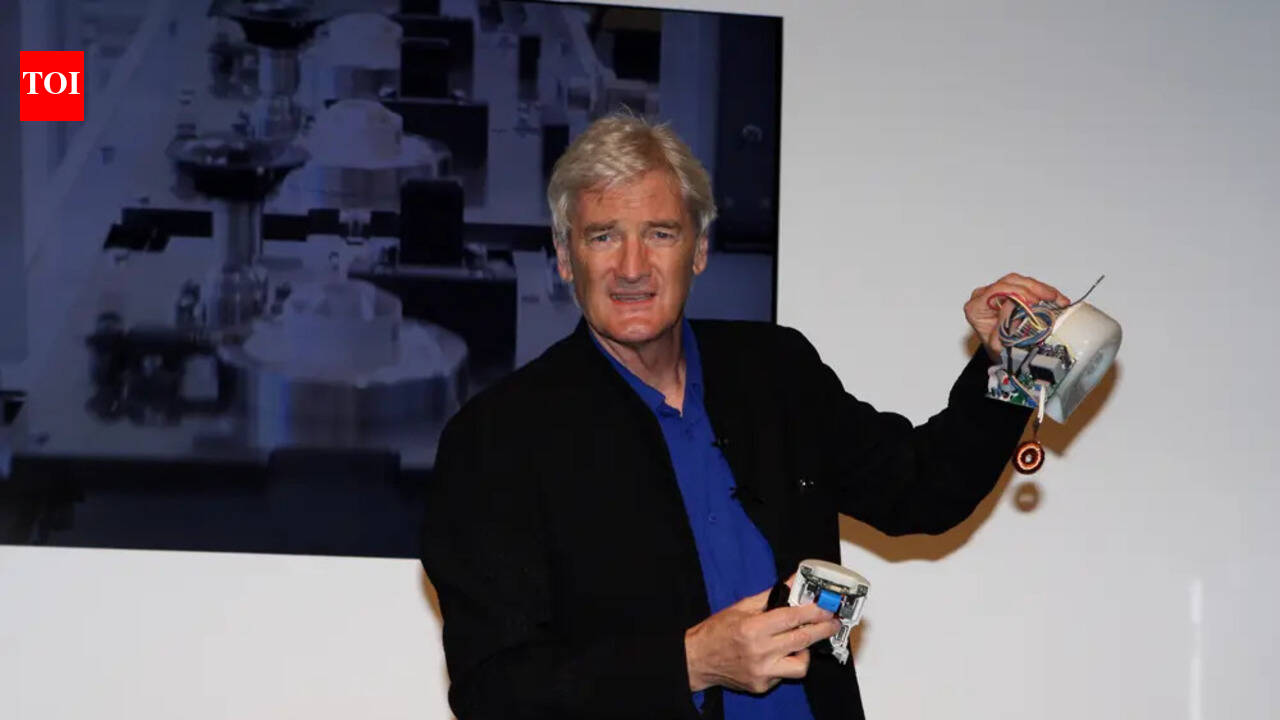
A common household frustration sparked an idea for James Dyson. He spent fifteen years developing a bagless vacuum cleaner. Dyson applied principles of cyclonic separation, a scientific technique. Image Credits: via Wikimedia Commons

All of us have experienced such a scenario when we find ourselves in our living room with a noisy vacuum that is no more effective than the noise it makes in picking up anything at all. To many of us, it may just be a moment of frustration before we continue with the rest of our day. However, in 1978, while taking an afternoon break in the middle of harvesting season, Dyson was struck with a fascination with this problem that went on for almost 15 years. What he found was simply ironic; the bag, intended to hold in the dirt, was the cause of the vacuum’s inefficiency.Instead of following the next version of his product, Dyson decided to look into how huge factories were able to process large amounts of waste. Dyson remembered the gigantic cyclone tower at the local sawmill, where centrifugal force could pull sawdust from the air. Was it possible to apply such a powerful mechanism at home on a smaller scale? This was quite a bold step since it meant giving up the dominant bag system, which had been used for a century. Analysing household issues from the standpoint of engineering tasks, a new way of thinking opened the door for future developments.Physics of the bagless innovationFrom a persistent irritation to a fully-functional device was not a fast journey at all. The process took its course, frequently alone, a period of experimenting and making mistakes. As per the corporate history by the Cambridge Judge Business School, Dyson took about ten years developing his unique concept of a bagless vacuum cleaner while holding down a part-time job in addition to further developing previous inventions. According to him, he tried no fewer than five thousand prototypes before finding the optimal design. This highlights one important principle: “overnight success” is a fiction. For Dyson, it took fifteen years of diligent experimentation from 1978 to 1993 until the invention became marketable.The key to his innovation was the application of an exacting scientific technique called cyclonic separation. While Dyson did not invent the laws of physics, he was the first to realise that they could be applied to solve the problem of clogging bags inside the vacuum cleaner. The use of centrifugal force allowed the dirt to be ejected from the air stream by spinning it out to the outer wall of the container and letting it fall into a collection canister.

James_Dyson_media_launch_(8487827241)

This innovation transformed suction power and airflow. His perseverance led to a revolutionary product that is now a standard feature in modern vacuums. Image Credits: Eva Rinaldi, via Wikimedia Commons

The effectiveness of technical reasoning can be seen in recent research that continues exploring the way these mechanisms work. A study published by the ACS Omega journal confirms that these technologies are quite good at controlling particles and airflow. Taking all that into consideration, it can be noted that Dyson’s prototype of 1978 could be viewed as an example of putting well-established scientific concepts into practice. It was clear to him that vacuum bags were not the best option for filtration, so he replaced them with a separator. It was not an accident but rather an attempt to solve an existing problem.Lab tests and worldwide successWhen Dyson’s vacuum was finally put into production at the beginning of the 90s, it attracted attention by virtue of its unique design and effectiveness. What is more important, it made such a strong impression on users that medical practitioners became interested in it. Such a dramatic change in suction and airflow made people adjust themselves to a revolutionary product.The success of the brand was achieved due to the fact that the product design solved one specific problem of consumers. The failures in the operation of tools are noticeable, and vacuum cleaners without suction ability are particularly problematic. The fact that Dyson was able to solve only one problem led to the development of a useful product rather than a purely visual one. According to the historical data provided in the sources, Dyson’s perseverance during the 1980s allowed him to remain financially independent. In order to prove his concept, he had to be not only an inventor but also an enterprising entrepreneur who could defend his patents and perfect his product designs.In the case of James Dyson, the simple question of “Why do we fail in this?” is all it takes to make an invention revolutionise the industry. While most others would have overlooked such a trivial issue in everyday household use, he chose to view it as one that needed at least fifteen years of his life to be solved. Indeed, what was once considered the height of engineering is now a commonplace feature in all modern vacuum cleaners, showing us that innovation sometimes results from looking at a malfunctioning device and deciding to create something even better.


Source link

In 1967, Aretha Franklin rewrote a few lyrics in one song that turned ‘Respect’ into a women’s rights anthem |


In 1967, Aretha Franklin rewrote a few lyrics in one song that turned ‘Respect’ into a women’s rights anthem
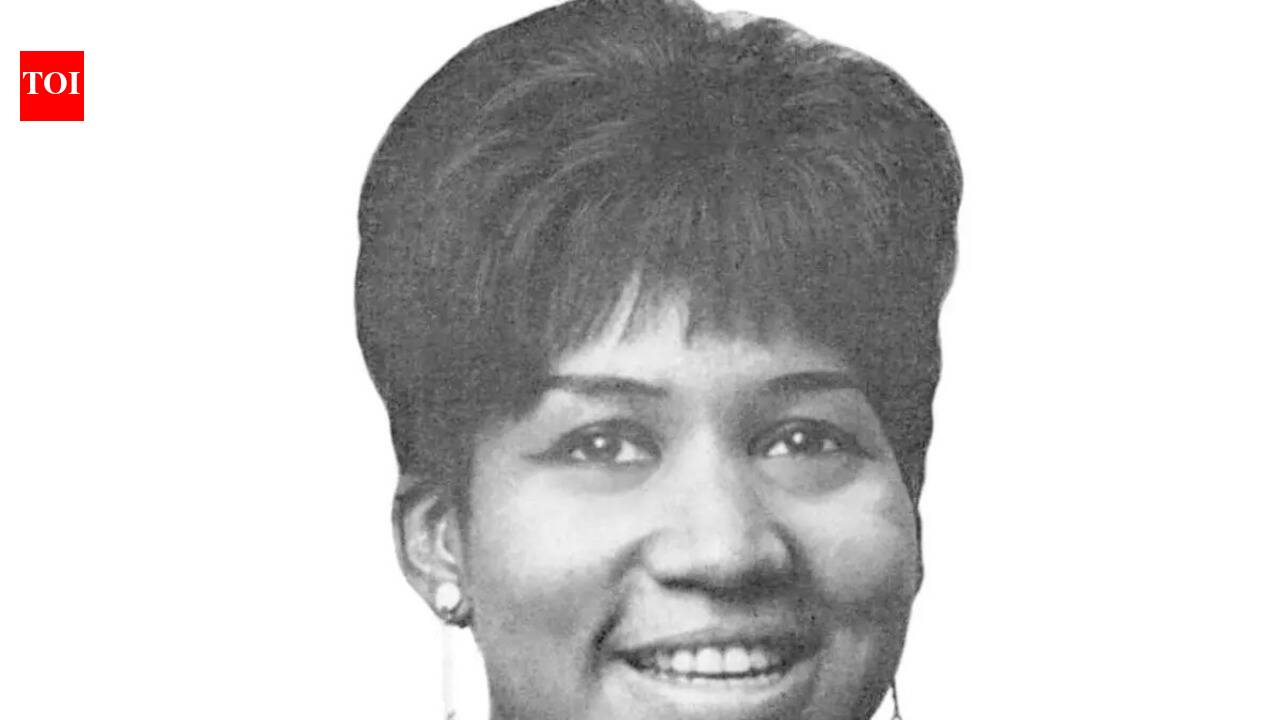
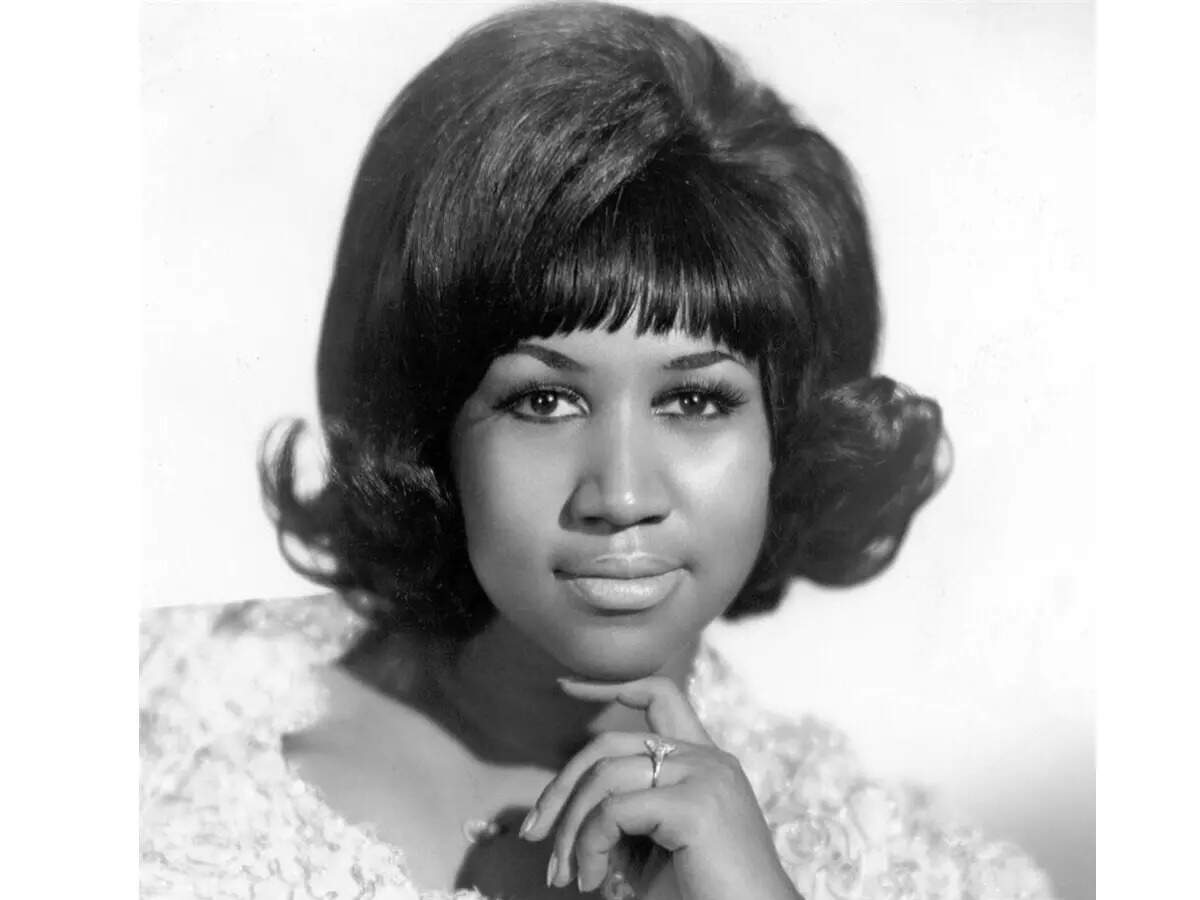
Aretha Franklin turned a simple song into a civil rights anthem. Image credit – Wikimedia

A song that defined a generation and became the greatest of all time for its take on the cultural revolution. “Respect,” recorded by Aretha Franklin in 1967, is considered to be one of the most influential songs in the history of American popular music. This track became one of the symbols of that time, representing two significant events – the Civil Rights Movement and the Women’s Rights Movement.According to Rolling Stone, the track “Respect” occupies the first position in the magazine’s list of “The 500 Greatest Songs of All Time”. According to the publication, it was an anthem that “redefined the possibilities of pop music.” In 1967, “Respect” entered the Billboard Hot 100 and the R&B charts.According to music historian and author of the book “A Change Is Gonna Come: Music, Race & Soul of the America”, Craig Werner, “Respect” turned into much more than a popular track. According to him, it became the voice of demands already growing throughout America.The original version of “Respect” was very different“Respect” by Otis Redding predates the hit version by Franklin. Released in 1965, Redding’s “Respect” was a ballad about a man demanding respect after getting back home from work. The track has an R&B Style and reflects the gendered outlook typical of the era.While “Respect” by Otis Redding enjoyed success, reaching number thirty-five on Billboard Hot 100, it did not have the social significance that the Franklin’s remake would acquire. As reported in the Rock and Roll Hall of Fame, Redding recognised the power of Franklin’s makeover, saying, “That girl stole that song from me.”Aretha Franklin gave new meaning to “Respect”There are several ways that Franklin revamped the classic hit. She changed the gender perspective by telling the story through the eyes of the woman. Furthermore, Franklin incorporated her unique version of the spelling of the word, adding the dash to emphasise it. She included backing vocals, saying “sock it to me,” sung by her sisters, Carolyn and Erma Franklin.As stated on the website of the Library of Congress, which included “Respect” into the National Recording Registry in 2002, the song is culturally, historically, and aesthetically significant. This organisation stressed the fact that it depicted changes taking place in the role of women.

The surprising story behind the song ranked no. 1 in all-time American pop music

The surprising story behind the song ranked no. 1 in all-time American pop music. Image credit – Wikimedia

Cultural influence that has proved long-lastingIt did not take long for the song to become an anthem at various protests. “Respect” addressed the issue of women who faced discrimination both at work and at home. At the same time, it encouraged African Americans to struggle for equal rights.Several studies claim that musical pieces like “Respect” prompted people to discuss issues related to identity and rights in the 1960s. The scholars believe that it was due to music that information was transferred to a larger audience.The song was so successful that Franklin received two awards – a Grammy Award for Best Female R&B Vocal Performance in 1968. Eventually, it got into the Grammy Hall of Fame.Importance of “Respect” todayMore than half a century since its creation, “Respect” is more pertinent than ever. Its themes of self-respect and equal treatment resonate with newer generations of listeners. “Respect” has been featured in various movies and political campaigns, among others.Jon Pareles, music critic of The New York Times, once described Franklin’s ability to transform a personal desire for respect into a universal need as her greatest gift. This was the key factor that made “Respect” stand out from all the songs in its category.From being an ordinary rhythm and blues song, “Respect” has come a long way. Not only was it performed by Aretha Franklin, but it also redefined.


Source link