Thailand revamps visa rules: 60-day visa-free stays, DTV, and digital entry system to boost tourism and economy |


Thailand revamps visa rules: 60-day visa-free stays, DTV, and digital entry system to boost tourism and economy

Thailand has taken another step toward reshaping its visa framework as part of a broader strategy to boost tourism and economic recovery. Ms. Airin Phanrit, Deputy Spokesperson for the Prime Minister’s Office, made an official announcement recently stating that the Cabinet has recognised a comprehensive series of visa policy guidelines that was proposed by the Foreign Affairs Ministry. For more clarity, check the official page. These range from short-term facilitation, medium-term structural reforms, and long-term digital upgrades. Together, they aim to simplify entry procedures, expand visa exemptions, streamline non-immigrant categories and modernise Thailand’s arrival systems.

thailand govt

The Cabinet’s acknowledgment formalises a series of changes already implemented in 2025, including expanded visa exemptions, the introduction of new visa categories such as the Destination Thailand Visa (DTV) and ED Plus, a reduction in non-immigrant visa codes, and the rollout of a fully digital arrival system. Below is a summary of the completed and ongoing measures outlined by the government.

Matters that have been accomplished

The cabinet has acknowledged several short-term visa adjustments, such as:

Visa exemption (Form 60)

A list of 93 countries and territories has been established whose passport holders, or holders of documents used in lieu of passports, may enter Thailand temporarily for tourism, work, or short-term business without a visa, and are permitted to stay for up to 60 days as a special case.

Visa on arrival (VoA)

A separate list of 31 countries and territories has been designated whose passport holders may apply for a Visa on Arrival (VoA) at immigration checkpoints.

visa on arrival

Canva

Destination Thailand Visa (DTV)

Thailand has introduced the Destination Thailand Visa (DTV), allowing foreigners to stay in the Kingdom for tourism and remote work under a special category.

ED Plus Visa (Non-Immigrant)

A new Non-Immigrant ED Plus visa category has been introduced, allowing foreigners to stay in Thailand for study or combined study-and-work purposes under special provisions.

Visa policy committee

A Visa Policy Committee was appointed in 2025, and two meetings have already been held. The Prime Minister has since signed an order appointing a new committee, with further meetings to be convened by the Ministry of Foreign Affairs.Read more: Guess the place: It’s home to the world’s only floating national park

Medium-term measures

thailand

Reduction of visa codes

The number of temporary residence (Non-Immigrant) visa codes has been reduced from 17 categories to 7, effective from August 31, 2025. The Ministry of Foreign Affairs has updated the electronic visa (e-Visa) system, notified relevant agencies and publicised the changes through its official channels.

Expansion of e-Visa services

From January 1, 2025, Thailand expanded its electronic visa (e-Visa) service to cover all 94 embassies and consulates-general worldwide via the official portal: https://www.thaievisa.go.th/.

Long-term measures

Electronic travel authorization and TDACThe Immigration Bureau has developed the TM.6 online system, known as the Thailand Digital Arrival Card (TDAC), replacing the earlier Electronic Travel Authorization (ETA) system. The TDAC system has been in use since May 1, 2025.Read more: This Himalayan village has a 500-year-old preserved mummy; who does it belong to?

Ongoing measures

Additional VoA expansion (phase two)Thailand is considering adding 8 more countries to the Visa on Arrival list, allowing their passport holders to apply for VoA at immigration checkpoints. Long-stay visa adjustmentsThe authorities also review and modify the criteria and conditions for long-stay visas, especially for elderly individuals who want to retire in Thailand.

Broader policy direction

These measures, collectively, seek to:

  • Simplify visa procedures
  • Expand visa-free and visa-on-arrival openings
  • Support remote workers and students
  • Streamline visa categories
  • Improve arrival systems

By leveraging the expansion of visa exemptions, the digitalisation of processes, and changes to long-stay, the country is preparing the ground for the growth of tourism, long-term visits, and increased economic activities.




Source link

Are Kritika Kamra-Gaurav Kapur getting married? Here’s a heartwarming peek into their love story |


Are Kritika Kamra-Gaurav Kapur getting married? Here's a heartwarming peek into their love story
Are Kritika Kamra-Gaurav Kapur getting married? Here’s a heartwarming peek into their love story

There’s something magical and heart-warming about love that grows naturally, away from people’s gaze. And TV actor Kritika Kamra and IPL host Gaurav Kapur’s relationship seems to be one such bond. After much speculation, the couple made their relationship official in 2025, and now, buzz has it that they are getting married this year! While neither Kritika nor Gaurav has confirmed the rumours, sources close to the couple have hinted at their upcoming intimate wedding ceremony which will be held in Mumbai by late March or early April 2026.A source close to the couple told Pinkvilla that Kritika and Gaurav are ditching destination wedding glamour, and they’re instead choosing a modern, minimalist wedding in Mumbai – surrounded by close family and friends. “For Kritika and Gaurav, the wedding was never about scale; it is about meaning,” the insider shared.

‘Part 2 ka wait hai’, says a pap as ‘Bambai Meri Jaan’ actress Kritika Kamra clicked at airport

A Hindustan Times source echoed the joy: “Kritika and Gaurav are in a happy space together and ready to take their relationship to the next level.” They’re eyeing March end or early April, followed by a reception for industry pals in Mumbai. No extravagance, just authenticity – a celebration that feels like home.In a world that is obsessed with lavish weddings, their choice of an intimate wedding warms the heart. Let’s have a look at their love story and journey so far:

The soft launch

Imagine scrolling through Instagram on a December morning and stumbling upon pure joy. On December 10, 2025, Kritika dropped the hint of dating Gaurav – no grand announcement, just warm cafe pictures with him sitting across the table. Two coffee cups etched with “Bubby’s” in a playful boomerang, captioned simply “Breakfast with.” It was cheeky, and the post broke the internet in the softest way possible. For the unversed, Gaurav hosts the popular sports talk show ‘Breakfast With Champions’. And so, fans were quick to connect the dots and link Kritika with Gaurav.A few days later, on January 5, 2026, Kritika shared a few pictures with Gaurav, Sagarika Ghatge, Zaheer Khan, and others on her social media. Her caption read, “Fell into ’26 nicely.” It felt like peeking into their happy world, where love simmers without the spotlight’s glare.This wasn’t rushed romance; it was slow-cooked perfection.

From friends to partners

Kritika Kamra and Gaurav Kapur

Their story reads like a rom-com script with real emotions. Kritika Kamra and Gaurav Kapoor first met each other through their mutual friends, and they soon became friends. Their bond became deeper while shooting for ‘The Great Shamshuddin Family’, reports suggest.Their bond began as friendship and it soon blossomed into love. While it was speculated that the duo were dating, they kept their fans guessing by keeping their relationship private. This let their bond grow slowly and naturally. By 2025, they were in that “happy space,” as sources describe, ready to share snippets without fanfare.Kritika’s charm shines brightest when she talks love. In a December 2025 Filmygyan interview, asked if things were official, she smiled coyly and said, “For a woman, it’s official only when she gets married.” She defined love as “all about giving,” then melted hearts by naming Gaurav her favourite sports presenter.It’s the beauty of their connection – grounded, unhurried, and deeply felt – which makes them a lovely couple.Are they really getting married in March or this is just another rumour? Drop your thoughts below in the comment section.


Source link

How to say ‘I Love You’ in 15 different languages!


One of the most romantic days in the year, Valentine’s Day is just around the corner. As February 14 approaches, love is in the air, and couples are getting ready to express heir love for each other. If you too plan to say “I love you” to your partner, but in a new language then read this article. In our globalised world, these simple words transcend borders, turning a heartfelt moment into something exotic and unforgettable. Whether you’re planning a romantic getaway, surprising your sweetheart with a multilingual card, or just want to add sparkle to your affection, mastering these phrases shows your effort and thoughtfulness to surprise your partner and express your love for them.
These phrases aren’t just words; they’re bridges to cultures, making your Valentine’s Day celebrations stand out.
From the poetic romance of French to the rhythmic charm of Swahili, saying “I love you” differently can deepen your bond and create lasting memories. Read on to know more:


Source link

Which is the better investment


Risk is a crucial differentiator. Under-construction projects may face delays, legal complications, hidden costs, or quality concerns if due diligence is not performed. Buyers must verify approvals, RERA registration, and financial commitments before investing. Ready-to-move homes minimise such uncertainties because the structure is complete and ownership clarity is higher, making them comparatively safer.

There is no universal winner in the ready-to-move versus under-construction debate. While on one hand, the latter works best for buyers who desire a sense of security, timely possession, a rebate on GST, and a steady source of returns, on the other, the former is a better fit for long-term investors who look to benefit from a lower cost of purchase and customisation of the property. The choice between the two options will ultimately depend on the individual buyer’s needs and priorities. A critical evaluation of the potential buyer’s financial capacity and the need for legal protection will ensure that the house bought becomes a worthwhile investment.

Image Credit: Canva


Source link

Watch: Elderly woman blocks scooter on footpath, internet can’t stop cheering


Watch: Elderly woman blocks scooter on footpath, internet can’t stop cheering
An elderly woman in Kozhikode bravely confronted a scooter rider attempting to use the footpath to bypass traffic. Standing firm, she asserted the pavement is for pedestrians, not vehicles. Her courageous stand, captured on video, has garnered widespread admiration online, highlighting the importance of respecting public spaces and pedestrian safety.

What started as just another moment on a crowded Kozhikode street has now become a full-blown internet moment, all because one elderly woman refused to step aside.In a video that’s now doing the rounds on Instagram (shared by @aflu_stories_), the woman is seen stopping a man who tried to ride his scooter on the footpath to avoid traffic. Instead of moving out of the way like most people do, she plants her feet and tells him, clearly and firmly, that the footpath is for people, not bikes.As traffic piles up on the road, a few two-wheelers begin sneaking onto the pavement. Others move aside, but she doesn’t. When the rider tries to squeeze past her, she stands her ground. At one point, she even pulls out her phone, as if to say, “Go on, I’m watching you.” That alone seems to make the man uneasy.There’s a bit of back-and-forth, but eventually, he gives up and turns his scooter back towards the road where it belongs.The caption says the incident happened near the Eranhipalam signal in Kozhikode and calls out how risky this behaviour is – especially for kids and older people who are just trying to walk safely. The person who posted the clip admitted they don’t even know the woman, but said they felt proud watching her speak up when most of us usually stay quiet.And the internet? It’s in love with her.The video has clocked millions of views, and the comments section is full of praise. One person said it’s embarrassing that someone her age even has to fight for something as basic as walking space. Another said her little smile at the end felt like a win for everyone who’s ever been forced off a footpath by careless riders. Someone else recognised her and shared how she’s strict but big-hearted – the kind of person who always stands up for what’s right. Many others called out the rider for arguing instead of simply accepting he was wrong.In a place where traffic rules are often treated like optional advice, this small moment hit home. Sometimes, it really does take just one person refusing to budge to remind the rest of us how to behave.


Source link

Parenting quote of the day: “I think a lot about teaching my kids to work hard. I’ve learned something about kids – they don’t do what you say; they do what you do.” – Jennifer Lopez |


Parenting quote of the day: “I think a lot about teaching my kids to work hard. I’ve learned something about kids - they don’t do what you say; they do what you do.” - Jennifer Lopez
In the grand tapestry of childhood, the threads woven by parental actions are far more impactful than any sermon. Kids internalize values like integrity, diligence, and perseverance not through admonishments, but by watching their parents navigate life. Each moment spent fulfilling daily tasks, confronting challenges, and celebrating success plants seeds of character that will blossom into a resilient future.

Jennifer Lopez’s quote cuts straight to the heart of parenting. It reminds parents of a simple truth. Children are always watching. They may forget long lectures, but they remember daily behavior. Hard work, honesty, patience, and discipline first enter a child’s life through what they see at home. This quote gently shifts the focus from telling children what to do to showing them how life is lived.

Children copy effort, not advice

Children understand effort before they understand instructions. When they see a parent finish chores after a long day or stay focused on work despite tiredness, they absorb the meaning of hard work. A parent saying “study well” carries less weight than a parent who reads, plans, and follows through on tasks. The lesson settles quietly, without force, and stays longer.

Daily habits become silent lessons

Small routines teach more than grand speeches. Waking up on time, keeping promises, or handling responsibilities calmly sends a strong message. When parents treat everyday tasks with seriousness, children learn that work is not punishment. It is a normal part of life. Over time, these habits shape a child’s attitude toward school, work, and relationships.

How parents handle failure matters

Children watch closely when things go wrong. If parents panic, blame others, or give up easily, children learn the same response. When parents accept mistakes, try again, and stay calm, children learn resilience. Hard work is not just about success. It is also about showing up again after a bad day. That lesson often matters more.

Respect for work starts at home

When parents speak poorly about their own jobs or complain constantly, children learn to dislike effort. But when parents show pride in honest work, even difficult work, children learn respect. This does not mean pretending everything is perfect. It means showing dignity in effort and fairness in responsibility. That balance stays with children for life.

Consistency builds trust and character

Children notice gaps between words and actions. If rules change based on mood, they feel confused. When parents stay consistent, children feel safe and guided. Hard work grows best in stable spaces. Seeing a parent stick to values, even when it is inconvenient, builds trust and shapes strong character.

Turning the quote into daily practice

This quote is not about being perfect. It is about being aware. Parents can pause and ask one quiet question. What am I showing today? Simple choices, like finishing tasks without excuses or treating others kindly, become lessons. Over time, children carry these examples into their own lives, often without realising where they began.Disclaimer: This article is for general informational purposes only. It is not a substitute for professional parenting, psychological, or educational advice. Parenting experiences can vary, and readers are encouraged to seek expert guidance when needed.


Source link

8 baby names inspired by Bollywood’s most loved characters


Bollywood has always shaped the way India dreams. Films give us lines we repeat for years, songs we hum at weddings, and characters who stay in our hearts. Some of these characters also bring beautiful, meaningful names that feel fresh even today.
For parents who want something modern yet rooted, film-inspired names can be a lovely middle path. The key is to pick names that carry depth, not just popularity. Here are eight baby names drawn from memorable Bollywood characters. Each one has a story, a meaning, and a personality of its own.


Source link

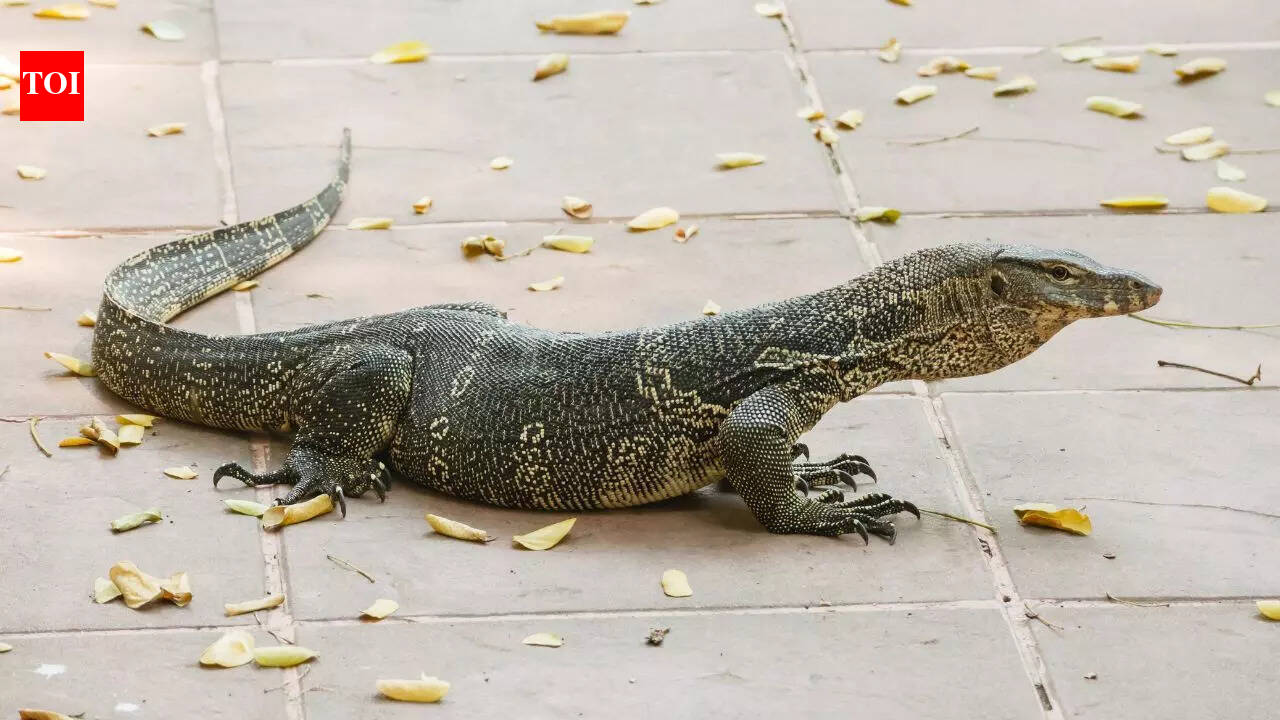
Can monitor lizards regrow tails like normal house lizards; here is what science says |


Can monitor lizards regrow tails like normal house lizards
Monitor Lizards (Image source: Canva)

Monitor lizards are often confused with common house lizards. At first glance, both have long bodies, sharp claws and extended tails. When people see a small wall lizard drop its tail and run away, the question naturally follows. Can larger reptiles, such as monitor lizards, do the same thing? If a monitor lizard loses its tail, will it grow back?This question has a clear scientific answer. Many lizard species have been studied and documented for their ability to lose and regrow their tails, a process called autotomy and regeneration. But not all lizards can do this. Monitor lizards are not the same type of animal as geckos or skinks, which often lose their tails.To find out if monitor lizards can grow back their tails, we need to look at reptile biology, how they have changed over time, and scientific studies on how things can grow back. Here you will get to know how tail autotomy works, which lizards can grow back their tails, where monitor lizards fit into the scientific picture, and what studies show about their ability to heal.

What is tail autotomy in lizards

Tail autotomy is a defense mechanism seen in many lizard species. The word “autotomy” comes from the Greek and means “self-cutting.” When threatened by a predator, certain lizards can voluntarily detach their tail. The detached tail continues to move for a short time, distracting the predator. Meanwhile, the lizard escapes.According to a research published in the journal Biological Reviews and studies in reptile physiology, this process occurs because some lizards have fracture planes inside their tail vertebrae. These are pre-formed weak points that allow the tail to break off cleanly without major blood loss.After detachment, many species regenerate a new tail over time. The regrown tail is usually made of cartilage instead of bone and may differ in colour and structure from the original.

What type of lizards can regrow their tails

Tail regeneration is common in several lizard families. Geckos, skinks, and some iguanas are well known for their ability to shed and regrow tails. According to the book Biology of the Reptilia edited by Carl Gans, tail autotomy has evolved independently multiple times in lizard evolution.The regenerated tail is not identical to the original. Various studies show that regenerated tails don’t have real vertebrae; instead, they form a rod of cartilage. The arrangement of muscles and the patterns of scales may also be different.This ability helps lizards survive, especially smaller ones that are at risk of being eaten.

Can monitor lizards regrow their tails

Monitor lizards belong to the family Varanidae and the genus Varanus. There are more than 80 recognised species worldwide, including the Nile monitor, Asian water monitor and Komodo dragon.Scientific evidence shows that monitor lizards do not possess the same tail autotomy mechanism found in geckos or skinks.According to research on tail autotomy and anatomy, many lizard species possess intra-vertebral fracture planes in their tail vertebrae. These fracture planes are specific structural features that allow a lizard to shed its tail as a defensive response. When a tail is dropped, the fracture plane splits along the vertebrae, and sphincter muscles minimise blood loss. This structural adaptation is well documented across reptile taxa that use autotomy as a defence strategy.This means they cannot intentionally drop their tails as a defense strategy.

Why did monitor lizards lose this ability

Evolution shapes survival strategies differently for different animals.Small lizards are vulnerable to birds, snakes and mammals. Shedding a tail increases survival chances. Monitor lizards, however, grow much larger and are active predators. Many species can defend themselves aggressively.A peer-reviewed research article published in PLoS ONE found that when lizards lose their tails through autotomy, it can significantly reduce their running speed and change their behaviour. This supports the idea that losing a tail affects balance, mobility and activity, and thus carries a biological cost for survival and fitness.Monitor lizards use their tails as weapons. Observational studies in wildlife research show that some species whip their tails to defend themselves. This defensive strategy reduces the evolutionary need for tail shedding.

How do monitor lizards defend themselves

Since they cannot drop their tails, monitor lizards rely on other survival mechanisms:

  • Strong jaws and sharp teeth
  • Powerful claws
  • Tail whipping as a physical defense
  • Speed and climbing ability
  • Swimming skills in aquatic species


Source link

Top 8 most expensive homes in Delhi


Steel magnate Lakshmi Mittal owns a Lutyens-zone mansion bought in 2005 for about ₹31 crore. Spread across roughly 2.5 acres, the residence includes multiple bedrooms, elegant living areas, and grand dining spaces. Despite being an older acquisition, it remains one of the notable luxury homes in Delhi due to its location and ownership.

The costly properties of Delhi represent more than just a residential space, but also a symbol of power, economics, architecture, and heritage. These properties, concentrated mainly within Lutyens’ Delhi and other areas of the Elite Zone, sell at unusually high prices because of their scarce landholdings, heritage, and connections with influential business families. Together, these residences illustrate how luxury real estate in the capital mirrors India’s evolving wealth landscape, where legacy industrialists and modern entrepreneurs share the same exclusive addresses.

Image Credit: Forbes India


Source link

Once, twice or thrice? How many times do we really fall madly in love, study reveals |


Once, twice or thrice? How many times do we really fall madly in love, study reveals

We’ve all swooned over those butterflies-in-your-stomach moments – the ones immortalised in Bollywood movies, Hollywood rom-coms, and countless diary entries. Falling passionately in love feels like the ultimate human high, right? That intense, can’t-eat-can’t-sleep obsession that poets rave about. But here’s a question no one’s crunched the numbers on until now: How many times does it actually happen in one lifetime? A fresh study from the Kinsey Institute finally lifts the lid, and spoiler – it’s fewer than your rom-com binge sessions might suggest.Researchers surveyed 10,036 single Americans, ages 18 to 99, with one simple query: “In your lifetime, how many times have you been passionately in love?” And, the average turned out to be just twice (precisely 2.05 times), as per the study. Break the result down, here’s how people responded to the question: 14% of people said zero times, 28% said once, 30% said twice, 17% said three times, and 11% said four or more times. “People chat about falling in love non-stop, but this is the first big study pinning down how rare it really is,” says lead author Dr. Amanda Gesselman, a Kinsey scientist, reported Phys.org. For most, that firecracker passion flares up only a handful of times – then life, well, happens.

Why Some Partners Fear Commitment: Insights From Love Guru Rachna Khanna Singh

What’s cool? It’s pretty universal. Straight, gay, lesbian, bisexual – differences were tiny across orientations. Older folks edged out the young ones slightly, proving Cupid doesn’t retire. Men reported a tad more (thanks mostly to straight guys outpacing straight women), but again, that’s a small number. Passionate love isn’t picky; it’s a great equaliser. Therapists love this data, it reminds clients that chasing endless fireworks isn’t the norm. Companionate love, that steady “ride-or-die” vibe? That’s the real long-game MVP.Why does this matter in 2026’s swipe-right world? Romance is still king – Kinsey’s Singles in America data (with Match) shows 60% of U.S. singles calling themselves “very romantic,” buying into love-at-first-sight fairy tales. But pressures are real: 51% feel more heat to couple up than past generations, and 73% blame movies for sky-high expectations. Think about it – social media flaunts highlight reels of grand gestures, leaving us ghosted by reality. This study grounds us: Passion is magic, but fleeting. Cherish it when it strikes, but don’t ditch solid bonds waiting for round three.For Indians navigating auntie-approved rishtas or Bumble matches, it’s a nudge too. That head-over-heels rush? That might not always be true love, but just attraction. Build deep love based on trust, laughs, and shared Netflix queues instead. Falling madly in love happens twice-ish on average for most people. But, staying madly in love– That’s the plot twist worth scripting.


Source link