7 playground rules that actually keep kids safe


7 playground rules that actually keep kids safe

Playgrounds are a world of excitement, but they also come with unseen risks. By following simple guidelines such as inspecting the play area, sharing equipment, wearing appropriate footwear, refraining from pushing others, adhering to designated age zones, and being aware of their guardian, kids can navigate these spaces with safety and assurance.

Playgrounds look harmless, but small risks hide in plain sight. A loose bolt, a fast-moving older child, or a moment of distraction can turn fun into injury. Many play areas sit inside parks, school grounds, or housing societies with mixed-age children and uneven maintenance. That makes safety lessons even more important. These 7 playground rules are not just warnings. They are habits that help children stay safe while still enjoying play.

Check the ground before the game begins

Children should learn to look down before looking around. Wet mud after rain, loose gravel, broken tiles, or stray stones can cause slips. In parks, morning dew and evening water sprinklers are common. A quick scan of the ground helps children choose where to run, jump, or sit. This habit also builds awareness, not fear.

One turn means one child

Many injuries happen because of crowding, not falling. Slides, see-saws, and swings are designed for one child at a time. When two children squeeze in, balance is lost. Teaching patience here matters. Waiting for a turn is not just good manners. It protects fingers, legs, and heads from sudden bumps.

Shoes stay on, laces stay tied

Although barefoot play can be dangerous outside the house, it feels joyful. In public areas, hot metal slides during the summer, rough cement edges, and hidden glass fragments are serious issues. Proper shoes that have their laces knotted provide protection and grip. besides this rule teaches kids to take care of their bodies.

No pushing, even during excitement

Playgrounds bring out energy and joy, but excitement can turn rough quickly. Pushing from behind, even as a joke, can sometimes cause serious falls. Children should be taught to stop, speak, and signal if they want space. Using words instead of hands is a simple lesson that stays useful beyond the playground.

Bigger kids, different zones

Older children play faster and jump higher. Younger ones may not judge speed or distance well. Teaching children to notice age groups helps everyone stay safe. If a space feels too rough or fast, moving to another area becomes a smart choice, not a weak one. This builds confidence and self-protection.

Pause when something feels wrong

A loose swing chain, a cracked slide, or a dog wandering nearby are signs to stop playing. Children should know that stepping away is allowed. In many Indian parks, repairs take time. Recognising danger and walking away is a powerful safety skill that lasts a lifetime.

Know where the trusted adult is

Children should always be aware of who is watching them. This does not mean constant fear. It means knowing where help is if and when needed. Whether it is a parent, grandparent, teacher, or caretaker, this rule helps children feel secure and reduces any panic during small accidents.Disclaimer: This article is for general awareness only. Playground conditions vary by location. Parents and caregivers should always supervise children and assess safety based on the environment and the child’s age and abilities.


Source link

Canada Visitor Visa for Indian passport holders: Current timelines and how to apply |


Canada Visitor Visa for Indian passport holders: Current timelines and how to apply

All those planning a trip to Canada, and have some confusions related to visa, this article might help you a bit. It’s in the context of Indian travellers holding an Indian passport, and who is planning to travel to Canada from India as a tourist. First things first; for them the most crucial thing to factor into their plans is visa processing time. Now, as per the latest update from Immigration, Refugees and Citizenship Canada (IRCC), applications for a visitor visa submitted from India currently take around 83 days to process.

Canada Visitor Visa

https://www.canada.ca/

Current processing time for Indian applicants

So, as mentioned earlier, for visitor visa applications made from outside Canada, IRCC lists the processing time for India at 83 days. Do note that this figure was last updated on January 28, 2026, and that the data is refreshed weekly. The processing time gives an idea on how long it took IRCC to process most complete applications in the recent past.It is necessary to mention that this time line, however, does not guarantee or give the maximum limit. It might happen that some applications may be processed faster, while others may take longer depending on individual circumstances.

canada approved

Canva

What the processing time includes, and excludes

IRCC counts processing time from the day it receives a complete application until a final decision is made. However, the following are not included in the timeline: Time required to transfer documents between a Visa Application Centre (VAC) and the visa office Time taken by applicants to book and provide biometrics If an application is missing documents or information, it may be delayed or even returned, which can significantly, and further extend the overall processing period.

Canada

Canva

Who needs a visitor visa to travel to Canada?

This is one question that many of you will ask. For this, travellers need to know that they must have the correct entry document to enter or transit through Canada. Depending on nationality and travel circumstances, this could be: A visitor visaAn electronic travel authorization (eTA)Or, in some cases, just a passport will be sufficientAs regarding Indian passport holders, they would require a visitor visa to travel to Canada.Read more: Baggage Rules, 2026: Duty-free limits, jewellery allowance and advance baggage declaration explained

Visitor visa validity, cost, and length of stay

To secure a Canadian visitor visa, it can cost CAN $100, as per the official information.It can be issued as either a single-entry or multiple-entry visa, and will remain valid up to a maximum of 10 years, depending on the applicant’s passport validity and immigration history.Each visit to Canada will let you enjoy a stay of up to six months, unless a different duration is specified by a border services officer at the port of entry.Applicants must hold a valid passport or travel document that covers the entire intended period of stay in Canada.

When the visitor visa is required:

  • To board a flight to Canada
  • At the Canadian port of entry
  • It is not required for domestic flights within Canada or when leaving the country.

Read more: How many rivers flow through Gir National Park? A closer look at its lifelines

Possible reasons for inadmissibility

Well, not everyone can just enter Canada. An applicant may be found inadmissible for reasons including:

  • Past criminal convictions, including impaired driving
  • Security concerns
  • Certain medical conditions
  • Applications are assessed under the Immigration and Refugee Protection Act and related regulations.

Planning ahead for a smooth trip

Applying far in advance of your intended travel date is highly advised due to the current 83-day processing time for Indian applicants. High application numbers or complicated cases can cause processing delays, so planning beforehand is essential for a hassle-free trip.


Source link

Gir National Park: How many rivers flow through Gir National Park? A closer look at its lifelines |


How many rivers flow through Gir National Park? A closer look at its lifelines

We all know that this place is known worldwide as the last natural habitat of the Asiatic lion. Gir National Park is, however, much more than a predator stronghold. Beneath its dry deciduous forests, lies a carefully balanced natural system sustained by rivers, and reservoirs. These rivers are the true lifelines of Gir, shaping its ecology, wildlife distribution, and even human settlements around the forest.

Rivers in Gir National Park

Gir National Park

Gir National Park and Sanctuary is watered by seven perennial rivers. These river streams are perennial, and they substantially contribute to the water supply during the long non-monsoon seasons in Gujarat. The seven rivers are:

  • Hiran
  • Shetrunji
  • Dhatarvadi (Datardi)
  • Shingoda
  • Machhundri
  • Raval
  • Ambajal

These rivers serve as the support system of diverse ecosystems of the park, ensuring that water reaches grasslands, forest patches and reservoirs across Gir landscape.

The Hiran River: The life line of Gir

Among all the rivers that flow through Gir, the River Hiran is considered to be the most significant. The Hiran River originates from near the Sasa hills ofGir Forest and flows in a westward direction forming a drainage basin as much as 40 km long. The total Hiran river catchment area is about 518 square kilometres (200 sq mi).

Gir Forest National Park

The Hiran River is fed by tributaries and sub-tributaries such as the Saraswati River and the Ambakhoi, among a few minor ones that come together at Talala town. This makes a very fullriver system as the Hiran is capable of supporting life.Crucially, the Hiran River runs through the western side of the Gir forest, providing water throughout the year. The river supports grasslands where herbivores roam and watering holes for carnivores such as the Asiatic lion.Read more: Nirmala Sitharaman says India can offer world-class hiking and trekking: 5 best places for these activities

Dams and reservoirs inside Gir

Of the seven rivers, four have dams built on them: Hiran, Machhundri, Raval, and Shingoda. These four dams have formed four major reservoirs, which ensure a supply of water in the dry season.Famous among them is the Kamleshwar Dam, which is constructed over the Hiran River. Known as the ‘Lifeline of Gir’, this reservoir is among the best places to spot wildlife, especially during summers when animals gather around water holes. Umrethi Dam is another large project connected to the Hiran River.

Rivers and Gir’s biodiversity

Although with regard to wildlife, it’s home to only about 38 mammalian species, the total biodiversity in Gir exceeds 2,300 species. That’s along with 300 species of birds, 37reptile species, and hundreds of insects. The rivers and reservoirs have a direct hand in maintaining this diversity.Predators such as the Asiatic lion, Indian leopard, striped hyena, jungle cat, desert cat, honey badger, and mongoose depend on river-fed habitats to hunt and survive. Herbivores like chital, sambar, nilgai, chinkara, blackbuck, wild boar, and four-horned antelope rely on riverine vegetation for food and shelter. Reptiles such as crocodiles, Indian cobras, monitor lizards, and tortoises are closely tied to Gir’s water bodies.Read more: Baggage Rules, 2026: Duty-free limits, jewellery allowance and advance baggage declaration explained

Forest vegetation shaped by water

The dry deciduous forest that dominates Gir’s environment is interwoven with more than 500 different plant species, including teak and banyan trees. These vegetative zones are maintained by the rivers, which provide shady passageways that are vital for both mammals and birds. Seasonal flooding enriches the soil, allowing grasslands and scrub forests to regenerate naturally.Despite being among India’s most protected forests, the rivers of Gir too are not completely free from threats that continue to press in on them. There are natural risks posed by a range of phenomena such as cyclones, forest fires, floods and repeated occurrence of droughts. Human-induced pressures are grazing, invasion, vehicle impacts, tourism-related degradation and mining activities in vicinity. Pollution of railway lines running through peripheral areas have also a deterioration effect on the environment.Despite these challenges, Gir remains the most promising long-term refuge for the Asiatic lion. Its rivers, especially the Hiran, continue to act as the invisible threads holding this fragile yet resilient ecosystem together.


Source link

Baggage Rules, 2026: Duty-free limits, jewellery allowance and advance baggage declaration explained |


Baggage Rules, 2026: Duty-free limits, jewellery allowance and advance baggage declaration explained

In a bid to facilitate ease of international travel and bring about hassle-free movement, the Central Government has notified the Baggage Rules, 2026, along with the New Customs Baggage (Declaration and Processing) Regulations, 2026, and issued a consolidated Master Circular. The changes, announced by the Ministry of Finance, are designed to reduce paperwork, enhance transparency, and significantly speed up customs clearance at Indian airports.The government states that the revised framework takes into account current economic realities, growing level of international travel and changing passenger preferences. The new rules were drafted after consultations with a number of stakeholders, including other ministries, airport operators and passengers.

baggage rules

PIB press release

Electronic and advance baggage declaration

Of the many changes, the implementation of electronic and advanced baggage declarations is one of the most important. Passengers flying in and out of India can now digitally declare their baggage, even during travel itself, perhaps before the flight lands at a destination too, thereby saving time at customs counters. The government had said this will lead to a more efficient process and clearance for international passengers.

baggage

The new Customs Baggage (Declaration and Processing) Regulations, 2026 consolidate and revise 35 earlier circulars in an effort to usher a simplified approach for clearer operational guidance and uniform implementation across customs formations.

Enhanced general duty-free allowance

The Baggage Rules, 2026 introduce enhanced duty-free allowances, updated to reflect modern travel realities. The revised limits for different passenger categories are:

  • Residents: INR 75,000
  • Indian tourists: INR 75,000
  • Foreign nations with a valid visa (other than tourist visa): INR 75,000
  • Foreign tourists: INR 25,000
  • Crew members: INR 2,500

The government also emphasized that passengers coming through land borders will not be entitled to any general duty-free allowance.

General free allowance

PIB press release

Simplified transfer of residence benefits

The new rules additionally modernise and streamline TR benefits. Instead of multiple lists specific to items, a single consolidated list of duty-free items has now been prescribed with an overall value ceiling linked with the period of stay abroad as follows:

  • Up to 12 months: INR 1.5 lakh
  • 1–2 years: INR 3 lakh
  • More than 2 years: INR 7.5 lakh

This will not only help in avoiding confusion, but also speeding up the clearance process for the returning residents coming back to India.

Jewellery allowance revised

One other key change is on the duty free jewellery allowances. The outdated value-based caps have been dispensed, and allowances are now prescribed purely on a weight basis for eligible returning residents and tourists of Indian origin who have stayed abroad for more than one year:

  • Female passengers: up to 40 grams
  • Passengers other than female: up to 20 grams

This change is expected to simplify assessment and reduce disputes at customs.

Temporary imports, re-imports, and consolidated concessions

To address frequent issues faced by travellers carrying items temporarily, the new rules introduce provisions for temporary imports and re-imports. Customs authorities will now be able to issue temporary baggage import or export certificates for goods brought into or taken out of India temporarily, helping avoid unnecessary detention during return.The government has also formally incorporated consolidated concessions into the rules. These include the duty-free import of one laptop for passengers above 18 years of age and the duty-free import of pets, subject to prescribed conditions.

Focus on passenger facilitation

The Finance Ministry said the new baggage policy has been revised keeping in view the feedback after thoroughly examining passenger’s views and considering sentiments. An increase in the duty-free allowance, less detention of goods, digitalisation and simplified procedures are expected to enhance the travel experience without compromising regulatory aspects.The government added that the uniform implementation of these rules across airports will strengthen India’s position as a globally connected and tourism-friendly destination. The Baggage Rules, 2026 and the accompanying regulations officially come into effect following their notification, as announced by the Press Information Bureau, Delhi, on February 2, 2026.


Source link

Man moves back to India after 7 successful years in US, compares with life in Bengaluru; “I faced issues in…” |


Man moves back to India after 7 successful years in US, compares with life in Bengaluru; "I faced issues in..."

The decision to move back to India after years abroad is rarely simple. For many professionals who have spent a significant part of their adult lives in the US, the idea of returning is weighed down by fears of regression, poorer infrastructure, pollution, bureaucracy, work culture, and a perceived loss of quality of life. Online forums are filled with strong opinions on both sides, often painting the choice as a difficult one. Likewise, earlier this year, one Reddit user (Classic_Ad1336) shared his experience of moving back to India after seven years in the US, and offered a balanced note on expectations versus reality. The post, as usual, resonated with many who were indeed grappling with the same decision. He shared, “Moved back to India after 7 years in the US. My experience so far…” According to him, he wanted to come back because of lots of reasons. He shares, “I couldn’t see myself settling there, the visa hamster wheel, my parents getting old. I didn’t come back with rose-tinted glasses. A lot of the concerns people raise here are real: AQI is bad, hygiene, civic sense and littering on the roads, infrastructure is uneven, bureaucracy can be frustrating. Those aren’t imaginary problems, and I’m not trying to downplay them. I was told by my friends and family not to move back, and that I’ll regret moving back.”

road trip

Giving suggestions always seems easy, but the actual hurdle lies in implementing it in real life. He shared that as he moved back reality was far more practical. Instead of constantly thinking ‘this country is broken,’ he is going with the flow… living, working, meeting people, moving around, dealing with annoyances when they come up, and enjoying certain things like food, hanging out with family and friends, convenience of getting stuff done in the house like cooking and cleaning, with no more stupid visa worries.Well, staying abroad has both pros and cons. He pushed back against the idea that the challenges faced abroad are somehow lesser or easier to tackle. He shared, “I faced issues in Houston as well — homelessness, gun violence, racism, missing family and traffic in Houston is no joke despite the 8 lane highways. Heck I didn’t feel safe roaming there at night in certain neighborhoods. So while there as well I had to find a way to work around these issues and go on living my day to day.He agreed that he is not claiming this will be everyone’s experience, or that India doesn’t have serious issues. He was just sharing his views that for him the gap between online narratives and reality has been noticeable, in a way that he didn’t fully expect before returning.However, one thing he was sure about which is, “So far I haven’t regretted my decision of moving back and I don’t intend to go back to the US anytime soon.”

reddit

He said, “As far as work-life balance is concerned for my line of work, I haven’t noticed a meaningful difference compared to the US. Long hours and blurred boundaries exist there too…Same with traffic — congestion and stressful commutes are a reality in large US metropolitans as well… Bengaluru traffic doesn’t feel that unfamiliar or unique to me.” For all those contemplating a similar move, apart from sharing that reality an expectation can be very different, and also whether one wants to stay in the US or move back should be a personal choice, and not something driven by online narratives or general trends.People also seemed to agree with him. While agreeing with him, one shared that life is such, when you live in the US, you enjoy what it has to offer and navigate its challenges; when you live in India, it’s the same approach. No point fighting reality, study it, adapt to it, play the game according to its rules.Others also echoed the idea that constant comparison, in either direction, often leads to dissatisfaction.The discussions that happen around relocation debates, there is no objectively correct choice. There is only the choice that aligns best with one’s priorities, tolerance for uncertainty, and definition of a good life, something no online narrative can fully decide for you.


Source link

8 baby boy names that are inspired by successful celebrities


Choosing a baby boy’s name often starts with meaning and ends with emotion. Many Indian parents also look at real role models, people who built success with talent, discipline, and grit. Celebrity-inspired names work best when they feel familiar, grounded, and future-ready, not flashy. Here are eight baby boy names inspired by successful celebrities, each with a thoughtful twist that suits today’s Indian families and modern values.


Source link

Curiosity Corner: Where are some places on Earth where the sun never rises or sets |


Curiosity Corner: Where are some places on Earth where the sun never rises or sets
Earth’s tilt causes extreme light and dark periods near the poles. Places like Svalbard and Tromsø in Norway, and Utqiaġvik, Alaska, experience weeks of continuous daylight in summer and prolonged darkness in winter. Antarctica sees nearly six months of sun followed by six months of night, impacting local wildlife and human life.

Earth loves to surprise curious minds. On most days, the sun rises in the morning and sets at night. But near the very top and bottom of the planet, the sun plays by different rules. In some places, it stays in the sky for weeks or even months. In other places, it disappears for a long time. These strange and wonderful light stories happen because Earth is tilted as it travels around the sun.

Why does this happen at all?

Earth is slightly tilted, like a spinning top that leans. Because of this tilt, some parts of Earth lean toward the sun for a long time, while others lean away. Areas above the Arctic Circle in the north and below the Antarctic Circle in the south feel this the most. When these places lean toward the sun, they get the Midnight Sun. When they lean away, they get the Polar Night.

Svalbard, Norway

Svalbard sits far north, close to the North Pole. Here, the sun does not set from about late April to August. Children can play outside at midnight with the sky still bright. In winter, the opposite happens. The sun does not rise for weeks, and the land rests in deep darkness. Locals light candles and enjoy warm food to make winter feel cozy.

Tromsø, Norway

Tromsø is a lively city above the Arctic Circle. From late May to late July, the sun stays up all day and night. Birds keep singing because they think it is always daytime. In winter, the sun stays below the horizon, but the sky often glows blue or pink for a short time, like a painted picture.

Utqiaġvik, Alaska

Utqiaġvik is the northernmost town in the United States. The sun rises in mid-May and does not set again until early August. That means no bedtime darkness for about 80 days. In winter, the town goes through more than two months without sunrise. Snow, stars, and silence fill the long nights.

Frozen Giants

Parts of Greenland see weeks of nonstop daylight in summer and deep darkness in winter. Even more extreme is Antarctica. Near the South Pole, the sun stays up for almost six months, then disappears for another six months. Penguins experience one very long day and one very long night each year.

Life under endless day or night

Living without normal days and nights is not easy. Children use curtains to block light during summer so they can sleep. In winter, bright lamps help people feel cheerful. These places teach an important lesson. Nature does not look the same everywhere, and Earth has many rhythms, not just one.Disclaimer: This article is written for learning and curiosity. The timings mentioned are approximate and can change slightly each year due to Earth’s movement and location within these regions.


Source link

Quote of the day for kids: “The only limit to our realisation of tomorrow will be our doubts of today.” – Franklin D. Roosevelt |


Quote of the day for kids: "The only limit to our realisation of tomorrow will be our doubts of today." - Franklin D. Roosevelt
The insights of Franklin D. Roosevelt remind us that the convictions we hold today pave the way for the successes of tomorrow. For young minds, learning to conquer their fears is essential for cultivating their aspirations. Temporary failures can not and should not dictate their paths; rather, they serve as valuable lessons.

“The only limit to our realisation of tomorrow will be our doubts of today.” – Franklin D. Roosevelt. This quote sounds big, but its meaning is gentle and clear. It says that the future is shaped not just by talent or luck, but by belief. When doubt grows too loud, it quietly shrinks dreams. For children, this message matters deeply because childhood is the time when dreams are first formed, tested, and sometimes questioned.

What the quote really means for kids

The quote tells children that doubt can act like an invisible wall. It does not shout or stop them openly. It simply whispers, “Maybe you can’t.” When a child starts believing that whisper, effort slows down. When doubt is kept small, curiosity stays alive. The quote reminds kids that today’s thoughts decide how far tomorrow can go.

How doubt sneaks into a child’s world

Doubt often enters through small moments. A wrong answer in class. A lost race on the playground. A comparison with another child. These moments seem tiny, but they leave marks. The quote teaches that these moments should not define the future. One mistake today does not decide who a child becomes tomorrow.

The parenting link: Building belief at home

Parenting plays a quiet role here. Children borrow beliefs from adults before they build their very own. When effort is noticed more than results, doubt loses power. When children feel safe to try again, the mere fear steps back. The quote connects to parenting by reminding adults that words at home often become a child’s inner voice later.

What kids learn about failure

The quote does not say doubt will disappear forever. It teaches that doubt should not be in charge. Children learn that failure is not a stop sign. It is a signal to pause, learn, and move forward. This lesson helps children grow patient with themselves, especially when progress feels slow.

Turning doubt into questions, not fear

A takeaway for kids is this: doubt can be turned into questions. “What went wrong?” is healthier than “I can’t do this.” Questions open doors. Fear closes them. The quote quietly pushes children to stay curious instead of scared. Curiosity always gives tomorrow more room.

A lesson that grows with age

This quote stays relevant as children grow. School challenges change. Social pressures increase. Dreams become clearer and harder. The message stays the same. Belief does not promise success every time, but it promises effort. And effort always shapes a stronger tomorrow.Disclaimer: This article is meant for learning and inspiration only. It does not replace professional advice related to child development, education, or mental health. Every child grows at their own pace, and individual needs may vary.


Source link

5 things you didn’t know about Donald Trump’s viral India Gate post and the ‘Greatest Arch’ idea |


5 things you didn’t know about Donald Trump’s viral India Gate post and the ‘Greatest Arch’ idea

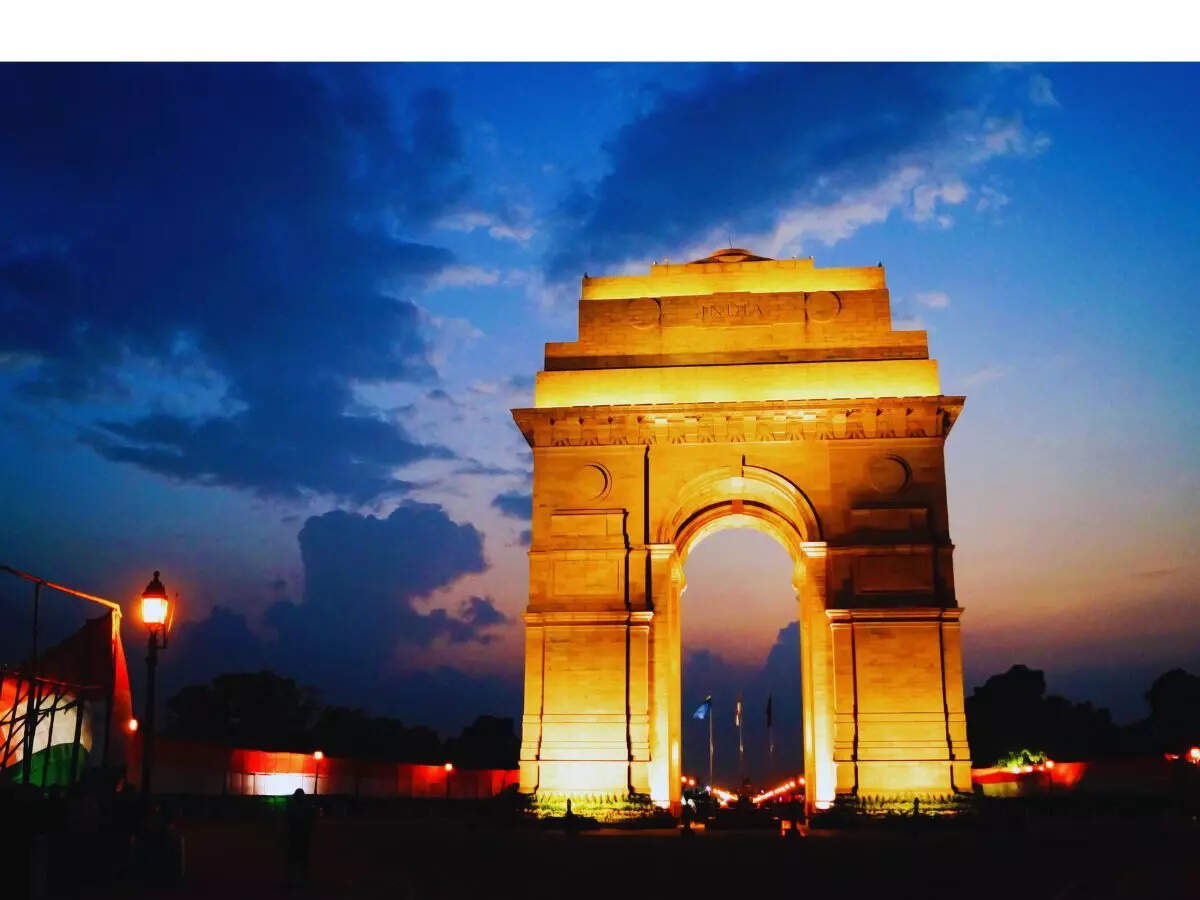
Donald J. Trump, the U.S President, recently posted a picture of DIndia’s iconic India Gate on his social media platform and called it “India’s beautiful triumphal arch” and declaring “Ours will be the greatest of them all!” For those who don’t know, India Gate is a war memorial in New Delhi and his remark was connected to his proposal to construct a mammoth triumphal arch in Washington, D.C. The post went viral in no time and soon became a subject of global curiosity.Now let’s have a look at five surprising facts you probably didn’t know about this post which is attracting mass global attention:India Gate is not just an arch; it’s a piece of history

Delhi India Gate

Canva

India Gate is an iconic architectural landmark and a war memorial designed by British architect Edwin Lutyens. It was inaugurated in 1931 and built in the memory of over 70,000 Indian soldiers who died serving the British Indian army during World War I and the Third Anglo-Afghan War. Their sacrifice is also reflected by the Amar Jawan Jyoti, the eternal flame.Washington, D.C., is among the few world capitals without a triumphal archYes, you read that right. Despite being a popular global city, there’s no triumphal arch in Washington, D.C. When Trump said “the greatest of them all,” he also meant that Washington, D.C. has no triumphal arch yet. There are some 57 cities in the world which have triumphal arches.“The Independence Arch”They are calling Trump’s envisioned monument as the “Independence Arch.” The nickname aligns with the 250th anniversary of American independence in 2026. Taller than India Gate, as per Trump’s visionAnother interesting fact is that when (if) built, it will be taller than India Gate which is around 42 meters (about 138 feet) tall. That would make it one of the tallest triumphal arches in the world. A messageBy highlighting India Gate, it is like sending a message and acknowledging India’s cultural significance. It matters because a picture along with a slogan reflect how leaders use symbolism and architecture. In this case, Trump’s reference has sparked a global debate about history, and symbolism.


Source link