The Wrong Shoe theory: Why your footwear shouldn’t match your outfit


The Wrong Shoe theory: Why your footwear shouldn't match your outfit
The “Wrong Shoe Theory” suggests intentionally pairing outfits with contrasting footwear to create visual interest and a more personal style. This trend, popularized by stylists, encourages breaking traditional fashion rules by opting for unexpected shoe choices, making outfits feel modern and lived-in.

Have you ever put together a look that made perfect sense on paper but felt incredibly boring in the mirror? You wore the floral kurta with the matching juttis. You paired the tailored office trousers with sensible pumps. You did everything “right,” yet the result looked more like a mannequin display than a personal style statement.If this sounds familiar, your problem might be that your shoes match your outfit too well.Enter the “Wrong Shoe Theory,” a styling trick that has quietly taken over the fashion world – from the streets of Milan to the hustle of Mumbai. It suggests that the most stylish choice is often the one that feels completely incorrect.

What is the Wrong Shoe Theory?

The concept is simple. Instead of finishing a look with the obvious footwear choice, you intentionally choose the shoe that opposes the vibe of your clothes. If your outfit is feminine and flowery, you skip the delicate sandals and reach for chunky sneakers. If you are wearing stiff corporate tailoring, you ditch the heels for casual chappals.

istockphoto-528742411-612x612

The term was popularized by stylist Allison Bornstein, the author of Wear It Well. The idea is to create visual friction. When everything matches perfectly, the eye glides over the outfit without stopping. But when you introduce a contrasting element -like a heavy boot with a chiffon saree, it forces the viewer to pay attention.

The desi edit: How to make it work here

While the theory started in the West, it was practically made for Indian wardrobes. We often fall into the trap of thinking ethnic wear must be paired with ethnic shoes. The Wrong Shoe Theory asks you to break that rule.The Saree Update: We usually default to heels or embellished wedges with a saree. But have you tried the “Sonam Kapoor approach”? Try pairing a crisp cotton saree with brogues or ankle boots. It instantly shifts the vibe from “wedding guest” to “art curator.”The Kurta Twist: A simple cotton kurta and palazzo set is a summer staple. The expected shoe is a Kolhapuri or a jutti. To apply the theory, swap them for a pair of chunky “dad sneakers” or loafers. It toughens up the look and makes it feel modern rather than purely traditional.The Anti-Corporate Suit: For the office-goers, take your favorite oversized blazer and trousers. Instead of the usual oxfords, try a simple pair of leather flip-flops or thong sandals. It’s a classic move popularized by the Olsen twins, but it works perfectly for the Indian climate. It says you mean business, but you’re relaxed about it.

Commuter Chic: Fashion meets survival

Let’s be real, this trend is a blessing for anyone navigating the Delhi Metro or a Mumbai local. We’ve been told for years that “beauty is pain,” but the Wrong Shoe Theory argues that comfort is actually cooler.

istockphoto-618337428-612x612

Wearing running shoes with your lehenga or heavy work gear isn’t just a commute hack anymore; it’s a legitimate style statement. It signals that you are busy, you have places to be, and you aren’t going to let a pinch-y pair of heels slow you down. It transforms a practical necessity into a deliberate fashion choice.

The celebrity seal of approval

It isn’t just a Western obsession, either. While Hailey Bieber might be the global poster child for pairing ballgowns with dad sneakers, Bollywood has fully embraced the art of the clash. We have seen a massive shift in Indian wear, with stars like Alia Bhatt normalizing the use of comfortable kicks under heavy lehengas.They understand that perfection is overrated. We are moving away from perfectly curated aesthetics toward a style that feels lived-in and real.The best part? You don’t need to buy new clothes to try this. You just need to swap the shoes you already own. The next time you get dressed, look at your shoes. If they feel like the “safe” choice, put them back. Reach for the pair that feels a little bit weird. Because sometimes, being a little bit wrong is exactly right.

Source link

“Snow is not our dustbin. High time we bring civic sense is cool trend”: A lesson from the hills I will never forget


“Snow is not our dustbin. High time we bring civic sense is cool trend”: A lesson from the hills I will never forget

I hate winters. But somehow I love snow, thanks to “Harry Potter and the depiction of snow in the Hogsmeade”. But the irony is, I had never seen snow before. Not the kind you see in movies or Instagram reels—soft, white, untouched and unreal. I mean real snow! Cold enough to burn your fingers but soft enough to disappear under your boots. And that’s the only reason that the dreamy snowlover in me decided to travel all the way to Lansdowne in Uttarakhand from Delhi recently. It was peak winter and the forecast promised snowfall. That’s when my soul whispered: this is it. If I didn’t go now, I might never get to see the white beauty. After battling hours of traffic jams, car honks, and vomiting, I finally reached. The town looked like it had paused mid-breath. And I was like, “ya, the sight is actually worth all the pain”!Snow rested gently on rooftops, some clung to tree branches just like I had seen in the movies. The roads were also covered in a soft white blanket. The endless valleys, layered in white and grey, fading into mist. The tin of the houses buried deep under snow looked smaller. Every step I was taking was making a crunching sound. There I stood still. Took a deep breath as coming from Delhi’s pollution, this was my moment to fill my lungs with clean, unpolluted air. It was an overwhelming moment.It was magic.It was pure.It was love at first sight.It was like I was in Hogwarts enjoying winters.It was everything I had imagined.And then I saw a bottle.

Snow is not our dustbin

PC: Priya Srivastava/TOI

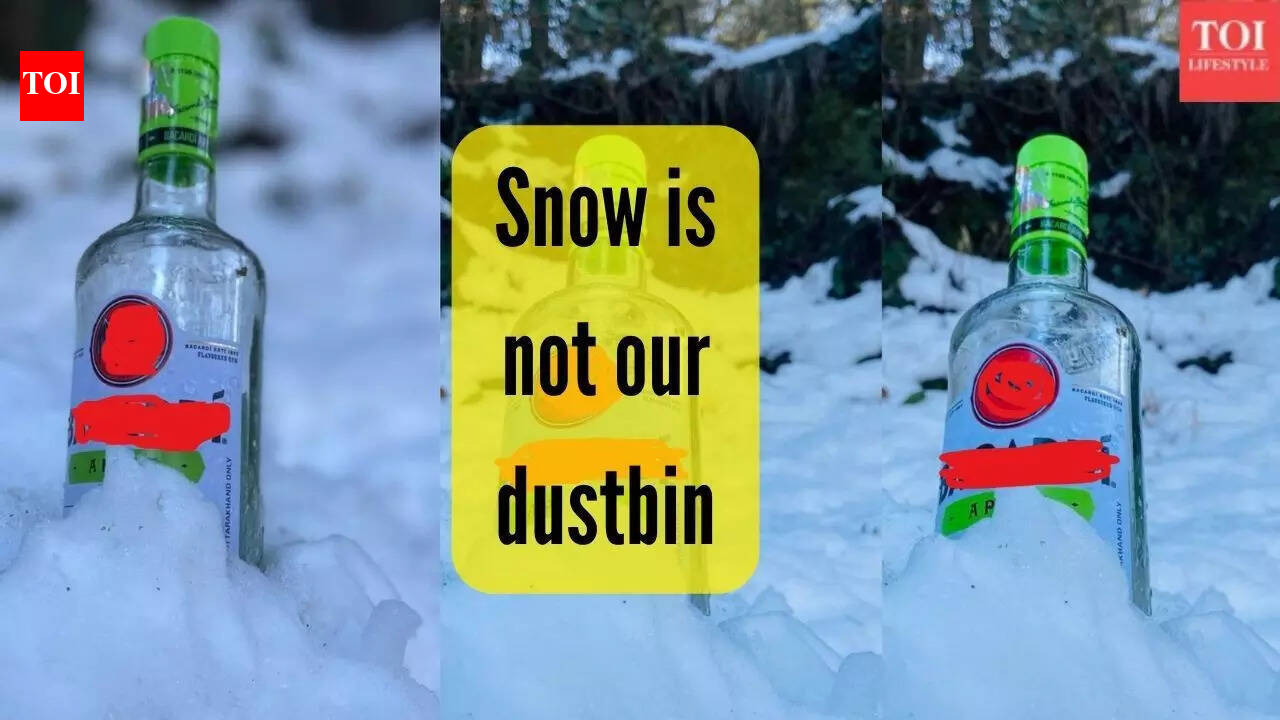
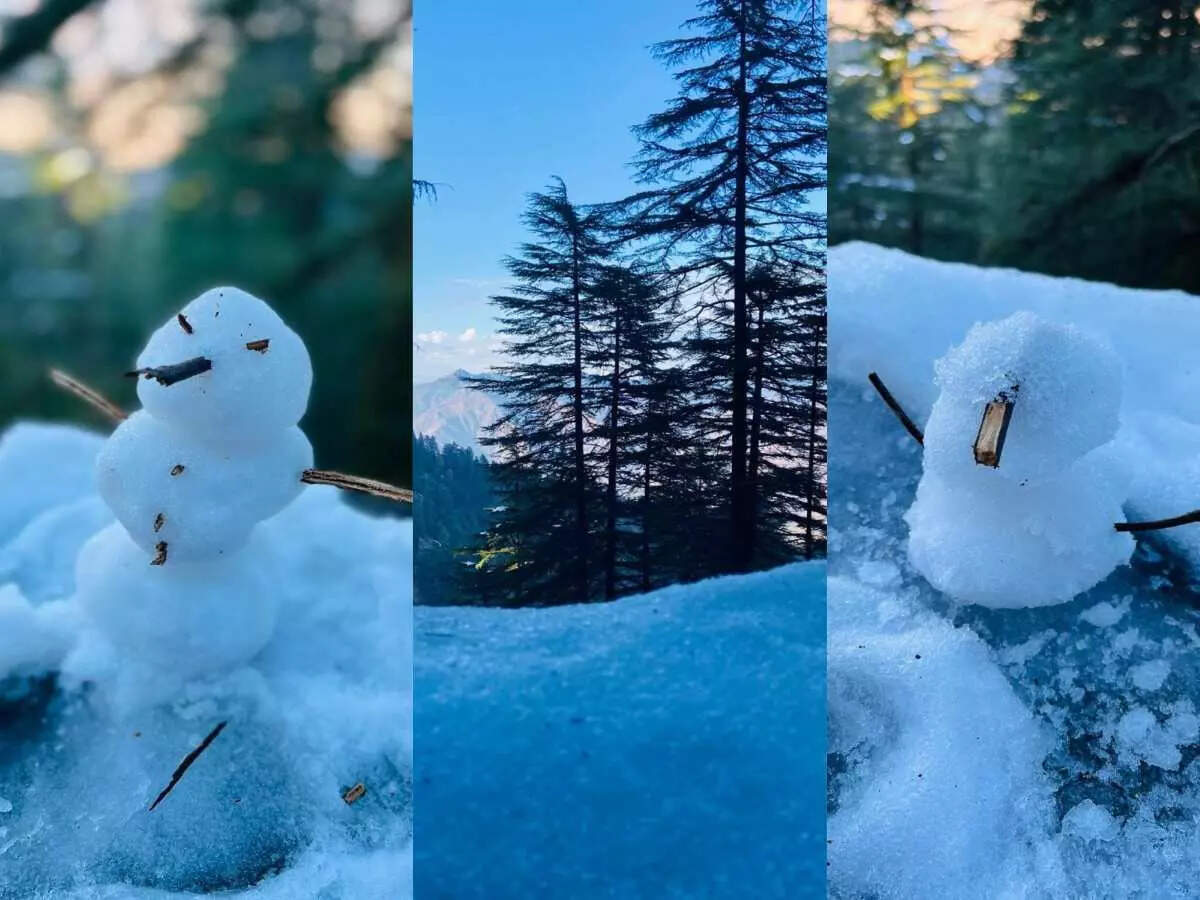
At first, I thought it would be snow in the shape of a bottle. But no, it wasn’t. It was a green and white glass bottle poking out of the snow. Somebody took their time to bury it close to the roadside walking path. I walked closer and saw it was a bottle of alcohol, half buried, frozen into the snow like it was its home.I looked around, there were little kids with families. My heart sank. Then I noticed another bottle, not far from it. And then I couldn’t stop seeing them. Beer bottles. Some dug deep into the snow, some tossed carelessly.But the doers didn’t realise that snow doesn’t erase bad behaviour. It only hides it for some time.That’s when I saw a little boy. He must have been eight or nine, all bundled up in a jacket too big for him, heavy gloves clinging to his small but strong hands. I saw him sitting across the road. The little boy was trying to pull something out with all his strength. His parents were also there, trying to help him while watching carefully.I walked closer. It was a dark brown coloured beer bottle, stuck solid in the snow. He, with the help of his father, was successful in removing the bottle. The boy looked up at anyone who passed by and said, “Let’s remove all these glass bottles. It’s bad. We can’t play in the snow because of these bottles. Someone might get hurt.”The irony! Kids are paying for adults’ misbehavior. Here was a child who had come all the way up in the hope of playing with snow, to build a snowman and instead, he was trying to clean up some adult’s mess.I felt ashamed for us.Soon, it became a quiet collective effort. Two-three youngsters joined in. Other snow lovers, photographers, travellers like me also paused, bent down, and one by one, we managed to move more bottles out.Six.Seven.More. I did not count.When we were done, the snow looked better and safe. It was just a small patch of snow. There was snow all over. And I was imagining how many more bottles the snow hides. Meanwhile, the boy smiled and ran off and started his game of making a snowman with his family.

The snowman

PC: Priya Srivastava/TOI

Later that night, while scrolling through Instagram, I saw several reels and pictures from snowy destinations where people had spat paan and gutkha and liquor bottles. They don’t realise that snow is not our dustbin. Mountains are not the places where responsibility goes on vacation.We’ve somehow made “zero civic sense” a trend. But maybe it’s time we make bringing civic sense back a trend instead. If a little kid can understand that glass doesn’t belong in the snow, why can’t we?While Lansdowne gave me my first snowfall experience, it also gave me a lesson I didn’t expect. As travellers, we say “leave only footprints.” But maybe it’s time we actually mean it.Let’s stop hiding our mess under snow, sand, or sea.Let’s follow, “civic sense is cool”, a trend worth following.Disclaimer: The above account is based on the author’s personal experience, and The Times of India does not endorse or verify these views.


Source link

40-ton humpback whales travel 5,000 miles each year performing epic jumps and jaw-dropping shows |


40-ton humpback whales travel 5,000 miles each year performing epic jumps and jaw-dropping shows

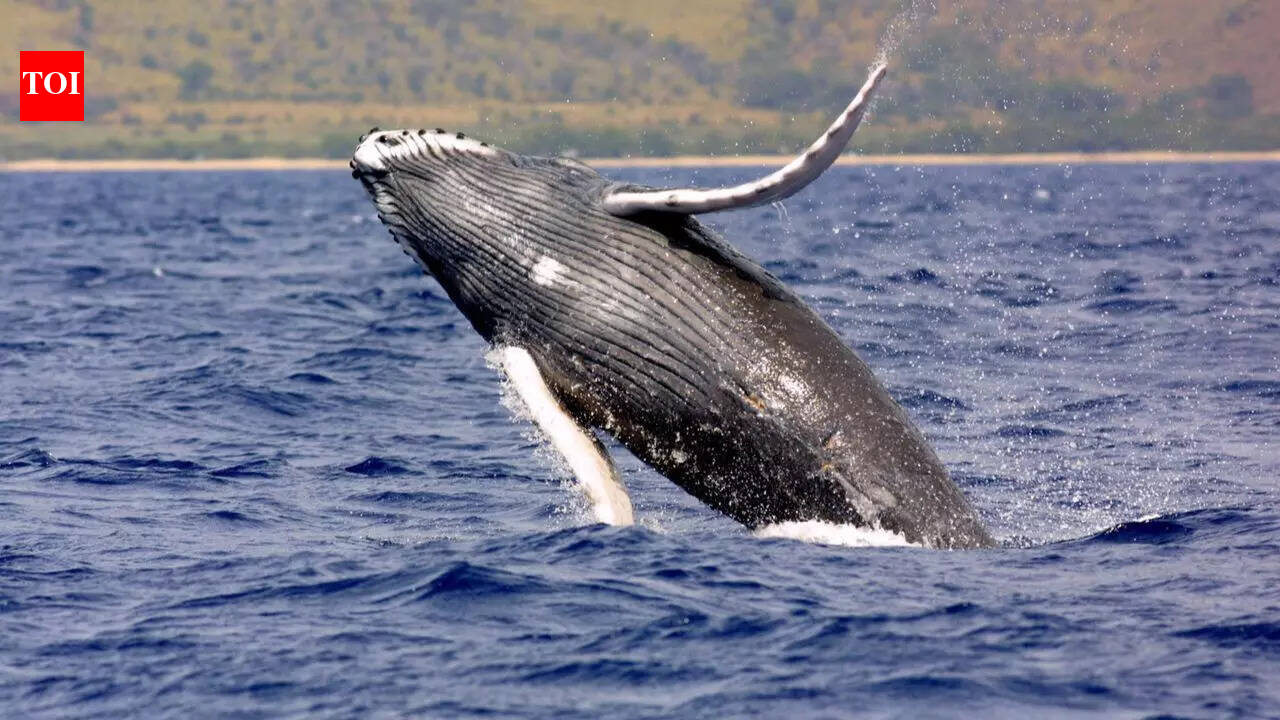
Humpback whales surface, leap out of the water, slap the sea with their massive fins and tails. And its seems very similar to whales, but humpbacks have something extra. Up to 60 feet long, weighing as much as 40 tons. Some can live close to 90 years. They travel thousands of miles every year from tropical breeding grounds to cold, nutrient-rich feeding areas. But, humpback conservation threats from humans add a risk. Fishing nets, busy shipping lanes, and even ocean noise. Still, these whales persist. They are playful, dramatic, and somehow enduring. Humpback whales are more than just giant mammals. They are performers, athletes, and symbols of resilience. Each breach, tail slap, or bubble-net feeding session is a reminder of the ocean’s wonder.

Humpback whale patterns and feeding habits

They are mostly black in colour but many have white patches on bellies, fins, and tails. Southern Hemisphere whales often show more white than northern ones. Each tail is unique. Scientists spot whales by tail shape, scars, and colours. Like fingerprints. This helps track behaviour, movement, and health over decades. Some carry scars from fights or entanglements. They eat krill and small fish. Filter huge amounts of water through baleen plates. Bubble-net feeding is clever. A group swims in circles, blows bubbles to trap fish, then lunges up to catch them. It looks like play. Like a choreographed move. But it works.

Humpback whale migration and reproduction

Humpbacks live in all oceans. They travel long distances. Some go 5,000 miles from summer feeding spots to winter breeding areas. North Pacific whales swim from Alaska to Hawaii in around 28 days. North Atlantic whales move from the Gulf of Maine to the West Indies or Cape Verde. Southern Hemisphere whales feed in Antarctic waters. Calving happens in shallow, warm waters. Adults dive deep for food. Exhausting trips. But they do it every year. It seems instinctive.Whales mature between 4 and 10 years. Females usually have one calf every 2–3 years. Some calve yearly. Gestation about 11 months. Calves 13–16 feet long. Stay near mothers up to a year. Mothers protect them, swimming close, nudging them with fins. Bonds are temporary but strong.

Human impacts and threats to humpback whales

Humans make life risky. Vessel strikes common in busy lanes. Can be fatal. Fishing gear traps whales. Injuries, fatigue, sometimes death. Climate change alters water temps and food. Migration, feeding patterns shift. Whale-watching boats can stress whales, though they seem to tolerate them. Noise underwater messes with communication. All this adds up. Even strong humpbacks are vulnerable.Before 1985, commercial whaling nearly wiped them out. Populations dropped 95% in some places. The International Whaling Commission’s ban helped. Scientists track whales with photos, maps, and habitat protections. Management reduces entanglement, avoids collisions, and protects feeding areas. Humpbacks are performers, athletes, survivors. Each splash, breach, and feeding display is a reminder. Protect them, and you protect the oceans too.


Source link

Curiosity Corner: Which country has no rivers at all? |


Curiosity Corner: Which country has no rivers at all?
In the heart of the Arabian Peninsula, Saudi Arabia stands out as a sprawling desert realm devoid of permanent rivers. However, the ingenuity of its people shines through as they navigate life with limited rainfall, relying on rich underground aquifers and cutting-edge desalination technologies.

Imagine opening a map and looking for blue lines. Blue lines usually mean rivers. Now imagine finding none at all. It sounds strange, doesn’t it? But there is a real country where no river flows across the land. That country is Saudi Arabia.Yes, not one permanent river runs through it. Here’s everything that you need to know about how that is even possible.

Why are there no rivers?

Saudi Arabia is mostly desert. Large parts of it are covered by sandy lands like the Rub’ al Khali, also called the Empty Quarter. It is one of the largest sand deserts in the world.Rivers need steady rain or melting snow from the mountains. Saudi Arabia gets very little rain each year. In many areas, the annual rainfall is less than 100 millimetres. That is very low compared to countries like India, where many places receive over 1,000 millimetres.Without regular rain, rivers cannot form and flow throughout the year. So, there are no permanent rivers.

But what happens when it rains?

Rain does fall sometimes. When it does, water rushes quickly across dry land. These temporary streams are called “wadis.”One well-known example is Wadi Hanifah near Riyadh. During heavy rain, water flows through it. But after some time, the water dries up.So technically, water moves across the land. But it does not stay long enough to become a river.

Then how do people get water?

This is where smart planning comes in.Saudi Arabia uses underground water stored deep below the earth. This water collected over thousands of years. The country also runs some of the world’s largest desalination plants.Today, Saudi Arabia is one of the top producers of desalinated water in the world. Through the process of salt removal, it transforms seawater from the Arabian Gulf and the Red Sea into drinking water for urban areas.It is possible to live without rivers, but it requires careful planning.

How does this shape daily life?

Water is precious in Saudi Arabia. People are taught not to waste it. Gardens are planned carefully. Many homes use water-saving systems.Because there are no rivers, there are no riverbanks for picnics or boat rides. Instead, desert landscapes and oases shape the culture.

Are there other countries without rivers?

Saudi Arabia is the largest country with no permanent rivers. A few very small countries, like some desert city-states, also do not have rivers. But Saudi Arabia stands out because of its size. It covers more than 2 million square kilometres, yet no river flows across it.That makes it unique on the world map.Nature works differently in every place. Some countries have mighty rivers. Others have snowy mountains. And some, like Saudi Arabia, have vast deserts and no rivers at all.Disclaimer: This article is based on widely accepted geographical data about Saudi Arabia’s climate and water systems. It refers to permanent rivers, not temporary rain-fed streams. Information is simplified for educational purposes for young readers.


Source link

Parenting quote of the day: “We never know the love of a parent till we become parents ourselves.” – Henry Ward Beecher


Parenting quote of the day: “We never know the love of a parent till we become parents ourselves.” - Henry Ward Beecher
Stepping into parenthood unveils a new dimension of love, highlighting the everyday sacrifices and small gestures that often go unnoticed. This new perspective nurtures compassion, evolving parenting from a position of control to one rooted in collaboration. It’s through unwavering dedication and thoughtful actions that children develop a strong sense of security and confidence.

“We never know the love of a parent till we become parents ourselves.” – Henry Ward BeecherThis line feels simple. Yet it carries years of sleepless nights, silent worries, and unspoken sacrifices. Many people grow up thinking they understand their parents. But something shifts the day they hold their own child for the first time. The meaning of care changes. So does the weight of responsibility.This quote is not just about love. It is about awareness. It asks parents to pause and see their own role with honesty and humility. It invites them to raise children with deeper empathy, not just authority.

Love is often invisible, not loud

Parental love rarely looks dramatic. It hides in routine.It is in the packed lunch at 6 a.m.It is in checking the door twice at night.It is in saving money for school fees.Children may not notice these acts. And that is natural. Young minds focus on what they can see and feel immediately. But parents should remember this: love does not need applause to matter.The lesson here is simple. Continue doing the small things with consistency. One day, children will connect the dots. Even if they do not say it, they will understand.

Empathy for one’s own parents changes parenting

Becoming a parent softens the view of one’s own mother and father. Previously inflexible decisions begin to make sense. Previously unjust rules now appear protective.Parenting can be changed by this introspection. Parents can make deliberate choices rather than mindlessly repeating or rejecting trends.Ask: What did previous generations do well?

What needs to change?

This balanced thinking prevents two extremes, harsh repetition or complete rebellion. It builds thoughtful parenting instead of reactive parenting.Love is responsibility, not just emotionThe quote reminds us that love is not only a feeling. It is action.Real love means setting boundaries. It means saying no when it is easier to say yes. It means protecting a child from harm, even if it leads to tears.Many parents struggle with guilt. They fear being disliked. But responsible love is not about being popular. It is about being dependable.Children feel secure when parents stay firm yet kind. That security shapes confidence later in life.

Sacrifice should not erase identity

Parental love is deep. But it should not consume a person’s entire identity.Many parents give up hobbies, friendships, and dreams. Some sacrifices are necessary. But losing the self completely can lead to silent resentment.Children benefit when they see parents who care for themselves too. It teaches balance. It shows that adulthood includes self-respect.Healthy love includes personal boundaries. It says, “I care for you deeply, and I also value myself.”

Gratitude should be taught early

If most people only understand parental love after becoming parents, then how can gratitude be encouraged earlier?Through conversations.Parents can talk about effort without sounding dramatic. For example, explaining why work is important, or how planning a family budget helps everyone. These small discussions make children aware of unseen effort.When children grow up understanding effort, they become more respectful adults. Gratitude does not appear suddenly at 30. It grows slowly from childhood awareness.

Parenting is a long-term investment

Parental love rarely shows instant results. Values take years to sink in. Habits form slowly. Respect deepens over time.Many parents worry when children argue or question rules. But questioning is part of growth. What matters is consistency.Love mixed with discipline creates resilience. Patience mixed with structure creates maturity.The quote reminds parents to think long term. Parenting is not about winning daily battles. It is about shaping a stable human being over decades.


Source link

8 one-of-a-kind baby names you have never heard before


Finding a baby name can feel like walking through a crowded room. Many names sound nice but feel familiar. Some are overused, while others lose their charm over time. This list takes a different route. These names are rare, rooted in Indian sounds, and shaped for a modern world. Each one carries feeling and depth, without sounding heavy or outdated. The idea is simple: names that feel personal, fresh, and worth cherishing.


Source link