Louis Vuitton Hotel: Ever seen a Louis Vuitton hotel while travelling? This pop-up in Bangkok is the city’s coolest new attraction |


Ever seen a Louis Vuitton hotel while travelling? This pop-up in Bangkok is the city’s coolest new attraction

If you thought Bangkok is only about its vibrant nightlife, old temples and sumptuous street food, then you need to check out Louis Vuitton latest hotel pop-up which has become the city’s cool new attraction. And the Thai capital is not at all complaining and basking in the fashion glory. It has added a stylish touch to the city’s list of cultural attractions. The place is becoming a destination for every fashion lover and offbeat experience seekers in Thailand. Let’s have a look at it closely:From 11 February to 15 March 2026, Louis Vuitton, the famous French luxury brand, took over a historic building in Chinatown and turned it into a four-floored fake hotel. It’s an experience that invites visitors, not only from the world of fashion, to walk inside the property and see the world of fashion.This isn’t a hotel, still travellers are checking inUnlike your traditional hotels, this pop-up of “Louis Vuitton Hotel Bangkok” won’t offer you beds and breakfast or room service. It’s about narrative, history, and sensory experience. The place has installations blending fashion and heritage beautifully to narrate stories from the past. Once inside you’ll feel like inside a mini–museum. Oh so Instagrammable! A must-visit attraction

LV

Facabook

When you arrive, you’ll be pleasantly surprised to see that it isn’t just a boutique or gallery, but an immersive sojourn through the iconic Louis Vuitton Monogram legacy. It is here to celebrate 130 years of one of fashion’s most recognisable emblems. Each floor tells a story. Let’s see more:Ground and First Floors: The ground and the first floors feature flag-lined façade. The lobby area evokes a travel and adventure feeling. Level 2: This is where Keepall and Speedy are displayed, two of the brand’s most beloved silhouettes. You’ll also know the stories behind these classic pieces and if you want, you can even customise select leather goods with personalised hot-stamping. Level 3: This is the “gym” area where a playful nod to the bag’s strength and versatility is shown. Travellers can also enjoy at the Noé Bar. Top Floor: This is the floor dedicated to the classic Speedy bag, while a terrace is dedicated to the Alma handbag. This place narrates a travel-infused chronicle of how these bags moved from practical travel companions and became cultural icons. Where and WhenAddress: Baan Trok Tua Ngork, 306 Thanon Santiphap, Pom Prap Sattru Phai, Bangkok 10100, Thailand Dates: 11 February – 15 March 2026Opening Hours:Mon–Thu: 11:00 AM – 8:00 PMFri–Sun: 10:00 AM – 9:00 PMAdmission: Entry is free, but online reservations are mandatoryHow to reach:

LV

Facebook

This heritage building is in Chinatown (Yaowarat) district. The closest stations are a short tuk-tuk or taxi ride away; you can also walk from Wat Mangkon Train Station in Chinatown. The Louis Vuitton Hotel pop-up is a once-in-a-lifetime experience for curious travellers and fashion enthusiasts. If you are planning a trip to Bangkok during these dates, add a quick stop-over to this fake hotel in your itinerary.



Source link

Rs 10 lakh for just 45 paise: How a train insurance changed a family’s fate and why not to skip this step while booking a ticket |


Rs 10 lakh for just 45 paise: How a train insurance changed a family’s fate and why not to skip this step while booking a ticket

Sometimes even a small act of wisdom can yield a profound impact. It often happens that while booking a train or a flight ticket we ignore the insurance checkbox. But one man’s wisdom while booking a rail ticket provided the much needed support to his family after his death.This event dates back to 2020 when on October 19, Ravi Kumar,Sharma, a resident of Morena, Madhya Pradesh had booked an online ticket from Morena to Nizamuddin in the Bhopal Express. As per a report published in Bhaskar English, Ravi had booked his ticket for Delhi and was allotted a seat in the D-1 coach. Along with the ticket, he had also opted for travel insurance worth 45 paise.On the night of October 21, 2020, at around 3:30 am, he reached Morena railway station. It was raining heavily, and suddenly there was a power outage. Reports say that the display board showing the coach numbers on the platform had also stopped working, making it difficult to understand where the coach would halt.As per media reports, when the train arrived, the gate of the D-1 coach was closed. He called out to the passengers inside to open the door, but before it could be opened, the train started moving. While trying to step onto the footboard, his foot slipped and he fell onto the platform. He was immediately rushed to the hospital, but doctors declared him dead on arrival.

Insurance

After the incident, Ravi Kumar Sharma’s wife, Manisha, went with the claim to IRCTC for the travel insurance claim. As per media reports, the family filed an insurance claim in August 2021. They submitted all the required documents including the ticket, the nominee documents and the booking details. But there seemed to be no response from the insurance company. The case kept on getting delayed over documentation issues. Eventually, the family approached the Bhopal Consumer Commission.Nearly six years later, the decision came in favour of the family. According to Dainik Bhaskar, the Consumer Commission ordered the insurance company to pay ₹10 lakh, along with 7 percent annual interest calculated from the date of the written complaint. In addition, it directed the company to pay ₹10,000 for financial loss and physical and mental distress, and ₹5,000 towards legal expenses. The order also stated that if the payment is not made within the stipulated time, an interest rate of 9 percent will apply.The Bhopal Consumer Forum considered the incident an accident that occurred during the course of travel and ruled that the insurance claim was valid. Ravi Kumar Sharma had all the required documents, including a valid railway ticket and travel insurance. It was also clarified that IRCTC’s role is limited to ticket booking, while the insurance company is responsible for settling claims. The Forum directed that the insurance claim be paid within 15 days.

Image: Canva

How insurance works while booking a train ticketPassengers booking train tickets have the option to opt for travel insurance. While booking a ticket through IRCTC’s website or mobile app one has to enter details such as train number, journey date, and travel information. At the payment stage, an option for travel insurance appears on the screen, which the passenger must select. A very small fee of 45 paise is charged while booking the ticket. One is also required to provide nominee details, including age and relationship. Once the ticket is confirmed, the insurance policy becomes active, and the information is shared with the insurance company.If any incident occurs during the journey, a claim can be filed within four months. The injured person, nominee, or legal heir can submit the claim by providing a written application to the insurance company along with all necessary documents. According to the IRCTC website, the insurance policies are contractual obligations between the Insurance company/is & the passenger. According to the ITCTC website, the Indian Railways travel insurance premium for tickets booked online via IRCTC is only 45 paise (₹0.45) per passenger. This is inclusive of all taxes. This optional insurance offers coverage up to ₹10 lakh for death or permanent total disability, along with coverage for hospitalization, partial disability, and transportation of mortal remains. Key Details of 2026 Train Insurance:Cost: ₹0.45 (45 paise) per passenger per journey.Coverage Amount:

  • Death/Permanent Total Disability: Up to ₹10 lakh.
  • Permanent Partial Disability: Up to ₹7.5 lakh.
  • Hospitalization Expenses: Up to ₹2 lakh for injuries.
  • Mortal Remains Transportation: ₹10,000


Source link

6 Vastu mistakes that are silently blocking wealth in your home (don’t ignore number 4)


Some rooms when in the wrong direction (as per Vastu) can disturb the harmony of a home. For example:

Kitchen in the North-East or North-West is not suggested as it can create disharmony between the fire and water elements and create problems.

Sleeping with head towards North: It’s not recommended. As per Vastu, sleeping in the wrong direction can disrupt sleep.

How to fix it:

Sleep with your head towards South or East
Your kitchen should be in the South-East or South direction


Source link

How to stop monitor lizards from entering your home and why these enter residential areas |


How to stop monitor lizards from entering your home and why these enter residential areas

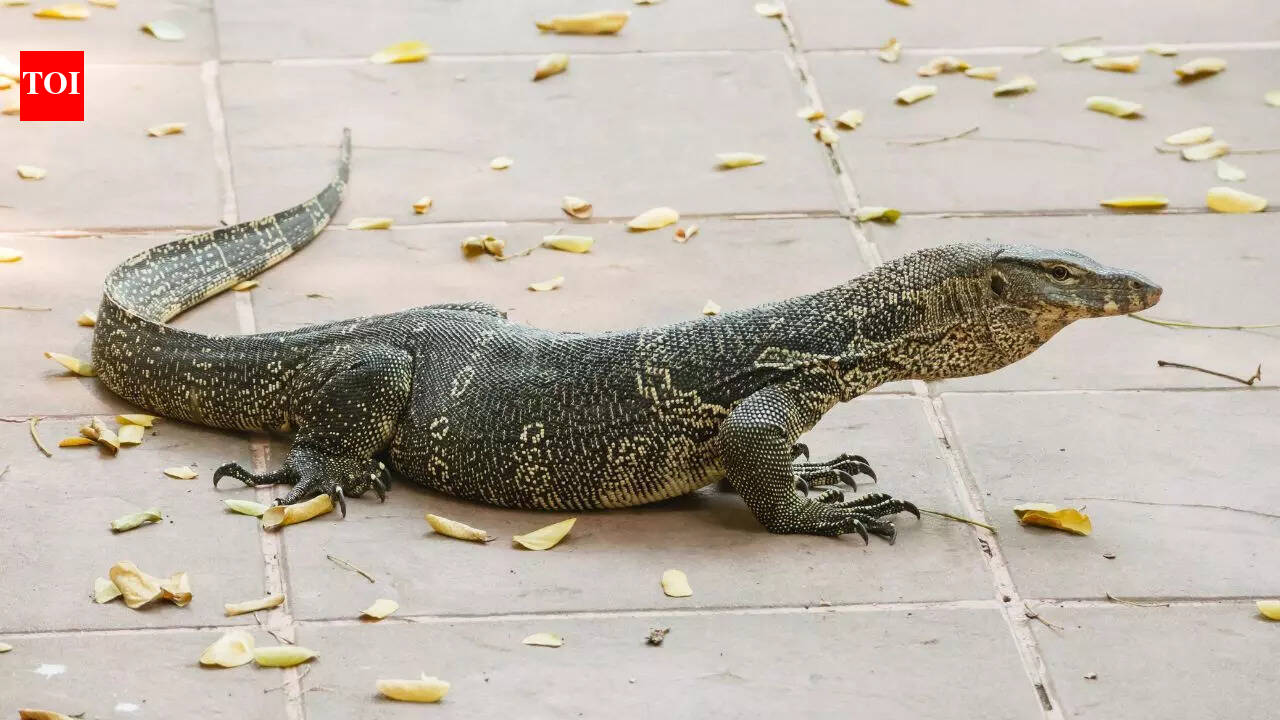
Seeing a large monitor lizard inside or around your home can be frightening. These reptiles are strong, fast, and can grow several feet long depending on the species. In tropical and subtropical regions across Asia, Africa, and Australia, monitor lizards sometimes enter residential areas. This usually happens near wetlands, forests, farms, or rapidly expanding urban zones where human settlements overlap with wildlife habitats.Monitor lizards may look scary, but they aren’t naturally aggressive toward people. Most of the time, these things happen when they are cornered, threatened, or accidentally stuck inside buildings. Laws in many countries protect monitor lizards, so hurting or killing them can lead to legal action or penalties. The International Union for Conservation of Nature says that some species of monitor are protected because their habitats are being destroyed and they are being sold illegally.If a monitor lizard enters your home or compound, the solution is not violence or poison. The correct approach involves safety, prevention, and contacting wildlife authorities where required. This article explains why monitor lizards enter homes, whether they are dangerous, what the law generally says, and how to safely remove and prevent them.

What are monitor lizards

Monitor lizards belong to the genus Varanus. There are over 80 species around the world. The water monitor, Nile monitor, and Asian water monitor are some of the most well-known species.They are reptiles that eat insects, rodents, birds, eggs, small mammals, and sometimes dead animals. They eat pests like rats and bugs, which makes them an important part of the ecosystem because they help keep things in balance.Most monitor lizards don’t like being around people. Instead of facing danger, they rely on their speed and ability to climb or swim to get away from it.

Why do monitor lizards enter residential areas

Monitor lizards typically enter residences or enclosures for pragmatic purposes rather than to assault individuals. Some common reasons are:Search for food

  • They are drawn to trash cans, pet food, birds, and rodents. If there are rats around, monitor lizards might follow their scent.

Access to water

  • When it’s hot outside, reptiles look for places that are cool and wet. They may be drawn in by leaking pipes, garden ponds, or open drains.

Shelter

  • There are safe places to hide in storage rooms, wood piles, construction debris, and thick plants.

Habitat loss

  • Urban expansion often reduces natural habitat, pushing wildlife closer to human settlements.

According to conservation groups and wildlife management agencies, most residential sightings are accidental or food-driven rather than aggressive behaviour.

Are monitor lizards dangerous to humans

Monitor lizards are not typically a threat to humans. They are not known to attack people without provocation.If you touch them or corner them, they might bite. Their strong jaws and the bacteria in their mouths can hurt you if they bite you. If a wild animal bites you, you should clean the wound right away and see a doctor to make sure it doesn’t get infected.Some scientific studies say that some types of monitors make weak venom proteins, but these are not thought to be dangerous to people in normal situations.Most of the time, the lizard tries to get away after the encounter.

What to do if a monitor lizard enters your home

Stay calm

  • Don’t yell, chase, or try to hit the animal. It may become defensive if you move suddenly

Keep distance

  • Make sure that kids and pets are moved away from the area.

Isolate the place

  • If you can, close all the doors inside to keep the lizard in one room. This makes it easier to save.

Provide an exit if it’s safe

  • You can let the lizard go if it is close to an open door that leads outside and there is a clear path. They will often run away when they have the chance.

Contact wildlife authorities

  • Call your local animal control, wildlife rescue, or environmental agencies. People who have been trained can safely catch and move the reptile.

Don’t try to use poison, chemicals, or traps you make yourself. These methods can be harmful to other animals, against the law, and dangerous.

How to prevent monitor lizards from entering your property

The goal of prevention is to stop people from being attracted to something and to keep them from getting to it.Close off entry points

  • Fix cracks in the walls
  • Put in door sweeps
  • Put a mesh over the vents
  • Repair broken fences

Monitor lizards can fit through holes that are surprisingly small.Secure garbage

  • Use bins that are tightly sealed.
  • Throw away food scraps on a regular basis.
  • Don’t leave scraps outside.

Keep rodents in check

  • Fewer rats means less food for reptiles, which means fewer reptiles.

Clear hiding spots

  • Remove the piles of wood
  • Cut back thick bushes
  • Get rid of the mess around the house

Keep birds and pets safe

  • If you have chickens or small animals, make sure their enclosures are safe.

Do home remedies work in stopping monitor lizards from entering homes

There is no scientifically proven household item that always keeps monitor lizards away. There isn’t any scientific evidence to back up online suggestions like chemical sprays, strong smells, or powders. Some of them could hurt pets, people, or the environment.The safest choices are still physical prevention methods and professional help with wildlife.

Key points to remember when you spot a monitor lizard in your home

  • Most of the time, monitor lizards are not aggressive.
  • Many kinds are protected by law, so don’t hurt them.
  • Don’t try to kill or catch them yourself.
  • For safe removal, contact wildlife experts.

Sealing off entry points and getting rid of food sources are two things that prevention focuses on. It’s scary to find a monitor lizard in your house, but you need to know what to do. If you stay calm, know the law, and take steps to keep everyone safe, the problem can be solved safely for both people and animals.


Source link

Maharaja of Tehri’s 3.2-acre bungalow set to sell for ₹1,000 crore? 5 interesting facts about the royal home in Lutyens’ Delhi |


Maharaja of Tehri’s 3.2-acre bungalow set to sell for ₹1,000 crore? 5 interesting facts about the royal home in Lutyens’ Delhi

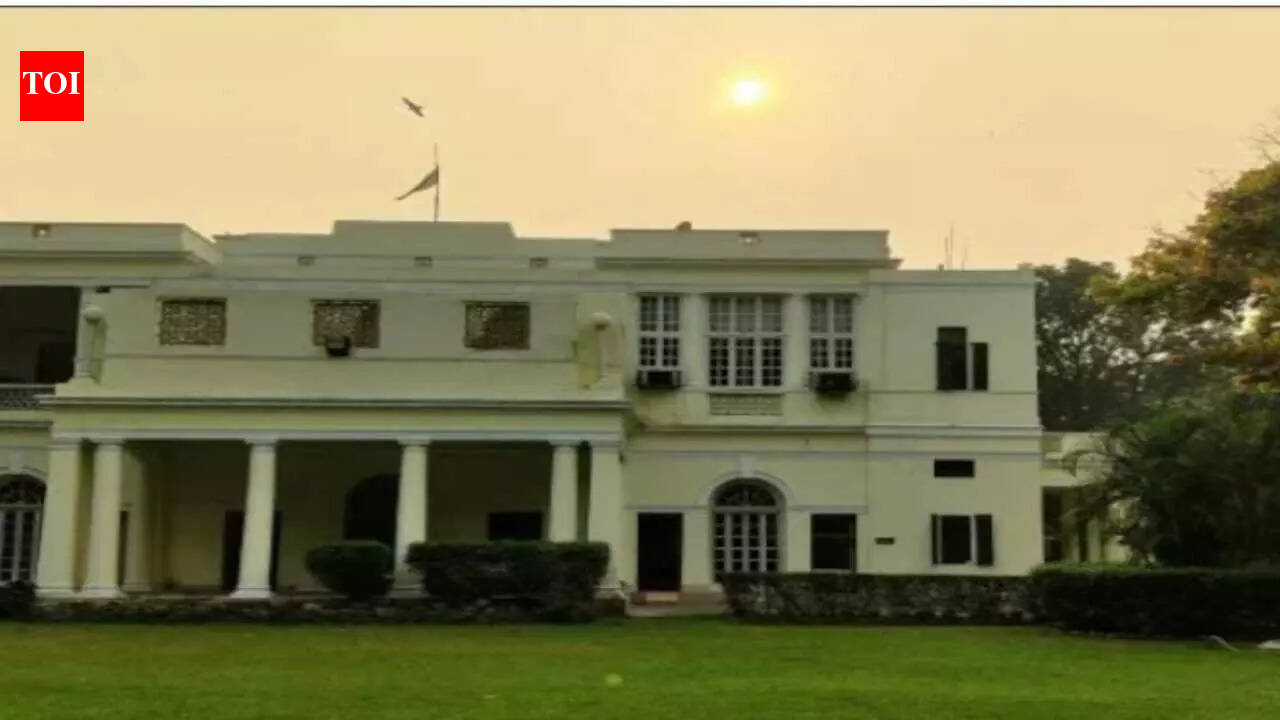
If it happens, it will become one of the most royal residential property sales in the history of India’s capital! Maharaja Manujendra Shah of Tehri Garhwal (Uttarakhand) is reportedly planning to sell his grand 3.2-acre estate in Lutyens’ Bungalow Zone (LBZ), New Delhi, for a whopping ₹1,000 crore. Though the deal is in advanced stages of negotiation, the news has stirred interest among the real estate industry. Although Times of India did not get any official confirmation of this report, however as per reports in Magic Bricks and other media houses, this deal is under discussion.Let’s find out why such hype and 5 interesting facts:1) A trophy property in DelhiThe property in question is a historic bungalow. It is situated at 5 Bhagwan Das Road (Plot No. 5, Block No. 159). The bungalow is recognised worldwide as one of the most coveted residential properties in Delhi, spread across 12,950 square metres (3.2 acres). The bungalow is grand and stunning and has the classic character of Lutyens’ Delhi. It was designed in the early 20th century by the renowned British architect Edwin Lutyens.2) Iconic location in Lutyens’ DelhiSo those who don’t know, Lutyens’ Delhi covers about 28 sq km and has some 3,000 bungalows. These are all mostly owned by industrial richies, former royalty and senior government officials and diplomats. It’s a rare incident as very few of these properties ever show up on the real estate market. And that’s what makes the sale especially rare and newsworthy.3) Who is buying the property?Though the identity of the buyer is not yet public, media reports suggest that the prospective buyer is a Delhi-based entrepreneur who has a strong hold in the food and beverage (F&B) industry. Amid this transaction process, a leading law firm representing the buyer has issued a public notice. They have invited any individual or entity with claims regarding the property to submit proof in writing. It’s only a customary procedure in high-value real estate transactions. This is done to ensure clear titles and secure ownership.4) Royalty meets modern markets

His Highness the Maharaja of Tehri Garhwal, Manujendra Shah

PC: @oroyalarchives

The bungalow dates back centuries and has been associated with the Tehri Garhwal royal family. They belong from the Himalayan kingdom. Maharaja Manujendra Shah, who is the present head of the family since 2007, has not yet issued an official statement yet. The spokespeople for the Maharaja’s office has also not responded to requests for comment yet.5) A royal real estate dealIf concluded at the reported ₹1,000 crore valuation, this transaction would rank among the most expensive residential property ever sold in Lutyens’ Delhi. The reported sale of the royal bungalow only represents the allure of prime residential properties in Delhi. It shows how historic legacy, prime location and scarcity value shape one of India’s most exclusive property tales.Till then, all eyes in the real estate world are fixed on the royal deal.


Source link

Watch: Rare moment as black panther and leopard drink water side by side |


Watch: Rare moment as black panther and leopard drink water side by side

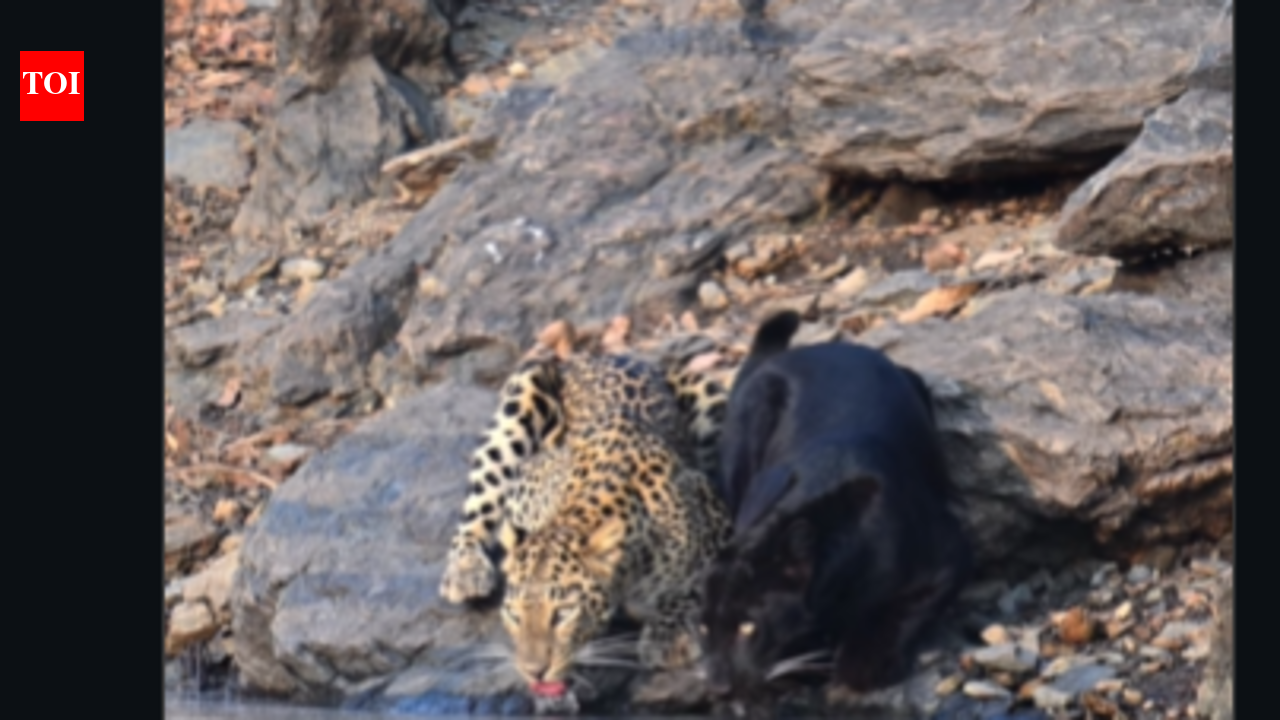
A breathtaking wildlife moment from Karnataka has captivated nature lovers across India and beyond. Watching the video, it makes us realise that very few are lucky enough to witness such a rare moment first-hand with their naked eyes. The rest of us remain content by watching through our screens, hoping one day we might also be just as lucky as the photographer to witness such a rare sight. So, at the serene backwaters of Bhadra Tiger Reserve, a rare and heartwarming scene unfolded, a black panther and a leopard were seen drinking water side by side, and this extraordinary encounter was captured by wildlife photographer Sohan Singh and shared on social media, where it quickly went viral. Social media users described the sighting as ‘once-in-a-lifetime,’ praising Singh for documenting such an intimate glimpse into the hidden life of India’s forests. A magical encounter in the wild The video begins with a leopard calmly quenching its thirst at the water’s edge. Moments later, a black panther, a melanistic leopard, quietly approaches from behind and stands beside it. The two majestic cats drink peacefully, their dark silhouettes mirrored in the still water. Sharing the video, Singh wrote, “When the stars align, magic happens. The Black Panther and his bold mother quenching their thirst in the serene Bhadra backwaters. A surreal moment that will live on as Bhadra’s legacy for years to come.” The term “black panther” does not refer to a separate species. It is a melanistic form of the Indian leopard, scientifically known as Indian leopard. Melanism is caused by an excess production of melanin pigment, which gives the animal its dark coat. Despite their black appearance, the leopard’s iconic rosette patterns are often still visible under certain lighting conditions. Sightings of melanistic leopards are rare, even in biodiversity-rich regions like the Western Ghats. Observing a melanistic cub peacefully sharing space with its mother in daylight, near open water, is even more uncommon. Bhadra Tiger Reserve, located in the Western Ghats of Karnataka, covers the Chikkamagaluru and Shivamogga districts. Famous for its dense forests, hills, and diverse wildlife, the reserve houses tigers, leopards, elephants, gaur, and many bird species. Such instances not only reveal the natural richness of the area but also the need for further conservation. The video was a breath of fresh air for many, as it presents the unscripted beauty of nature, and gives us rare insight into the peaceful coexistence that can be found in nature.


Source link

Top 5 real estate hotspots in Noida to watch in 2026


As the Delhi-NCR real estate landscape continues to evolve, Noida remains one of the most attractive markets for both home buyers and investors in 2026. The region offers a perfect mix of developed infrastructure, new developments including the upcoming Noida International Airport in Jewar along with great metro and Yamuna expressway connectivity. As per industry reports, 2026 could be a dynamic golden period for Noida. The region is perfect for those looking for laid-back green belts along with expressway connectivity. The city’s real estate market offers myriad opportunities catering to all kinds of buyers.

On this note, let’s have a look at the top 5 real estate hotspots in Noida to watch in 2026.

(Canva)


Source link

Doctor explains why appearance isn’t a health report card


Dr. Naveen Bhamri: BMI is a basic screening tool, but it doesn’t show body fat distribution, cholesterol levels, or artery health. Someone can have a ‘normal’ BMI but still have high visceral fat, insulin resistance, or unhealthy cholesterol. Common urban habits like late nights, high caffeine intake, poor sleep, stress, smoking, alcohol, frequent eating out, and reliance on protein shakes or processed foods can quietly increase heart risk.


Source link

Sufi Heritage Festival 2026 returns to Delhi: Daler Mehndi, Sona Mohapatra in line up; dates and other details |


Sufi Heritage Festival 2026 returns to Delhi: Daler Mehndi, Sona Mohapatra in line up; dates and other details

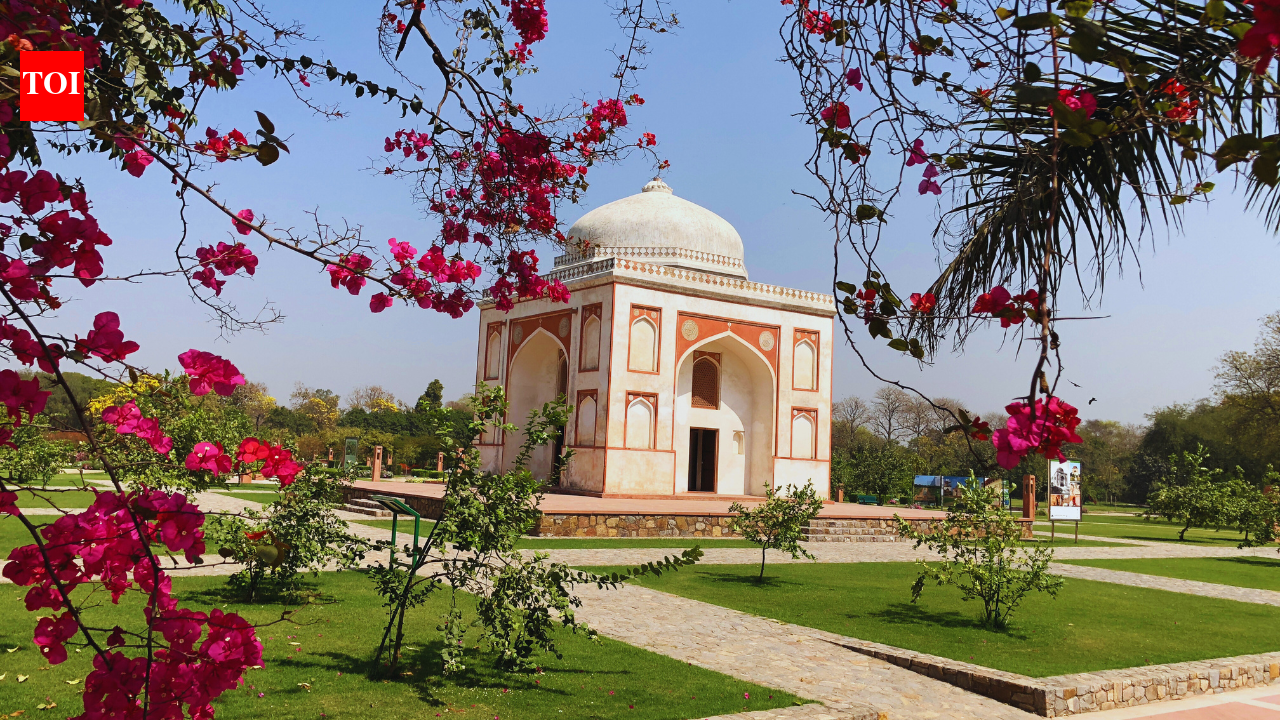
The Sufi Heritage Festival 2026 is set to return to Delhi. It will be a 2-day festival held in Sunder Nursery, which will have lots of music, poetry, movement, craft and conversation rooted in the timeless ideals of the Sufi tradition. You will be a mix of all these in one platform. This festival will be held from February 28 to March 1, 2026. The venue, Sunder Nursery, is a vast expanse of greenery, set in the heart of the city. Apart from the traffic chaos, this place witnesses a huge number of visitors almost every day. The festival will be held in this spot, which will showcase a cultural gathering that celebrates openness, inclusivity, love and shared humanity. During the course of the two-day festival, it aims to create a space where ancient spiritual thought meets contemporary artistic expression.Read more: Thailand overhauls visa rules: 60-day visa-free stays, DTV, and digital entry system to boost tourism and economy As regarding the performers, the 2026 edition has some exciting line up. It will feature performances and conversations by artists including Sona Mohapatra, Daler Mehndi, Sonam Kalra, Saumya Kulshreshta and Buland, Marham Poetry, The Aahvaan Project, Mujtaba Khan (Sabr Se), Shinjini Kulkarni, and the Murad Ali Ensemble, among others. The programming, ranging from classical sama-inspired performances on the grand stage to contemporary interpretations and experimental sounds, reflects classical and modern-day engagement with Sufi philosophy. Spoken word, poetry recitals, and contemplative dialogues are programmed to support and complement musical performances, encouraging audience engagement with philosophical underpinnings.

More details travellers need to know

The festival is not only about the performance aspect. There are workshops under the Kargaah segment that encourage people to engage with traditional craftsmanship and artistic expression. Visitors can also walk through a specially curated artisanal bazaar featuring handwoven textiles, carpets, perfumes, and other handcrafted items inspired by heritage craftsmanship. Also included in this experience are food and hospitality, where heritage-inspired food options add to the experience.

A space for reflection and connection

The celebration draws its inspiration from the lives, poems, and teachings that have contributed to the evolution of the Sufi movement, and it aims at bringing the past and the present closer. The venue, Sunder Nursery, is an Mughal-era heritage park in the heart of Delhi, which gives the celebration an edge in terms of its historical context. According to the organisers, the event is open to all, from art lovers and families, spiritual seekers and travelers, to culture enthusiasts. For two days, the festival promises to provide a space for the audience to slow down, participate, and share a cultural experience.Read more: Guess the place: It’s home to the world’s only floating national park

Event details

Dates: February 28 – March 1, 2026Venue: Sunder Nursery, Delhi With its mix of music, dialogue, craft and community, the Sufi Heritage Festival 2026 returns as a celebration designed to linger beyond the final performance, offering not just a cultural programme, but an artistic and reflective journey.


Source link

“Elephants and dromedaries in the streets… looked drugged as hell”: The experience that left this foreign traveller uncomfortable |


“Elephants and dromedaries in the streets… looked drugged as hell”: The experience that left this foreign traveller uncomfortable

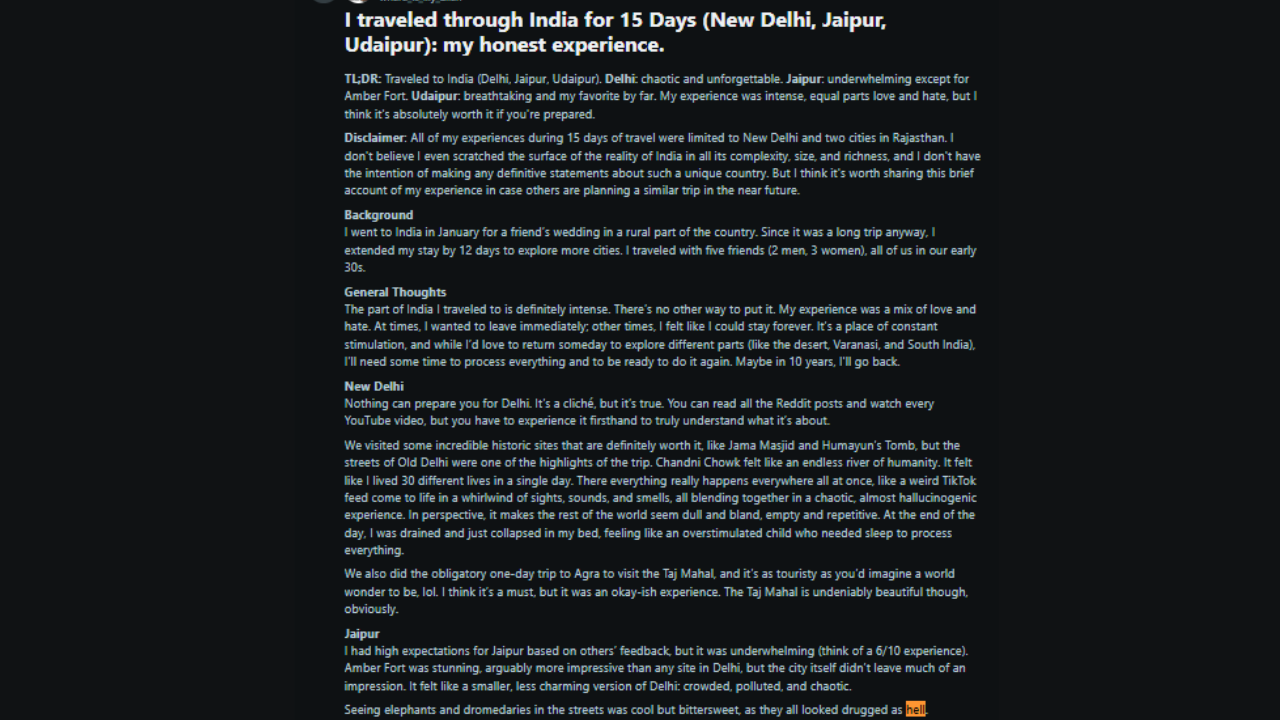
Travelling to any foreign place can be overwhelming, with unfamiliar customs, new languages, different food habits, and the list can go on. And then there are some destinations that have the potential to amplify that feeling, not because they are unwelcoming, but because they operate at an intensity that few places can match.Likewise, travel accounts about India also often tend to swing between extremes, either romanticised spiritual awakenings or horror stories of culture shock. A recent Reddit post brings together all the narratives in one place, confusion, exhaustion, admiration, with a bit of appreciation too.

Delhi

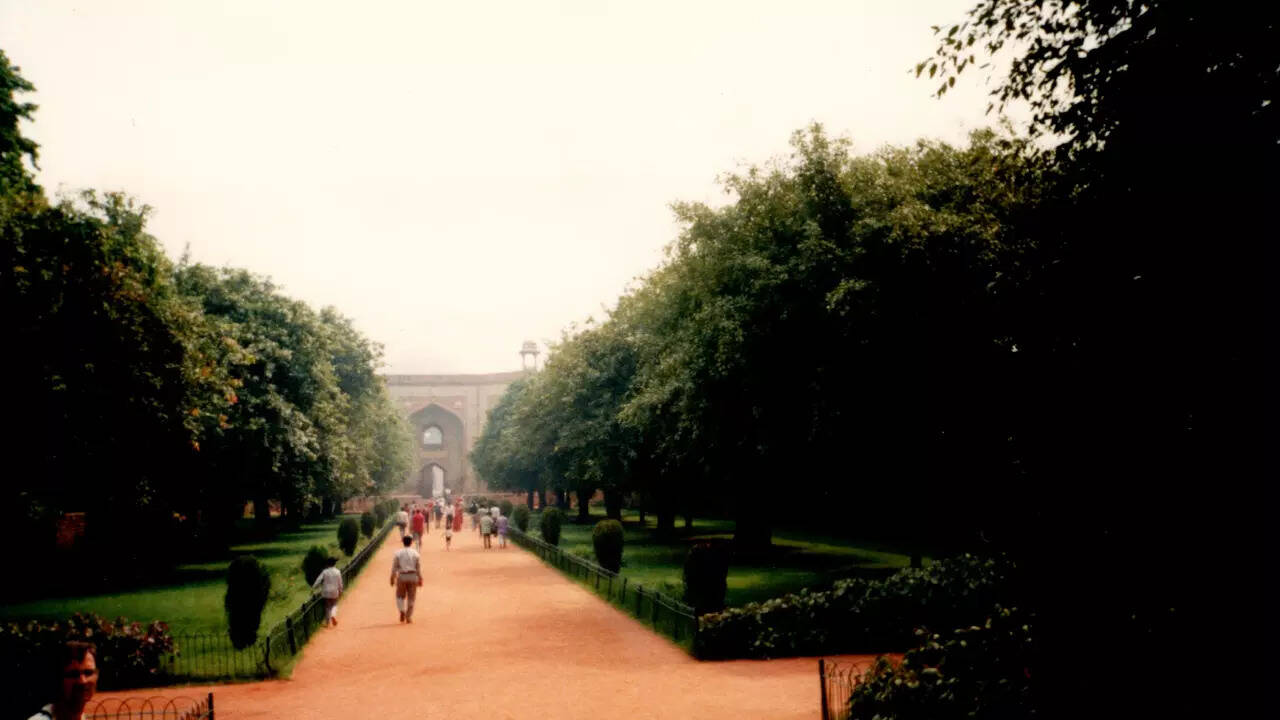
So this traveller in his post shared that he spent 15 days in India visiting New Delhi, Jaipur and Udaipur, and said his experience was “equal parts love and hate.” He clarified though that his impressions were limited to a small slice of the country, and is absolutely worth it if you’re prepared. He shares that he was in India to attend a wedding in a rural area, which was followed by city-hopping with five friends in their early 30s. He adds, “I don’t believe I even scratched the surface of the reality of India in all its complexity.” Still, what emerged was a portrait of travel that feels recognisable to many first-time visitors to India: overwhelming, intense and unforgettable.Read more: 5 hill forts of Rajasthan and why they are a traveller’s favourite“Nothing can prepare you for Delhi,” the traveller wrote. “You can read all the Reddit posts and watch every YouTube video, but you have to experience it firsthand.”He says, “We visited some incredible historic sites that are definitely worth it, like Jama Masjid and Humayun’s Tomb, but the streets of Old Delhi were one of the highlights of the trip. Chandni Chowk felt like an endless river of humanity. It felt like I lived 30 different lives in a single day. There everything really happens everywhere all at once, like a weird TikTok feed coming to life in a whirlwind of sights, sounds, and smells, all blending together in a chaotic, almost hallucinogenic experience. In perspective, it makes the rest of the world seem dull and bland, empty and repetitive. At the end of the day, I was drained and just collapsed in my bed, feeling like an overstimulated child who needed sleep to process everything.

Taj mahal

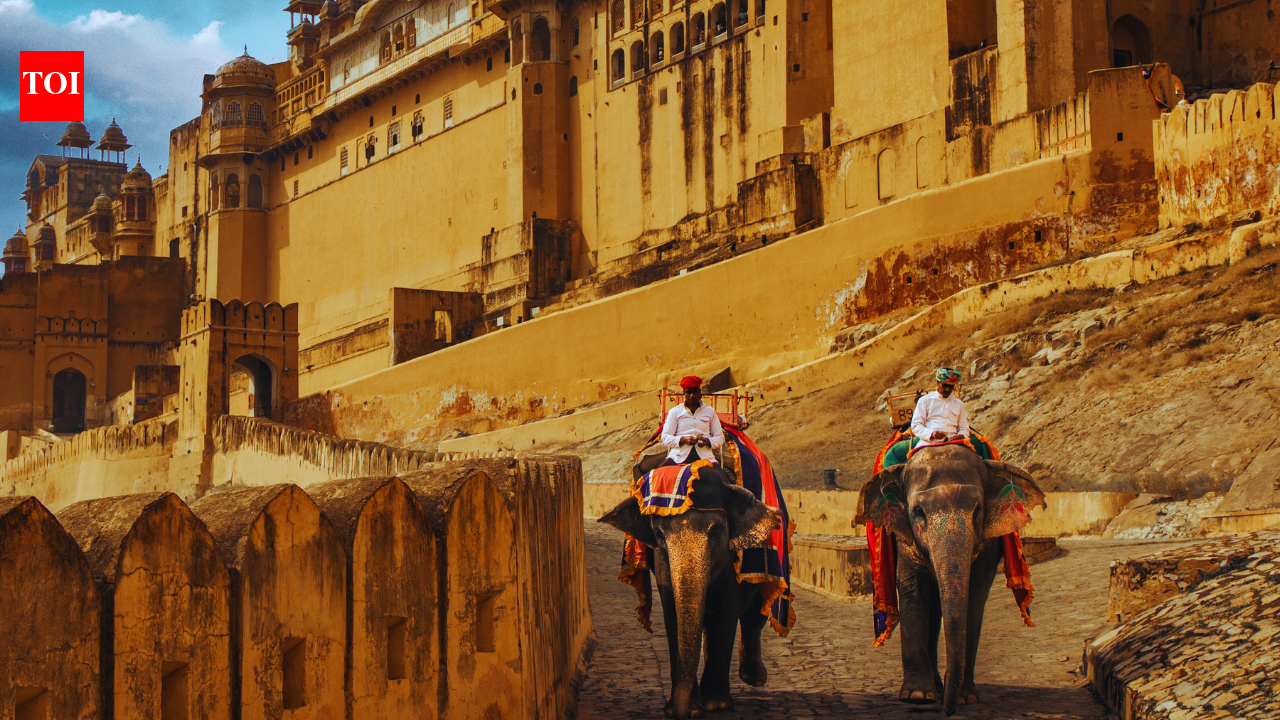
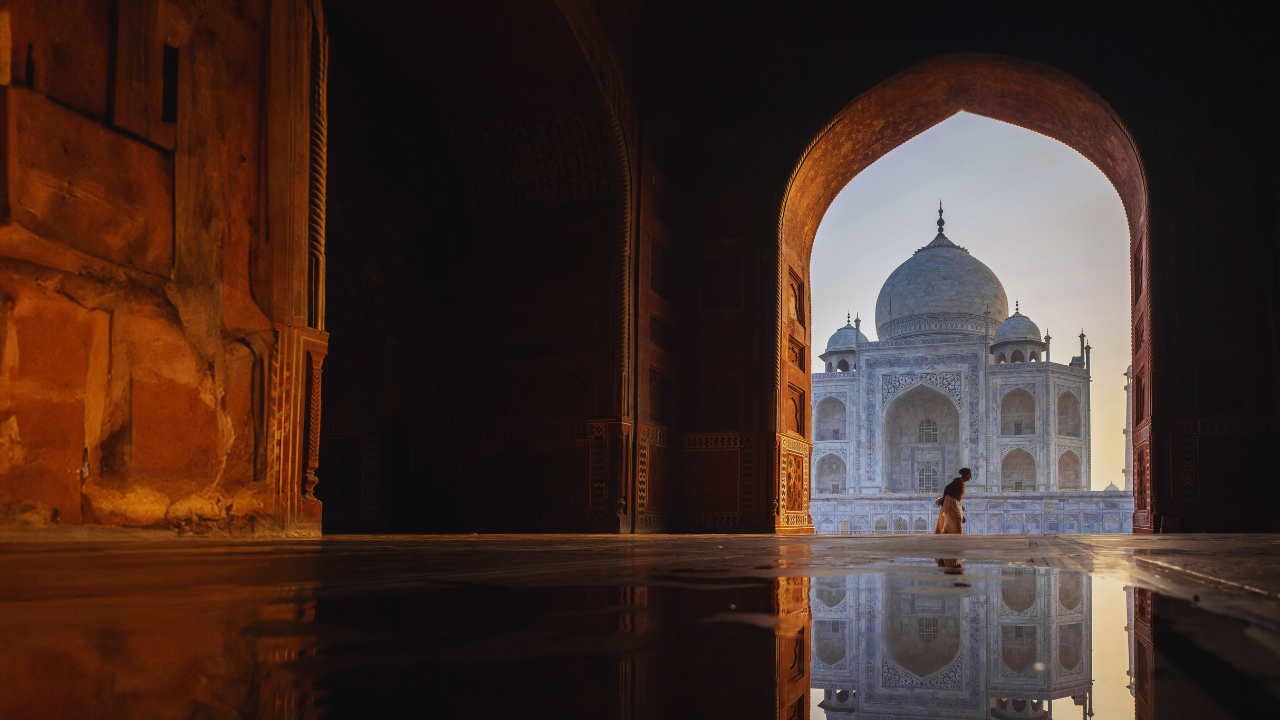
And as many visitors would definitely do, they did the obligatory one-day trip to the Taj Mahal, which was as expected, touristy, and although it was undeniably beautiful, the experience was okay-ish.Expectations were high for Jaipur, but the experience felt underwhelming. The traveller rated it a 6/10, describing the city as crowded and chaotic, though smaller than Delhi.One exception was Amber Fort, which they found stunning, and “arguably more impressive than any site in Delhi.” However, he adds, “Seeing elephants and dromedaries in the streets was cool but bittersweet, as they all looked drugged as hell.” He and his friends chose to walk up to the fort instead of paying for an elephant ride, observing that the rides appeared short, expensive and uncomfortable for the animals. Like many, they also opined that it’s better to avoid paying to ride an elephant up. They spent an evening at Raj Mandir Cinema, watched a Bollywood film despite not understanding Hindi, which they loved every bit of it.Read more: Thailand overhauls visa rules: 60-day visa-free stays, DTV, and digital entry system to boost tourism and economy After days of intensity, they made a trip to Udaipur that felt like a relief. “Watching the sunset over Lake Pichola was breathtaking.” Unlike Delhi and Jaipur, Udaipur felt calm. Vendors were not pushy, streets were cleaner in tourist areas, and the pace was slower. “It was like a peaceful paradise after the craziness of the first days.”They even suggested Udaipur as a possible alternative base for digital nomads seeking something quieter than Southeast Asia’s usual hotspots.

reddit

Challenges they faced

Language proved more challenging than expected. Although they thought that English is widely spoken in India, they found communication in service settings tiring over time.Hygiene and visible inequality stood out. He added, “You see huge mountains of garbage, and right next to them, an upper-class modern mall. The overwhelming presence of men in public spaces also struck them. While the women in the group did not report feeling unsafe, the imbalance felt noticeable and occasionally uncomfortable.”The group took strict food and water precautions, bottled water even for brushing teeth, avoiding street food and ice, and successfully managed to avoid illness.Despite the exhaustion and contradictions, the traveller concluded that the journey was worth it.India, in their words, may not be for inexperienced travelers, but for those open to intensity and cultural shock, it offers something unmatched. He concludes saying, “Honestly, I don’t think there’s anywhere else quite like it.”


Source link