Yuvraj Singh on breaking the parenting cycle he grew up with, and how Hazel Keech made it possible |


Yuvraj Singh on breaking the parenting cycle he grew up with, and how Hazel Keech made it possible
In a heartfelt episode of Serving It Up With Sania, Yuvraj Singh opened up about his parenting philosophy, reflecting on how his own disciplined upbringing drives him to cultivate an atmosphere of joy and leisurely moments for his kids.

In a candid chat on Serving It Up With Sania, former cricketer Yuvraj Singh spoke about fatherhood with quite rare honesty. Drawing from a childhood shaped by pressure and discipline, he shared how becoming a parent changed his priorities. The conversation, hosted by Sania Mirza, offered a look at how Yuvraj and his wife, Hazel Keech, are raising their children with care, balance, and, very importantly, intention.

A childhood that redefined his idea of parenting

Yuvraj Singh grew up in a home where cricket came first. His parents separated early, and his father’s strict focus on sport left little room for play. While that discipline built a champion, it also left gaps. Those gaps now guide his parenting choices. He wants his children to enjoy moments he missed, like picnics, theme parks, and unhurried family time.

“My mother suffered a lot”: Lessons from the past

During the podcast, Yuvraj spoke softly about his mother’s struggles. She lived with her parents during difficult years and protected him. The day he earned his first cheque mattered because it let him give her a home. That memory shaped his view of family. Providing safety and dignity, he believes, matters as much as success.

Hazel Keech and the power of shared parenting

Yuvraj gave clear credit to his wife, actor Hazel Keech, for shaping his bond with their children. At first, he hesitated with everyday care like feeding and changing nappies. Hazel pushed him to try. She believed early involvement builds trust. That advice changed everything. Even during long work gaps, daily calls keep the bond strong.

Choosing presence over perfection

Distance is part of Yuvraj’s life, with work across India, Dubai, and England. Yet, he spoke about staying emotionally present. Regular conversations matter more than constant physical closeness. He misses his children, and they miss him too. That mutual longing, he feels, is a sign of a healthy connection.

Breaking the cycle, gently

Yuvraj reflected on moments when parents are absent, not by choice but by circumstance. His own parents did what they knew then. Today’s parents know more. That awareness brings responsibility. He chooses to show up, slow down, and create memories. The goal is not to be perfect, but to be kinder than yesterday.

Love, laughter, and standing together

Beyond parenting, Yuvraj spoke about Hazel as his anchor. She stood by him during his hardest years, including health struggles. Their relationship, built away from fame, rests on respect and humour. He even joked about her “manly laugh,” a detail that shows ease and affection. Laughter, in their home, is not optional.Disclaimer: This article is based solely on statements made by Yuvraj Singh during Serving It Up With Sania hosted by Sania Mirza. No additional assumptions or external claims have been added.



Source link

Top 10 most expensive dog breeds in the world


Did you know that some pet dog breeds aren’t just adorable, but they’re luxurious too? They are so expensive that only few people can afford them, making them no less than royalty. From rare sighthounds to majestic guardians, these pups command up to $12,000 due to various factors like– their ancient lineages, scarcity, and sky-high demands. Here we list some of the most expensive dog breeds in the world (inspired by breed experts like the American Kennel Club and as shared by Tatler Asia)



Source link

Martyr’s Day 2026: History, significance and rare facts kids should know


Martyr's Day 2026: History, significance and rare facts kids should know
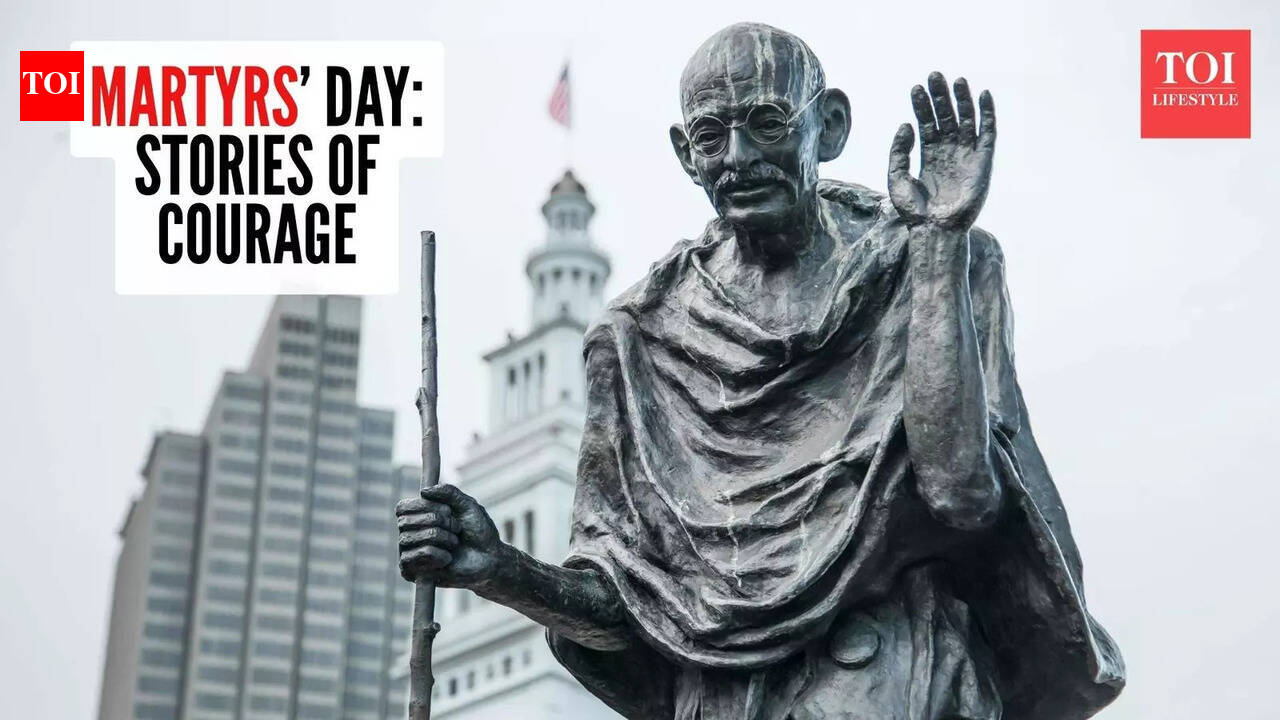
Martyrs’ Day, celebrated on January 30 and March 23, serves as a poignant reminder of the bravery exhibited by patriots like Mahatma Gandhi and Bhagat Singh. It’s a vital occasion for children to immerse themselves in lessons about valor, integrity, and the true sacrifices that underpin liberty.

Martyrs’ Day, also called Shaheed Diwas, is a day of respect as well as learning. It reminds us that freedom came with real sacrifice and strength. Behind every flag and school assembly lies a story of courage, choice, and love for the nation. This day helps young minds connect history with values they can carry forward.

What is Martyrs’ Day and when is it observed

In India, Martyrs’ Day is observed on more than one date. The two most important ones are January 30 and March 23. January 30 remembers Mahatma Gandhi, who was assassinated in 1948. March 23 honours Bhagat Singh, Rajguru, and Sukhdev, who were executed in 1931. Each date tells a different story, but both speak of bravery and belief.

Why these dates matter in history

January 30 marks the loss of a leader who believed violence weakens a cause. Gandhi’s death shocked the nation and the world. March 23 remembers three young men who believed fearless action could wake a sleeping nation. Together, these dates show that India’s freedom struggle had many paths, but one shared goal.

Why Martyrs’ Day is important for kids

Martyrs’ Day teaches children that freedom is not automatic. It is earned and protected. It helps kids understand values like courage, honesty, and standing up for what is right. The day also shows that age never limits impact. Some martyrs were very young.

Rare and lesser-known facts kids should know

Bhagat Singh was only 23 years old when he was executed. He loved reading and writing. Gandhi’s last words were believed to be a prayer, showing calm even in danger. Many martyrs were ordinary people, teachers, students, and farmers, before history remembered them.

How the day is observed across India

A two-minute silence at 11 am is observed on January 30 across the country. Schools hold assemblies with stories, not just speeches, to help children relate. Some states honour local heroes on different dates, keeping regional history alive.

Meaningful ways children can take part

Children can listen to such true stories of martyrs and share them at home. This will also help them learn more about the history. Drawing posters or writing short notes helps ideas stay longer in young minds. Small acts like kindness and honesty reflect the values martyrs stood for.Disclaimer: This article is written for educational and awareness purposes for children and parents. Dates and historical references are based on widely accepted public records. Readers are encouraged to refer to official government sources or school curricula for academic use.


Source link

Is being single a red flag? Do visa systems scrutinise single women differently? |


Is being single a red flag? Do visa systems scrutinise single women differently?

For many people, travel is supposed to get easier with age. You earn more, save more, become more confident, and finally have the freedom to go where you want. For women especially, solo travel is often something postponed, first for studies, then for work, then for family responsibilities. The assumption is that once you are financially independent, the world opens up.But for some, maybe that doesn’t work out that way.What often gets lost in these conversations is how opaque the visa process might seem to applicants themselves. Decisions are made behind closed doors, interviews are rare for tourist visas, and rejection letters are typically formulaic, offering little insight into what actually did not work in their favour. This lack of transparency feeds speculation and self-blame. Applicants begin dissecting their lives for perceived flaws, marital status, age, job profile, even gender, trying to decipher a system that provides no real feedback. For single women, this uncertainty can be especially unsettling. The result is a lingering sense of vulnerability, where future travel plans feel contingent not on preparation or intent, but on how convincingly one’s life fits an unspoken template of who looks like a ‘safe’ tourist.

solo traveller

There is a quiet anxiety that surfaces when visa applications start getting rejected without clear explanations. Not because documents are missing or funds are low, but because something about the applicant doesn’t ‘feel right’ to immigration authorities. That unease is rarely spelled out. It shows up instead as vague phrases like weak home ties or insufficient proof of return.Read more: Why are trees exploding on their own in parts of America?This is where questions begin to form. Does being a single woman make you look suspicious? Does having a weak passport work against the applicant? These questions surfaced after a post on Reddit, which was shared some time back, struck a chord with women travellers. The post was about an Indian woman, in her early 40s’, unmarried, financially stable, and keen to travel for leisure. Despite submitting salary certificates, bank statements, employer approvals, and confirmed itineraries, her tourist visa applications for both the Schengen region and Japan were rejected. The explanation given to her by her travel agency was painfully, and most likely, she was single.

reddit

What followed in the comments was not a single answer, but a collective unpacking of how visa systems actually work.Several people immediately questioned the role of travel agents, warning that poorly prepared applications, or worse, careless intermediaries, can sink even strong cases. Others, including someone who said they worked at an embassy, acknowledged a harder reality: for applicants from less economically developed countries, being unmarried and child-free can quietly count against them when officers assess the likelihood of return.At the same time, many women pushed back against the idea that singlehood alone was the problem. Young Indian women, older Southeast Asian travellers, and solo female tourists shared stories of successfully visiting Japan, Europe, and elsewhere, sometimes with far less income or documentation. Their view was that details matter: clean financial records, consistent paperwork, travel history, and applying directly rather than relying on agents.Read more: Travel Photographer of the Year Awards 2025: The photo of this Indian destination stole the showYet even among those confident voices, there was recognition of a pattern. A ‘weak’ passport means you are already starting from a place of doubt. Add single status, no dependents, and no prior travel history, and the burden of proof becomes heavier, even if the rules don’t say so explicitly.What makes these experiences difficult isn’t just rejection. It’s the sense that independence, which should be an advantage, is sometimes read as intent to leave for good. For women who waited years to travel on their own terms, that contradiction stings the most.In the end, visa decisions are rarely about one thing alone. Many countries are simply far more cautious when issuing visitor visas to applicants from certain parts of the world, especially when overstaying and irregular migration are persistent concerns. That caution often shows up as heightened scrutiny, not just of finances, but of whether an applicant is likely to return home.


Source link

Planning to buy a washing machine in 2026? Top features you must check before buying |


Planning to buy a washing machine in 2026? Top features you must check before buying

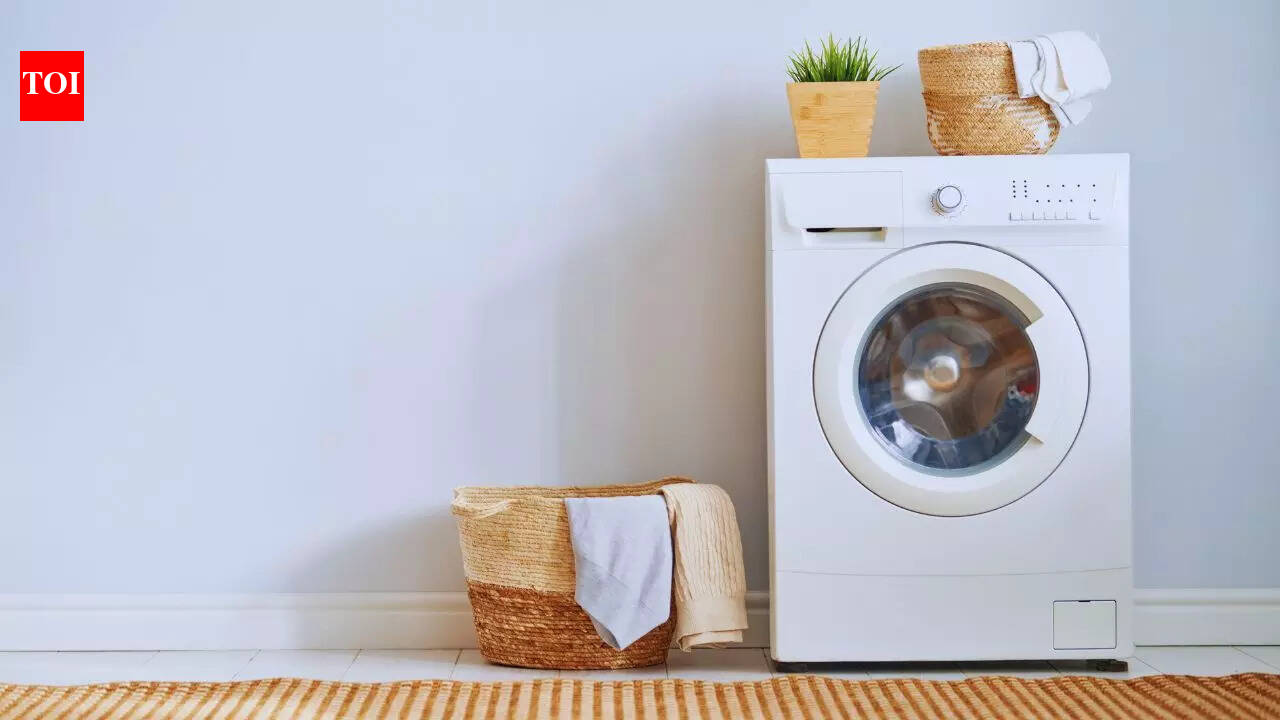
Buying a washing machine is no less than an investment, considering it is among the most practical and everyday household things. With technology updating on a regular basis, markets today are flooded with updated washing machines models in 2026. These machines are laced with modern and advanced technologies and smarter functions. So if you are someone planning to buy a washing machine, here are some prime features that you should focus on. Have a look:Capacity of the machineWashing machine’s capacity is among the first features you should check. The capacity determines how much laundry you can wash in one cycle. The capacity is usually measured in kilograms (kg), referring to the weight of clothes.Those with 6–7 kg capacity are perfect fit for singles or couples.Those with 7–8 kg capacity are ideal for a family of 4-5 people.Those with 8–10 kg or more capacity are perfect for big families where frequent washing is required.Type of Motor: Inverter or Direct Drive Choosing the type of motor determines a lot of things as it is the heart and soul of a washing machine. In 2026, you’ll find markets flooded with inverter motors, even in mid-range models. These motors adjust power depending on the load:Lower energy consumptionReduced noise and vibrationLonger motor lifeNoise and VibrationCheck the noise level as washing machines are no more just washroom or basement appliances. Many are installed in kitchens and utility rooms. That is why knowing noise levels is important.Smart FeaturesLook for smart features like:Wi-Fi or app controlAuto dosingSelf-clean functionsAI wash programsThese features add convenience. But only invest if you actually use them. Sometimes basic, reliable performance (good motor, capacity, efficiency) matters more than modern features.EfficiencyCheck the ratings of a machine. Its energy rating that matters like 4 or 5 stars. It means how much power it uses relative to its performance. Front-load machines often use less water than top-load models, but it completely depends on design. More the ratings, better the performance:Lower running costsLess water usageSmaller environmental impactWash functionsSome useful wash programs include:Quick wash Delicate/Gentle cyclesHeavy duty for stainsSteam cycles for sanitizationBe aware and don’t unnecessarily overspend on fancy features which mostly go unused. Think about your need and space.


Source link

Why Japanese toilets are used facing forward and most visitors get it wrong |


Why Japanese toilets are used facing forward and most visitors get it wrong

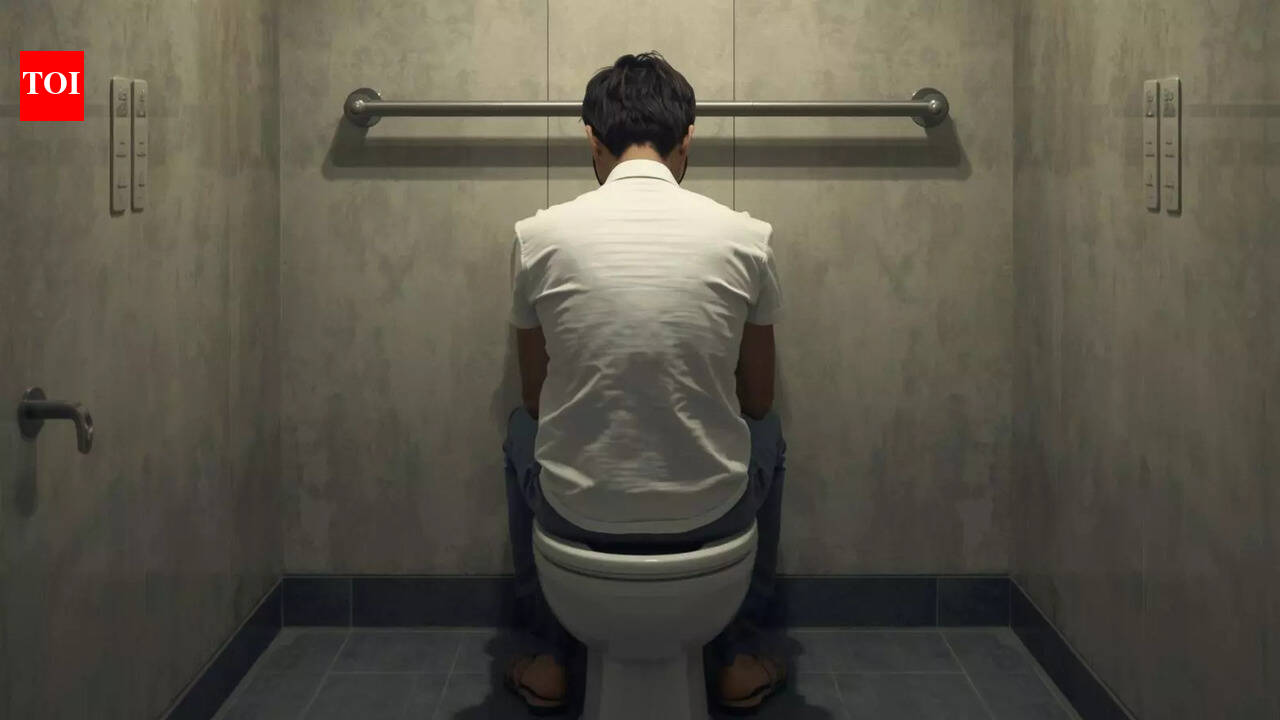
In public places across Japan, older floor-level toilets still appear with some regularity. They sit low to the ground, set into tiled floors, and look unfamiliar to many visitors. What often causes more confusion than the fixture itself is how it is meant to be used. People are expected to squat facing one specific direction, toward a curved hood built into the porcelain. This is not a social preference or a cultural quirk passed down without thought. It is a practical response to how these toilets are designed and maintained. The orientation affects cleanliness, comfort, and shared use. In stations, schools, and roadside facilities, this small detail reflects a broader approach to public infrastructure that prioritises function and quiet order over explanation.

Traditional public toilets in Japan rely on posture and layout

The traditional Japanese squat toilet, known as a washiki, is shaped to guide the body without instruction. One end of the fixture rises slightly and curves upward. This is the front. Facing it places the body over the deepest part of the bowl, where waste is meant to fall and flush cleanly.The slope inside the toilet relies on gravity working in a particular direction. When used correctly, water flows efficiently, and residue is less likely to remain. Turning around works against that design and often leads to splashback or soiling. Over time, this affects maintenance and hygiene, especially in busy public spaces.

Traditional public toilets in Japan rely on posture and layout

Traditional public toilets in Japan rely on posture and layout (Image Source – Wikipedia)

Cleanliness matters in shared spaces

Many washiki toilets remain in locations with heavy footfall. Train stations, schools, parks, and rural stops still rely on them because they are durable and easy to wash down. They have fewer moving parts and cope well with constant use.Facing forward reduces the chance of clothing touching contaminated surfaces. It also helps keep the surrounding areas clean for the next person. In a society where shared responsibility for public spaces is taken seriously, this matters. The posture supports a standard of use that does not need to be discussed.

Posture supports the body as well

Squatting itself is known to support bowel movement by aligning the body more naturally. The forward-facing position enhances this effect by matching posture to the bowl’s shape. Users are balanced and stable, with less strain. This is not framed as health advice in everyday life. It is simply how the fixture works best. Over time, familiarity removes the need for conscious thought. People follow the design because it feels correct.

Privacy is shaped by orientation

Older public toilet stalls in Japan often lack full-height doors. Facing the raised hood places the user’s back toward the entrance. This creates a small but meaningful sense of privacy. It also limits what might be visible from outside the stall. This consideration fits within a wider concern for modesty in public settings. The design supports discretion without relying on additional barriers.

Sound and etiquette sit alongside function

Japanese toilets often include features aimed at reducing embarrassment. In many women’s restrooms, sound masking devices play a flushing noise to cover bodily sounds. These additions reflect sensitivity to shared discomfort rather than necessity. They sit alongside older design choices like washiki toilets. Both assume that behaviour will adapt quietly to the space provided. Instructions are minimal because the expectation is already set.

Modern toilets have not erased older habits

High-tech toilets are now common in homes and newer buildings. Heated seats and bidet functions dominate popular images of Japanese bathrooms. Still, the older squat toilets remain part of the landscape. Their continued use reinforces a posture that is practical rather than symbolic. Facing forward persists not because of tradition alone, but because it still works. In many places, that is reason enough.


Source link

Relationship tip of the day: Ruskin Bond’s witty reality check about marriages- “Red roses for young lovers, French beans for…” |


Relationship tip of the day: Ruskin Bond's witty reality check about marriages- “Red roses for young lovers, French beans for..."

Remember that butterflies-in-your-stomach phase of love? The candlelit dinners, stolen glances, and endless poetry about soulmates? But what happens when the fairy tales get a reality check – bills, Monday blues, or taking care of kids and parents? India’s beloved storyteller from the hills, Ruskin Bond, nails it with his witty, heartfelt reality check: “Red roses for young lovers. French beans for longstanding relationships” – a quote from his ‘Book of Nature’. At 91, this master of simple wisdom reminds us that marriage or long-lasting relationships aren’t always going to be in the honeymoon phase – it’s a garden you tend, one humble bean at a time. And honestly? It’s the most romantic truth that you’ll hear today, about how love transforms.

The honeymoon high: Roses and their thorny allure

Remember the early days of your relationship when he brings home a single red rose “just because,” she’s lighting candles after a long day, and every touch feels electric. Ruskin Bond captures that magic perfectly in his quote – red roses symbolise passion’s fiery bloom, the intoxicating “us against the world” vibe. It’s pure, heady emotion, like the first rain kissing parched earth in his Himalayan tales. We chase it in movies, songs, and Instagram reels, hearts swelling with dreams of forever young love.

Celebrated author Ruskin Bond turns 98. Here is how his birthday was celebrated

But here’s the emotional reality: Roses wilt with time. And similarly, relationships too slowly shift– from the initial fireworks to quiet comforts. But Ruskin Bond doesn’t mock it; he acknowledges and honours it. Those early roses are vital, watering the roots of commitment. Without them, you’d never plant the deeper harvest. Relatable? Absolutely. If you’re in that rosy phase of your marriage or relationship, savour it – it’s the beginning of something even richer in life.

The long haul: French beans and everyday magic

Fast-forward a decade: Couples get busy with kids and their school runs, share grocery lists, and yes, French beans that are often cooked for meals. No fanfare, no sonnets – just a long-married couple and their steaming plate of sustenance. In this quote, Bond’s genius lies in flipping the “mundane” into profound. French beans aren’t glamorous; they’re nourishing, reliable, growing steadily through storms. They represent marriage’s quiet heroism – the inside jokes, the knowing glance during family chaos, the hand on your back saying, “We’ve got this, together.So, the relationship tip of the day? Embrace the shift. If you’re in rose season of your relationship/marriage, great – nurture it. But if life’s serving beans, lean in with gratitude. Ruskin Bond teaches us: True romance isn’t in the bloom; it’s in the harvest. It’s emotional resilience, choosing “us” when passion quiets to peace.In a world screaming for perfection, Bond’s words are a warm hug: Love evolves, and that’s beautiful. What’s your “French beans” moment with your partner? Tell us in the comment section below.


Source link

UAE rail revolution: Nation’s first passenger train network launching in 2026, know how it will impact travellers |


UAE rail revolution: Nation’s first passenger train network launching in 2026, know how it will impact travellers

The United Arab Emirates is all set for a rail revolution in 2026 which is going to transform the country’s travel landscape. The launch of UAE’s first fully integrated national passenger rail service remains one of the much-awaited events. This milestone will reshape tourism and connectivity across the seven emirates, which are Abu Dhabi, Dubai, Sharjah, Ajman, Umm Al Quwain, Ras Al Khaimah, and Fujairah. The historic project is spearheaded by Etihad Rail.A new era of train travelEtihad Rail, the developer and operator of the UAE’s national rail network, has officially announced plans to inaugurate passenger rail services in phases during 2026. This initiative builds on years of planning and construction. It represents the UAE’s future vision. The network is designed to cover approximately 900 km of track, stretching from Al Sila close to the Saudi Arabian border in the west to the eastern emirate of Fujairah. Stations and RoutesWith passenger services set to launch next year, Etihad Rail has revealed the full list of 11 stations:Abu DhabiDubaiSharjahFujairahAl Sila’Al DhannahAl MirfaMadinat ZayedMezaira’aAl FayaAl DhaidIn its first phase, passenger rail services will connect Mohammed Bin Zayed City in Abu Dhabi, Jumeirah Golf Estates in Dubai, University City in Sharjah, and the Al Hilal area in Fujairah. Etihad Rail’s stations, unlike traditional rails, are designed for connectivity with regional transport networks. It will change the way people travel inside the city. Speed and AmenitiesAs per official update, each train can carry up to 400 passengers. Some of the prominent features of the trains are that each feature has ergonomic seating, modern interiors, Wi-Fi, and power outlets. The service will operate on a schedule and will allow travellers reliable alternatives to road journeys. The network will also reduce travel time between Abu Dhabi and Dubai which is estimated to be around 57 minutes from two hours on road journey (minus peak traffic). A trip from Abu Dhabi to Fujairah is expected to take about 105 minutes.Impact on tourism The upcoming passenger rail service is expected to connect several emirates and tourism hotspots. With this, Etihad Rail is set to boost domestic tourism and ease peak hour traffic on roads. Sustainable FutureThis is a perfect example of how global cities are looking for alternatives to car-dependent travel. The UAE’s new passenger rail network represents a bold investment in sustainable infrastructure. With this, they aim to reduce carbon emissions and promote energy efficiency. The countdown has begun for the dawn of a new era in UAE travel.On this note, let’s have a look at 5 must-visit attractions in the UAE.Burj Khalifa, Dubai: The heart of UAE, Burj Khalifa in Dubai is the world’s tallest building at 828 metres. There are other records attached to the tower, including the highest occupied floor in a tower, longest elevator travel distance, and the world’s highest outdoor observation deck, among others. Sheikh Zayed Grand Mosque, Abu Dhabi: Your trip to Dubai would be considered incomplete without a visit to Sheikh Zayed Grand Mosque, which is counted among the most beautiful mosques in the world. It is also known as a masterpiece of Islamic architecture, housing the world’s largest hand-knotted carpet.Louvre Abu Dhabi: Then there is Louvre Abu Dhabi on Saadiyat Island. It is the Arab world’s first universal museum featuring a striking dome which creates a “rain of light” effect. The whole building is a work of art. Dubai Desert Safari (Arabian Desert): When in Dubai, you can’t miss out on Dubai Desert Safari. It is the best way to witness the UAE’s natural and raw side beyond skyscrapers. People can enjoy dune bashing, camel rides, and stay in traditional Bedouin-style camps.Hajar Mountains & Jebel Jais, Ras Al Khaimah: This place is a heaven for nature and adventure lovers. Jebel Jais is the highest peak of the UAE and a landmark attraction. It is set in the Hajar Mountains of Ras Al Khaimah.


Source link

7 modern apartment features homebuyers look for


Today’s apartment buyers may own cars and require parking facilities, including EV charging points. Connectivity is another aspect that is in high demand, including easy access to public transport, robust internet connectivity, and proximity to essential services. Apartments that are future-ready, with facilities such as EV charging points and high-speed connectivity, are highly sought after in the current market.

Modern homebuyers look for apartments that are more than just a living space; they look for smart, functional, comfortable, and future-ready homes. Facilities such as smart technology, functional design, wellness facilities, quality interiors, functional utilities and future-ready facilities help apartments become highly sought after in today’s competitive real estate market.

Image Credits: Canva


Source link

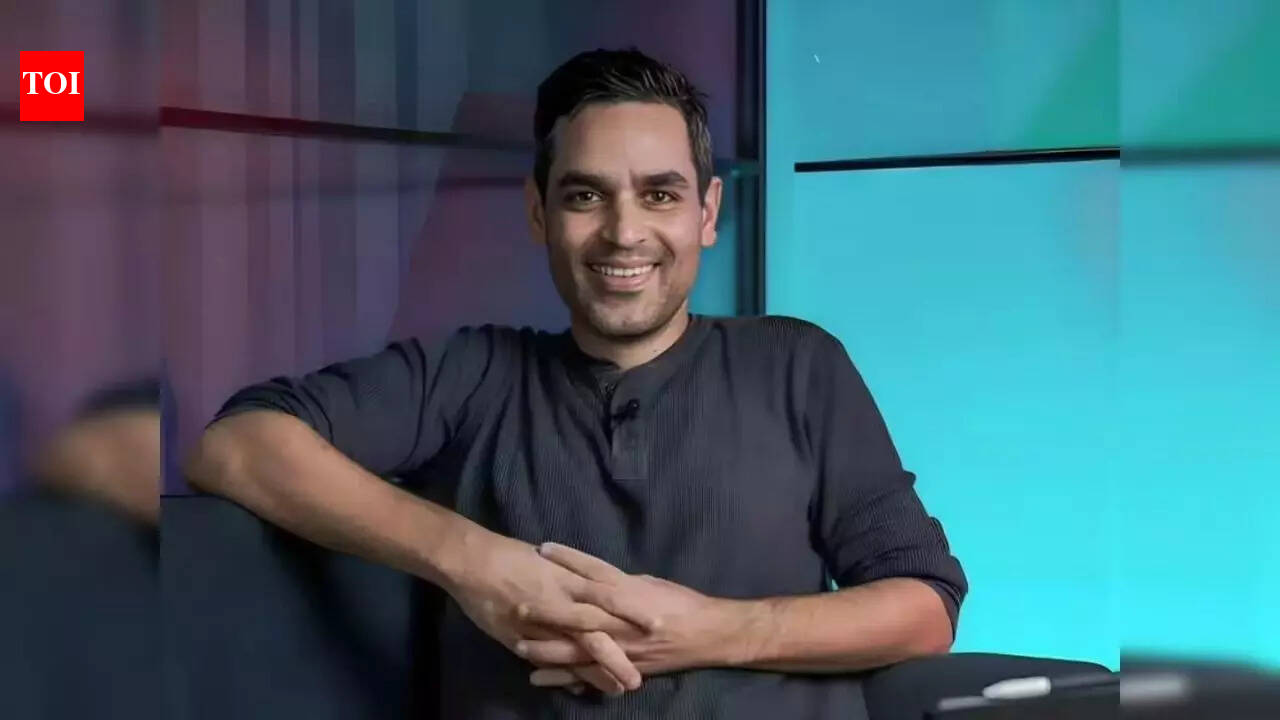
Ankur Warikoo shares 5 smart tips for starting a new job and standing out early: “Start with curiosity, not…” |


Ankur Warikoo shares 5 smart tips for starting a new job and standing out early: “Start with curiosity, not…”

Starting a new job is always a mix of excitement and panic. It seems like everyone expects instant results. You want to show your worth. But rushing in can backfire. The first 90 days often decide how smooth or messy the next few years will be. Experts say the real challenge isn’t speed. It’s understanding the culture, the people, and the unspoken rules. Many of us make the mistake of confusing activity with impact. Doing a lot doesn’t mean doing the right things. It might even hurt your reputation.If you get this phase right, it can set you up for years of success. Get it wrong, and it feels like walking uphill every day. It seems obvious, but many overlook it. And honestly, it’s not just about doing your job well. It’s about how you’re seen. How people listen to you and how do they take you seriously.

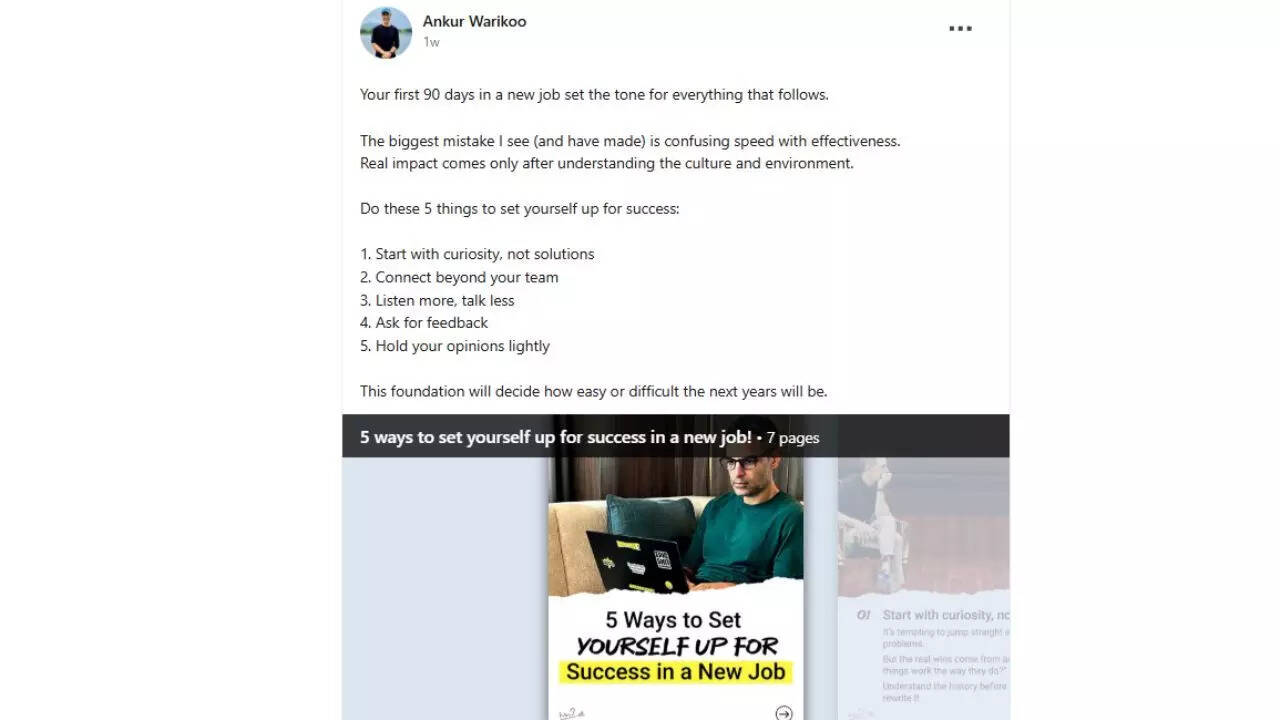
Ankur Warikoo reveals 5 things to set yourself up for success

It might feel like a short period, but it shapes the future. Observing, connecting, listening carefully, asking, reflecting, holding ideas lightly; it all quietly adds up over time. Ankur Warikoo shares that these small, consistent steps seem minor, almost invisible, but they often decide whether your years ahead are smooth, meaningful, or frustrating.So, pause. Look around. Ask questions. Be curious. Stand your ground gently. Stay patient, stay aware, and remember: speed isn’t impact. Understanding is.Your career might just thank you for it.

Ankur Warikoo reveals 5 things to set yourself up for success

Source: LinkedIn

Don’t rush and start with curiosity

It might be tempting to offer solutions immediately. Don’t. Not yet. The smartest move is to observe. Ask questions. Listen. Watch how teams work. Who talks? Who doesn’t? What matters, really?Curiosity shows you care. People notice. It’s subtle, but it builds trust. Jumping in with answers too soon can make you seem overconfident. Or worse, out of touch.

Connect beyond your team

It seems small, but those coffee chats, brief hallway conversations, even awkward hellos matter. You never know which connection will help later.Some colleagues might appear distant at first. Don’t take it personally. Experts say building relationships across departments often gives insights you can’t get from emails or meetings.

Listen more. Talk less.

Simple advice. Hard to follow. Many of us fill silence with words. But silence is powerful. It lets you understand dynamics, catch nuances, and notice what really matters.You might learn more by listening than by giving advice. It appears obvious, but it’s easy to forget.

Ask for feedback and mean it

It feels uncomfortable, doesn’t it? Asking people how you’re doing. But feedback early on can save months of mistakes.Try small steps. Quick check-ins. Short questions. “Did that make sense?” “Was this helpful?” People often respect it when you show you want to learn.

Hold your opinions lightly

Having ideas is good. Pushing them too hard? Not so much. People can sense when approval matters more than your opinion. And when that happens, respect fades.Not everyone will agree. That’s fine. Your thoughts still deserve space. Sometimes stepping back shows confidence more than pushing forward.

Earning respect without losing yourself

Once you’ve settled in, the next challenge is influence. How to earn respect without chasing nods or validation. It seems tricky. But reportedly, people notice authenticity more than effort to please. Ankur Warikoo explains that when you’re too focused on approval, influence drops. People might nod politely, but they stop taking you seriously. The trick is subtle. Speak clearly. Stand by your ideas. Listen when it matters. And don’t fear disagreement.Even small gestures count. Eye contact. Following up on promises. Owning mistakes. It all adds up. Respect isn’t about being liked it’s about being reliable and confident, without pretending to be someone else.


Source link